Denim stretch recovery is the difference between jeans that move with the wearer and jeans that become a different size by lunchtime. Stretch tells a product team how far a fabric can extend under a defined force. Recovery tells them what happens after that force is removed. The two properties are related, but they are not interchangeable. A fabric can stretch generously and still leave a bag at the knee, loosen across the seat or produce a rolling waistband.
This distinction is easy to lose during sourcing. A mill card may state a fiber blend and one impressive stretch percentage. Neither proves how the fabric will behave in the intended fit, wash or care cycle. The useful specification also controls growth, recovery time, fabric power, dimensional change and the test method used to obtain every number.
This guide is written for fashion brands, denim buyers, technical designers and product developers. It explains how to compare stretch denim, build a test plan, translate laboratory results into pattern decisions, approve the washed garment and control bulk production. It also shows why elastane content alone is a poor shortcut for performance.
Stretch, Growth, Recovery and Power Are Different Properties
A denim stretch recovery conversation often compresses four fabric behaviors into the word “stretch.” That is where poor comparisons begin. Product teams should separate the properties before they compare swatches or set limits.
Fabric stretch
Fabric stretch is the increase in length produced by a defined load or by extending a specimen to a defined force. It is usually reported as a percentage of the original benchmark length. Stretch describes available extension under the selected conditions. It does not say how much of that extension remains after release.
Direction matters. Most classic stretch denim places the extensible yarn system in the filling, or weft, direction, so the useful extension runs around the body. A fabric may have little warp stretch even when its crosswise stretch is high. Bi-stretch or four-way constructions add meaningful extension in both directions, but the warp and weft results still need to be reported separately.
Fabric growth
Growth is the residual extension measured after the force has been removed and after a stated recovery period. In a garment, excessive growth appears as a loose waist, a dropped seat, rippling at the front rise or a bag at the knee. Low growth is generally desirable, but the number has meaning only when the preceding load, duration, cycles and recovery time are known.
Recovery
Recovery expresses how completely the specimen returns toward its original length after extension. A fabric can recover quickly in the first few minutes and continue recovering more slowly over several hours. That is why a report should state the time between unloading and measurement. An immediate result and a result after one hour answer different questions.
Fabric power or modulus
Power describes the force required to reach a selected extension. Two fabrics can reach the same stretch percentage while feeling completely different on the body. A lower-power fabric may feel soft and easy but provide little support. A higher-power fabric may hold the silhouette but feel restrictive if the pattern does not allow enough ease. For close-fitting jeans, power is part of fit; it is not merely a laboratory detail.
Dimensional change
Shrinkage or extension after washing is not the same as growth during wear. However, it changes the starting dimensions from which stretch and recovery operate. A fabric that shrinks strongly across the width may produce a tight first wear, then relax during the day. The consumer experiences both events as inconsistent fit. Review the denim shrinkage and leg twist guide alongside the recovery data rather than treating them as separate approvals.
Why Elastane Percentage Does Not Predict Denim Stretch Recovery
Fiber content is a legal and commercial description of what is present in the textile. It is not a complete engineering description of how the textile performs. Two denims labeled 98% cotton and 2% elastane can have different stretch, power, growth and durability.
The outcome depends on how the elastic yarn is made and incorporated. Relevant variables include:
- elastomer type, linear density and draft;
- single-core, dual-core or other composite yarn construction;
- the fibers covering the elastic core;
- yarn count, twist and spinning method;
- pick density and weave geometry;
- stretch direction and distribution across the fabric;
- heat setting, sanforization and other mill finishing;
- garment wash chemistry, temperature and mechanical action;
- the amount of extension imposed by the pattern during wear.
Elastane can provide high extension, but extension alone does not guarantee shape retention. Some engineered constructions combine elastane with a bicomponent polyester or another recovery mechanism. The LYCRA Company, for example, describes its dualFX denim technology as using complementary stretch fibers to balance flexibility with bounce-back recovery. This is an example of a construction strategy, not a reason to approve a trade name without testing the finished fabric.
Mechanical stretch is another route. It can be created through yarn crimp, weave and finishing without an elastomeric fiber. Cotton Incorporated describes a 100% cotton mechanical-stretch construction designed to provide flexible ease and recovery. Such fabrics can be useful when a brand wants lower extension, an all-cotton composition or a different end-of-life strategy. They still require the same disciplined evaluation of extension, growth, wash stability and garment fit.
The practical denim stretch recovery rule is simple: use composition to understand material content, then use performance tests to understand behavior.
How Yarn, Weave and Finishing Change the Result
Denim stretch recovery begins inside the fabric structure. Traditional denim is a warp-faced twill with dyed warp yarns and lighter filling yarns. In a common filling-stretch construction, the elastic component is carried in the weft. The CottonWorks denim construction resource explains how core-spun elastic yarns can be used in denim filling systems. The covering fiber preserves much of the cotton surface while the core contributes extension.
Several structural changes can alter the same nominal blend:
Pick density and cover
A tightly packed filling system may limit how freely the yarn can extend. A more open structure may stretch easily but become vulnerable to seam opening, snagging or local distortion. The finished picks per unit length matter more than a greige target because finishing changes fabric width and yarn spacing.
Yarn draft and covering
The elastic core is extended during yarn manufacture and covered by staple fibers. Draft, cover uniformity and subsequent processing affect available stretch and how evenly the load is carried. An exposed or damaged core can create streaks, grin-through, inconsistent stretch or early failure.
Fabric weight and thickness
Weight changes perceived support, but it does not provide a direct ranking of recovery. A lightweight denim can be high power, while a heavier fabric can feel soft and relaxed. Read the performance data beside the denim fabric weight specification, thickness, construction and intended silhouette.
Finishing
Heat setting stabilizes many elastomeric constructions, while compressive finishing, resin, softener and surface treatments can alter extension and hand. Too little process control may leave lot-to-lot variation. Excessive thermal or chemical exposure can change power or damage sensitive fibers. The brand does not need to prescribe every mill setting, but it should approve finished-fabric performance and require notification when the mill changes the route.
Relaxation and storage
Stretch fabric under roll tension may change after it is unrolled and allowed to relax. Cutting too soon can produce panels that alter dimension after cutting or sewing. The factory should follow an agreed relaxation procedure appropriate to the fabric, roll condition and lay. Record the time, environment and whether the fabric was face-up, flat or otherwise handled. “Relax overnight” is not a process record unless overnight has a defined duration.
Rigid, Comfort-Stretch and High-Stretch Denim
There is no universal denim stretch recovery boundary that makes a fabric “comfort stretch” at one precise percentage and “high stretch” at the next. Mills and brands use these terms differently, and results shift with the method and load. The following table is a product-development conversation guide, not an acceptance standard.
| Commercial description | Typical design intention | Questions to resolve |
|---|---|---|
| Rigid or near-rigid denim | Authentic structure, gradual break-in and limited extension | Does mechanical give create enough mobility? How much will the garment relax with wear? |
| Mechanical or comfort stretch | Moderate movement while retaining a woven denim character | Is the extension durable? Does recovery remain acceptable after repeated laundering? |
| Performance or high stretch | Close fit, larger body movement and flexible sizing | What power is required? Will the seat and knee recover through a full day of wear? |
| Bi-stretch or four-way stretch | Extension across and along the body for active or very fitted products | Are warp and weft values controlled separately? Does vertical stretch alter rise and inseam? |
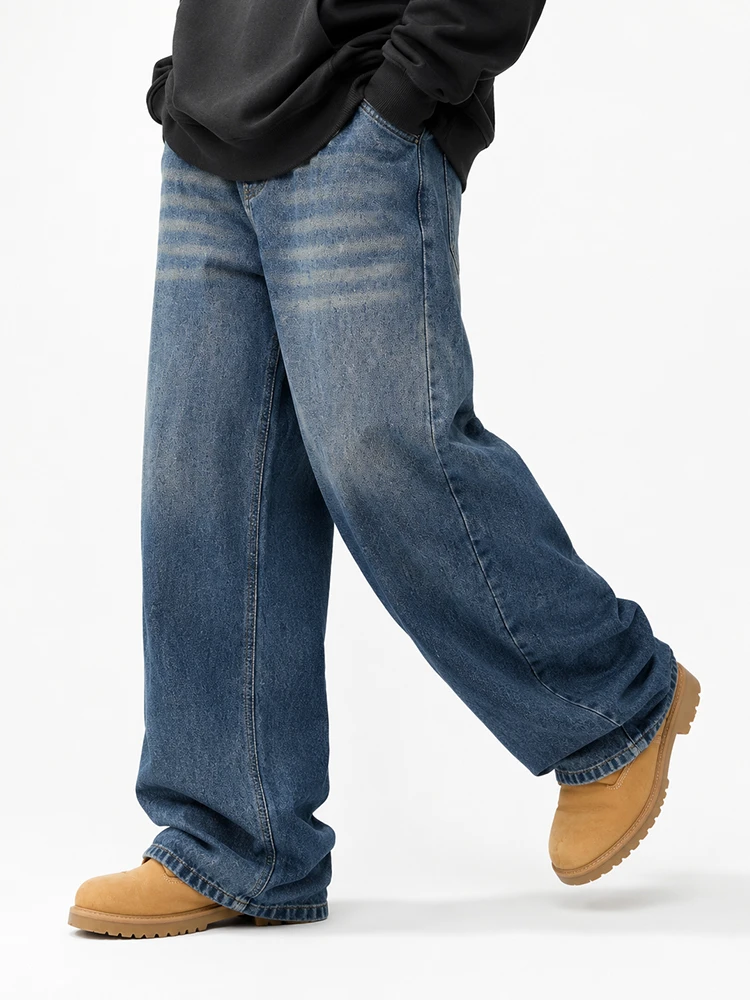
A brand should not choose the largest available stretch percentage by default. Wide-leg jeans may need comfort at the waist and hip but little extension through the leg. A close skinny fit may require substantial extension, controlled growth and enough power to recover. Work backward from the silhouette, target consumer and movement requirement.
Denim Stretch Recovery Test Methods and a Repeatable Laboratory Brief
Denim stretch recovery results become comparable only when the method and conditions travel with the number. The latest edition of a standard should be confirmed when the test request is issued, and buyer-specific modifications should be documented rather than assumed.
ASTM D3107 for woven stretch fabrics
ASTM D3107-26 covers stretch, growth and recovery of woven fabrics made wholly or partly with stretch yarns after specified tension and extension. ASTM states that the methods are intended for woven fabrics showing high stretch and good recovery under low tension, and the standard provides different tension options and calculations. It also notes limitations for commercial acceptance testing because between-laboratory precision can be poor. That warning matters: brands comparing two laboratories should align equipment, specimen preparation and calculations before treating a small difference as a supplier failure.
ISO 20932 strip and multiaxial testing
ISO 20932-1:2018, confirmed current by ISO in 2024, describes straight-strip and loop methods for measuring elasticity and related properties of fabrics. ISO 20932-2:2018 addresses multiaxial deformation of a fabric surface and includes dynamic and static approaches. A strip test is useful for directional extension; a multiaxial method can better represent localized bagging where the fabric is pushed in more than one direction, such as a knee or seat.
CRE methods and buyer protocols
Some laboratories use a constant-rate-of-extension tensile tester and a defined cycling program. Others use static weights, extension frames or brand-specific wear simulations. None of these results should be mixed into one spreadsheet without identifying the method. Even when two reports use percent units, they may have tested different specimen widths, gauge lengths, forces, cycles and recovery times.
What the laboratory request should state
- fabric identification, lot, color and finish;
- whether the specimen is unwashed, mill-finished, garment-washed or home-laundered;
- test standard, edition and any buyer modification;
- warp and weft directions to be tested;
- conditioning atmosphere and duration;
- specimen width, gauge length and sampling locations;
- specified force or specified extension;
- number of cycles and hold time;
- recovery measurement intervals;
- number of specimens and reporting precision;
- required stretch, maximum growth and any power limits;
- how outliers and retests will be handled.
Test across the usable width when fabric uniformity is a risk. Edge, center and opposite-edge specimens can expose finishing variation that a single center sample misses. For bulk approval, define how rolls and lots are selected. A beautiful development swatch is not evidence that every production roll behaves the same way.
Denim Stretch Recovery Calculations and Result Interpretation
The exact calculation must follow the selected method. The simple relationships below help product teams understand the report; they do not replace the formulas or procedural details in the applicable standard.
Stretch percentage
Stretch (%) = (extended length – original length) / original length x 100
If a 100 mm benchmark reaches 130 mm under the specified load, the observed extension is 30%. That does not mean the pattern should be reduced by 30%. Garment strain is distributed unevenly, and comfort depends on power as well as maximum extension.
Residual growth
Growth (%) = (recovered length – original length) / original length x 100
If the same benchmark measures 104 mm after the specified recovery period, residual growth is 4% under this simplified example. A later measurement may be lower if the fabric continues to recover. Always report the interval.
Recovery percentage
Recovery may be reported using the amount recovered relative to the imposed extension. The selected standard defines the correct formula and timing. Do not compare a fabric reported as “96% recovery” with another reported as “4% growth” until the test conditions and calculations have been reconciled.
Read the curve, not only the endpoint
Instrumental cyclic tests can show loading force, unloading force, hysteresis and change across cycles. These details explain why two fabrics with equal maximum stretch feel different. A fabric that requires excessive force early in the curve can restrict normal movement even if it eventually reaches the target extension. A fabric that loses power rapidly over repeated cycles may feel good in a fitting and loose after wear.
Turning Fabric Data Into a Jeans Fit
A denim stretch recovery report is not a pattern instruction. It describes a specimen under controlled conditions. The technical designer still has to decide how much body tension the garment should carry and where the pattern needs stability.
Start with the intended ease
Rigid jeans generally need enough positive ease for sitting, bending and dressing. High-stretch jeans may use reduced or negative ease in selected circumferences. The reduction cannot be calculated from maximum stretch alone. Fabric power, recovery, seam behavior, body diversity and comfort all limit usable strain.
A useful denim stretch recovery fitting marks horizontal balance lines at waist, high hip, full hip, thigh and knee. Photograph the garment standing, seated and after repeated movement. After the wearer removes it, lay the garment flat without forcing it back into shape and remeasure the loaded areas at agreed intervals.
Stabilize selectively
The body of a stretch jean may need movement while the waistband, fly, pocket mouth or belt-loop attachment needs control. Interlining, stay tape, non-stretch pocketing or seam construction can stabilize these locations. Too much stabilization creates a hard edge against a flexible body; too little can produce a rolling waistband, gaping pocket or wavy fly.
Review pockets as structural components
Front pocket openings interrupt the fabric and can grow under hand entry and hip tension. Back pockets locally stiffen the seat with extra layers and stitching. Placement that looks balanced on a relaxed sample may pull apart on the body. Check pocket angle, opening length, facing stretch, reinforcement and stitch type with the intended fabric.
Do not transfer one pattern between fabrics
Replacing a 20% stretch fabric with a 40% stretch fabric is not a color substitution. Even when weight and composition appear similar, the pattern may need different waist suppression, rise shaping, thigh ease, pocket reinforcement and waistband construction. Begin with the approved block closest to the new fabric behavior, then validate through the jeans fit sample approval process.
Grade the recovery system, not just the measurements
Large and small sizes place different loads on the same percentage increments. A grade rule that works in rigid denim may create too much compression or too little support in a stretch style. Review the smallest, base and largest sizes in a size set. The jeans size grading guide explains how base measurements, increments and size-set approval work together.
Wash Development Can Improve or Destroy the Approved Behavior
Denim stretch recovery before garment washing does not describe the complete product the consumer wears. Enzyme, bleach, oxidizing chemistry, resin, softener, abrasion, extraction and drying can change surface, dimensions and elastic performance. A wash that produces the right shade can still leave the garment with weak recovery or inconsistent power.
Approve the real wash route
Test the darkest rinse, the most aggressive light wash and any route with unusual thermal or chemical exposure. If several colors share a pattern, do not assume one recovery result covers them all. The lightest wash may receive more abrasion or oxidation; a resin route may change hand and extension; a heavy softener may alter perceived support.
Connect the test plan to the denim wash development standard. Keep the approved shade, hand, measurements and recovery behavior together. A wash recipe should not be released because color alone matches the reference.
Separate garment wash from home laundering
Garment washing creates the commercial finish before sale. Home-laundering tests estimate changes during consumer care. They serve different decisions. AATCC TM135-2025 addresses dimensional change of fabrics after home laundering. AATCC TM150-2025 addresses dimensional change of garments, while its published scope notes that it may not apply to certain stretch fabrics. The laboratory and brand should select a suitable method rather than applying a familiar code automatically.
Use repeated cycles when the risk appears over time
A first wash can reset a fabric temporarily. Repeated wash-and-wear exposure may reveal progressive loss of power, growth, seam distortion or elastomer damage. The number of cycles should reflect the product claim, care instruction and brand risk. Record drying conditions because heat and tumbling can influence both dimensions and elastic performance.
Measure at controlled times
A warm garment directly from a dryer, a damp garment and a conditioned garment can give different measurements. Define when the sample is measured and how it rests before measurement. The same discipline applies after a wear trial. Otherwise, apparent improvement may simply be extra recovery time.
A Practical Denim Stretch Recovery Approval Workflow
- Write the product brief. Define silhouette, target wearer, required movement, intended compression, care route, wash family and price level.
- Screen finished-fabric candidates. Compare composition, construction, weight, width, directional stretch, growth, recovery and power using one agreed method.
- Condition and relax the fabric. Follow a recorded procedure before cutting. Do not compare a freshly unrolled lot with a fully relaxed development roll.
- Sew a construction trial. Check needle cutting, seam extension, puckering, waistband compatibility and pocket opening stability. Use the denim seam construction guide to align thread, stitch and reinforcement decisions.
- Develop the garment wash. Test the actual chemistry, mechanical action and drying route. Recheck fabric behavior after wash.
- Fit the washed prototype. Review static appearance, seated comfort, bending, walking, pocket use and garment recovery after removal.
- Run a controlled wear trial. Set wear duration and activities. Measure the same points before wear, immediately after wear and after the agreed recovery period.
- Approve the size set. Confirm that compression, mobility and recovery remain balanced at range extremes.
- Freeze the physical and written standards. Retain fabric, washed garment, laboratory report, wash recipe, pattern version and approved measurements.
- Verify bulk lots. Sample rolls and washed garments using the agreed frequency and escalation plan.
A failed stage should send the product back to the cause, not automatically to a new fabric. Knee bagging may be caused by poor fabric recovery, excessive pattern strain, incorrect grain, wash damage or a combination. Changing the fabric without examining the pattern can repeat the problem in a more expensive material.
How to Specify Denim Stretch Recovery in a Tech Pack
The denim tech pack should identify the approved fabric article and the conditions that make it acceptable. A supplier marketing name is not enough for repeat orders.
| Specification field | What to record | Why it matters |
|---|---|---|
| Material identity | Mill, article, composition, weave, yarn system, color and finish | Prevents visually similar substitutions |
| Finished dimensions | Usable width, weight, thickness and roll tolerance | Connects performance to cutting yield and hand |
| Stretch method | Standard, edition, direction, force or extension, cycles and hold time | Makes the percentage reproducible |
| Growth and recovery | Calculation, recovery intervals and acceptance limits | Controls bagging and shape retention |
| Power | Force at agreed extensions or the approved force-extension range | Controls support and comfort |
| Dimensional change | Garment-wash and home-laundering method, length and width results | Protects the starting fit |
| Relaxation | Required handling, time and environment before cutting | Reduces panel-size variation |
| Approval references | Swatch, report, washed garment, pattern version and wash recipe | Creates a repeatable product standard |
Set ranges from development data rather than copying a competitor’s public specification. The best limit is strict enough to protect fit and broad enough to reflect a capable, controlled process. If the development sample sits at the edge of the proposed limit, the product has no manufacturing margin.
Bulk Fabric Controls and Garment Inspection
Bulk denim stretch recovery control begins at incoming fabric. Confirm the article, lot, shade group, width, weight and face direction. Record roll length and any required relaxation. Stretch results should be sampled by the plan agreed with the mill and manufacturer, with clear action when one roll or lot falls outside the range.
Spreading and cutting
Avoid unnecessary tension during spreading. Tensioned plies can contract after cutting and create size differences through the lay. Check whether automatic spreading settings suit the fabric and whether face-to-face or one-way laying is required for shade and stretch consistency. Keep cut panels identified when multiple lots are present.
Sewing
Stretch denim can expose a conflict between seam stability and garment extension. A seam that is too rigid may pop under movement; one that is too extensible may wave. Monitor stitch density, thread, seam type, differential feeding, needle condition and operator handling. Pay particular attention to the crotch, inseam, waistband joining, front pocket opening and back rise.
Washed garment measurement
Condition garments consistently, fasten them and measure without stretching the fabric. Operators should use the same landmarks and pressure. Compare measurement drift with the approved tolerance and the denim quality inspection plan. A garment can pass flat measurements and still fail recovery during wear, so functional tests and visual assessment remain necessary.
Visual signs of recovery problems
- wavy waistband or fly after washing;
- pocket mouths that flare away from the body;
- seat fabric that remains elongated after fitting;
- horizontal drag lines caused by excessive power or insufficient ease;
- knee bags that do not relax after the stated interval;
- different leg widths from uneven shrinkage or handling;
- seams that pucker because the fabric was stretched during sewing;
- local grin-through or broken elastic filaments.
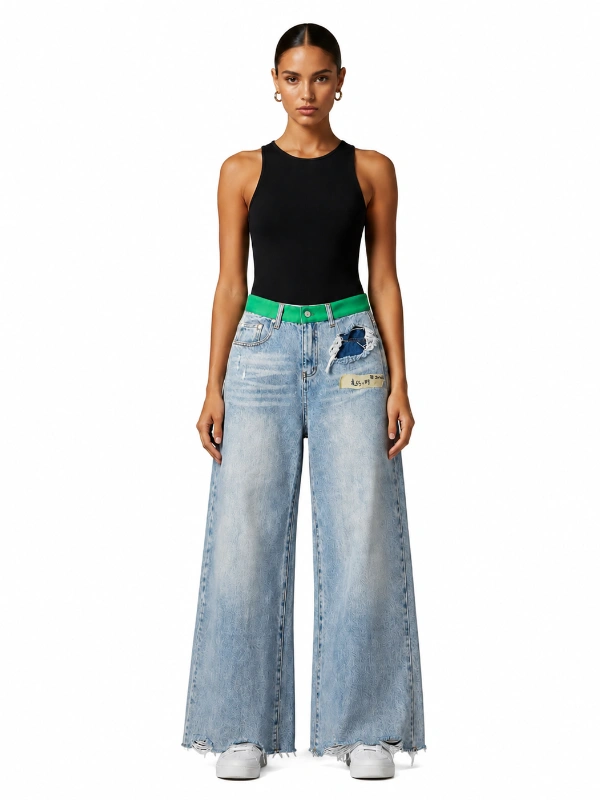
Diagnosing Common Denim Stretch Recovery Failures
| Observed problem | Possible causes | Useful checks |
|---|---|---|
| Knee bagging | High residual growth, low recovery power, excessive pattern strain or wash damage | Compare multiaxial and strip behavior; review knee circumference and wear-trial timing |
| Loose waist after wear | Waistband cut in an unstable direction, insufficient stabilization, growth or poor fit balance | Test waistband assembly; compare body and waistband strain; inspect interlining |
| Tight after laundry, loose later | High width shrinkage followed by wear relaxation | Track measurements after laundering, during wear and after recovery |
| Wavy seams | Fabric stretched during sewing, feed imbalance, rigid seam or thread tension | Sew a controlled trial; check differential feeding, stitch density and operator handling |
| Inconsistent sizes within one order | Mixed lots, variable relaxation, spreading tension, wash variation or measurement method | Trace roll and wash lot; audit relaxation and lay tension; recondition samples |
| Fabric feels restrictive despite high stretch | High force at normal body extension or pattern strain concentrated in one area | Review the force-extension curve and garment balance, not only maximum stretch |
| Loss of recovery after wash | Thermal, chemical or mechanical damage; unstable finishing; unsuitable fiber system | Test before and after each process stage; compare wash variants and drying conditions |
Preserve failed and passing samples from the same production stage. A laboratory result is much easier to interpret when it can be tied to roll number, wash lot, pattern version and sewing line. Without traceability, teams often argue about whether the material or garment caused the failure while the evidence has already been discarded.
Denim Stretch Recovery Questions for Mills and Manufacturers
- Which direction stretches, and what method produced the stated percentage?
- What are the growth and recovery values at each stated interval?
- What force is required at the extensions likely to occur in the garment?
- Are the results from greige, mill-finished, garment-washed or laundered fabric?
- How much variation is expected across width, roll and dye lot?
- What relaxation procedure is recommended before cutting?
- Which wash conditions have been validated for the fabric?
- Has the article been used in a fit and pattern similar to this product?
- What seam, needle and thread risks have been observed?
- Can the mill provide lot traceability and retain an approved reference?
- What changes require brand reapproval?
- How will bulk stretch, growth and dimensional change be sampled?
Clear answers do not need to be long. They need to be specific. “Excellent recovery” is a claim. A method, specimen condition, result range and test report form a specification.
Common Sourcing Mistakes
Buying by elastane percentage
The blend cannot show yarn construction, fabric power, finishing or growth. Approve behavior, not a fiber-content shortcut.
Choosing by hand feel alone
Soft hand can improve comfort, but it can also hide low support or finishing that changes after washing. Handle the swatch, then test it.
Using the highest stretch as the best stretch
Excess extension can weaken the intended denim character and complicate pattern control. Select the range the silhouette needs.
Testing only before wash
The wash is part of the material system. A pre-wash pass cannot approve a post-wash garment.
Copying a rigid-denim pattern
A fabric change alters mobility, ease and stabilization needs. Fit again in the production fabric and wash.
Ignoring recovery time
Immediate and delayed measurements are not interchangeable. State the interval on the test report and wear-trial form.
Approving one perfect roll
Development success is useful only if bulk variability is controlled. Define roll and lot sampling before the purchase order is released.
Denim Stretch Recovery Pre-Production Checklist
- The focus fabric article and approved mill are identified.
- Composition, weave, yarn system, weight and usable width are recorded.
- Warp and weft stretch directions are clear.
- Stretch, growth, recovery and power methods are defined.
- Recovery measurement intervals are stated.
- Limits are based on the approved washed product.
- Garment-wash and home-care routes are documented.
- Relaxation and spreading instructions are issued.
- Seams, waistband and pockets have been tested in the actual fabric.
- The washed fit sample has passed movement and recovery review.
- The smallest and largest size-set garments have been assessed.
- Bulk roll and wash-lot sampling are agreed.
- Failed-result escalation and substitution rules are written.
- Physical fabric and garment standards are retained.
Frequently Asked Questions
What is denim stretch recovery?
Denim stretch recovery is the ability of a denim fabric to return toward its original dimensions after it has been extended. It should be evaluated with the stretch, residual growth, load, cycles and recovery time stated, because a recovery result without test conditions is not comparable.
What is the difference between stretch and growth in denim?
Stretch is the extension available under a specified force or test condition. Growth is the extension that remains after the force is removed and the fabric has recovered for a stated time. A fabric can have high stretch and also have excessive growth.
Does more elastane mean better recovery?
No. Elastane percentage alone does not determine recovery. Yarn design, elastomer draft, covering fibers, weave, finishing, fabric power, washing and garment strain all affect performance. Compare tested finished fabrics rather than choosing only by composition.
Why do stretch jeans bag at the knees?
Knee bagging can result from residual fabric growth, insufficient recovery power, repeated multiaxial deformation, excessive pattern strain or damage during garment washing. Diagnose the fabric and the finished garment together.
How is denim stretch measured?
A conditioned specimen is extended under conditions defined by a standard or buyer method, and the change from its original benchmark length is calculated. The report should identify direction, force or extension, specimen size, cycles, hold time and method.
What is a good stretch percentage for jeans?
There is no universal best percentage. A relaxed wide-leg jean, a fitted straight jean and a compression skinny jean need different extension and power. Select the fabric from the intended silhouette, ease, movement and recovery requirements.
What is the difference between two-way and four-way stretch denim?
Two-way stretch commonly describes meaningful extension in one fabric direction, usually across the width, while four-way or bi-stretch fabric extends in both warp and weft directions. Each direction should be tested and specified separately.
Can 100% cotton denim stretch?
Yes. Cotton denim can provide limited give through yarn crimp, weave and mechanical finishing, and engineered mechanical-stretch constructions can provide more extension without elastane. The available stretch and recovery still need to be tested.
Should stretch denim be tested before or after garment washing?
Both are useful. Pre-wash testing describes the incoming fabric, while post-wash testing shows the effect of the actual garment process. Fit approval should use the washed garment that represents production.
How long should stretch denim recover before measurement?
The applicable standard or buyer protocol should define the interval. Immediate, short-term and longer recovery measurements can answer different questions. Use the same intervals for development and bulk comparison.
Can one jeans pattern be used for fabrics with different stretch?
Not safely without validation. Different extension, power, growth and shrinkage can change ease, balance, waistband behavior and pocket stability. Refit the style and confirm the size set whenever fabric behavior changes materially.
What should a stretch denim test report include?
It should include fabric and lot identity, specimen condition, test method and edition, direction, force or extension, cycles, hold time, recovery interval, individual results, averages and any deviations. Post-wash reports should also identify the wash and drying route.
Final Takeaway
Reliable stretch jeans are not created by adding elastane and reducing the pattern. They come from matching fabric extension, power and recovery to the silhouette, then preserving that balance through cutting, sewing, washing and bulk control. The most useful denim stretch recovery specification is not the one with the largest number. It is the one a mill, laboratory and garment factory can reproduce under the same conditions.
Brands developing custom jeans, jackets, skirts or shorts can send Luokugg the design, target fit, size range, quantity, fabric direction, wash reference and test requirements through the custom denim quotation form. Supplying the intended stretch behavior at the start allows fabric selection, pattern development and wash trials to be planned as one product system.