A denim tech pack is the production file that tells a jeans manufacturer exactly what to quote, sample, approve and reproduce in bulk. At minimum, it should define the product, fabric, finished measurements, construction, wash, trims, branding, tolerances and testing requirements. A mood board can explain the idea. A tech pack turns that idea into a standard that different people can follow.
This distinction matters more in denim than it does in many ordinary cut-and-sew products. A pair of jeans changes during washing. Indigo shade, fabric shrinkage, stretch recovery, seam twist, hand sanding and abrasion can all affect the final fit and appearance. If those variables are missing from the file, the sample room has to guess. A capable sample maker may make a good guess, but a guess is not a repeatable production instruction.
This guide explains how to build a practical denim tech pack for custom jeans, jackets, shorts, skirts and related products. It is written for fashion brands, private-label buyers and product developers who want more accurate quotations, fewer sample rounds and a clearer approval trail before bulk production.

Why Denim Needs a More Precise Tech Pack
Denim development is a chain of connected decisions. The base fabric affects shrinkage and wash response. The wash affects color, hand feel and finished measurements. Seam construction changes how raised edges fade. Pocket placement changes after the pattern is corrected. Even a custom button can affect the waistband construction and the final cost.
This is why a reference photo cannot replace a specification. A photograph does not reveal fabric weight, fiber composition, stretch recovery, stitch density, seam allowance, pocket dimensions or the measurements after washing. It also cannot show whether a fade was created by enzyme treatment, laser, abrasion, tinting or a combination of processes.
A good tech pack does not need to contain every technical answer on day one. It does need to separate three things clearly: what is already decided, what the factory should propose and what must be approved before production. A capable custom denim manufacturer can then identify missing decisions before they become sample delays. That distinction is especially useful when comparing OEM and ODM denim production. An OEM project normally arrives with more fixed specifications. An ODM project may begin with references and a product direction, then become more detailed as the pattern, fabric and wash are developed.
Start With a Controlled Product Overview
The first page should allow a merchandiser, pattern maker, sample sewer and washing technician to identify the product without searching through emails. Include the style name, style number, product category, season, target wearer, intended fit, base size, size range, colorway, version number and date.
Version control is not administrative decoration. Sample comments often arrive through email, spreadsheets and messaging apps. Without a current version number, one department may use a revised measurement chart while another follows an older pocket drawing. Put the version and date on every page or export, and keep a short revision history that states what changed.
The product overview should also identify the development route. Is this a new pattern, a modification of an approved fit block, a copy of a reference garment with deliberate changes, or a private-label adaptation of an existing style? Each route carries a different amount of pattern and sampling work.
Use Technical Drawings to Remove Ambiguity
Front and back flat drawings should show the garment without a model, pose or dramatic styling. Add separate detail views for areas that are easy to misunderstand: waistband construction, fly, front pockets, coin pocket, back yoke, back pockets, hem, cuffs, collar, placket, distressing and label placement.
Callouts should describe a decision, not simply point at it. Instead of writing “special pocket,” state the pocket type, opening, finished dimensions, stitch rows and reinforcement. Instead of writing “contrast stitch,” provide the thread color reference, thread weight if important and the locations where it is used.
For asymmetrical designs, label the wearer’s left and right. For artwork, include placement measurements from stable reference points. A print positioned “near the knee” will move differently across sizes. A placement measured from the waistband seam and outseam is easier to reproduce.
Build a Bill of Materials That Matches the Product
The bill of materials, usually called the BOM, lists every component required to make and pack the garment. For jeans, that can include more than the shell denim:
- main denim fabric and any contrast denim;
- pocketing, interlining and internal reinforcement;
- sewing, topstitch and bartack thread;
- zipper or button-fly components;
- waistband button, rivets, snaps and decorative hardware;
- woven label, size label, care label and country-of-origin label;
- leather, jacron or fabric waistband patch;
- embroidery, print, applique or repair patches;
- hangtag, barcode sticker, polybag and carton requirements.
Each row should state the component, supplier or factory source, material, color, finish, size, placement and approval status. If the exact component has not been selected, mark it as “factory to propose” rather than leaving the field blank. Blank fields look accidental; a proposal request is a clear instruction.
Custom metal trims deserve early attention. A branded button or rivet may require artwork approval, a mold, plating selection and a supplier minimum that is higher than the garment order. On a low MOQ custom denim project, using an existing hardware shape with a selected finish can be more efficient than opening a new mold for the first run.
Specify the Denim Fabric Beyond Color
“Blue denim” is not a fabric specification. The fabric section should state the target weight, fiber composition, weave or construction, stretch behavior, face color, back color, finish and performance requirements. When available, include the mill article number and a physical swatch.
Fabric weight is usually stated in ounces per square yard, but weight alone does not predict how the garment will feel or fade. Yarn size, weave density, cotton type, dyeing and finishing also matter. The CottonWorks denim construction guide is a useful technical reference for understanding how denim yarn, dyeing and fabric construction relate to the finished material.
For stretch denim, record the fiber composition and the stretch or recovery expectation. A fabric that feels comfortable in the first fitting can still grow at the knee or seat after several hours of wear. For rigid or raw denim manufacturing, document whether the product will be sold unwashed, rinsed or fully washed, and define how shrinkage is handled.
If several styles are intended to match, state whether they must use the same fabric lot. Indigo shade can vary between lots. Reserving one lot for a coordinated capsule reduces avoidable differences between jeans, jackets and skirts that are sold together.
Create a Measurement Chart With Clear POMs and Tolerances
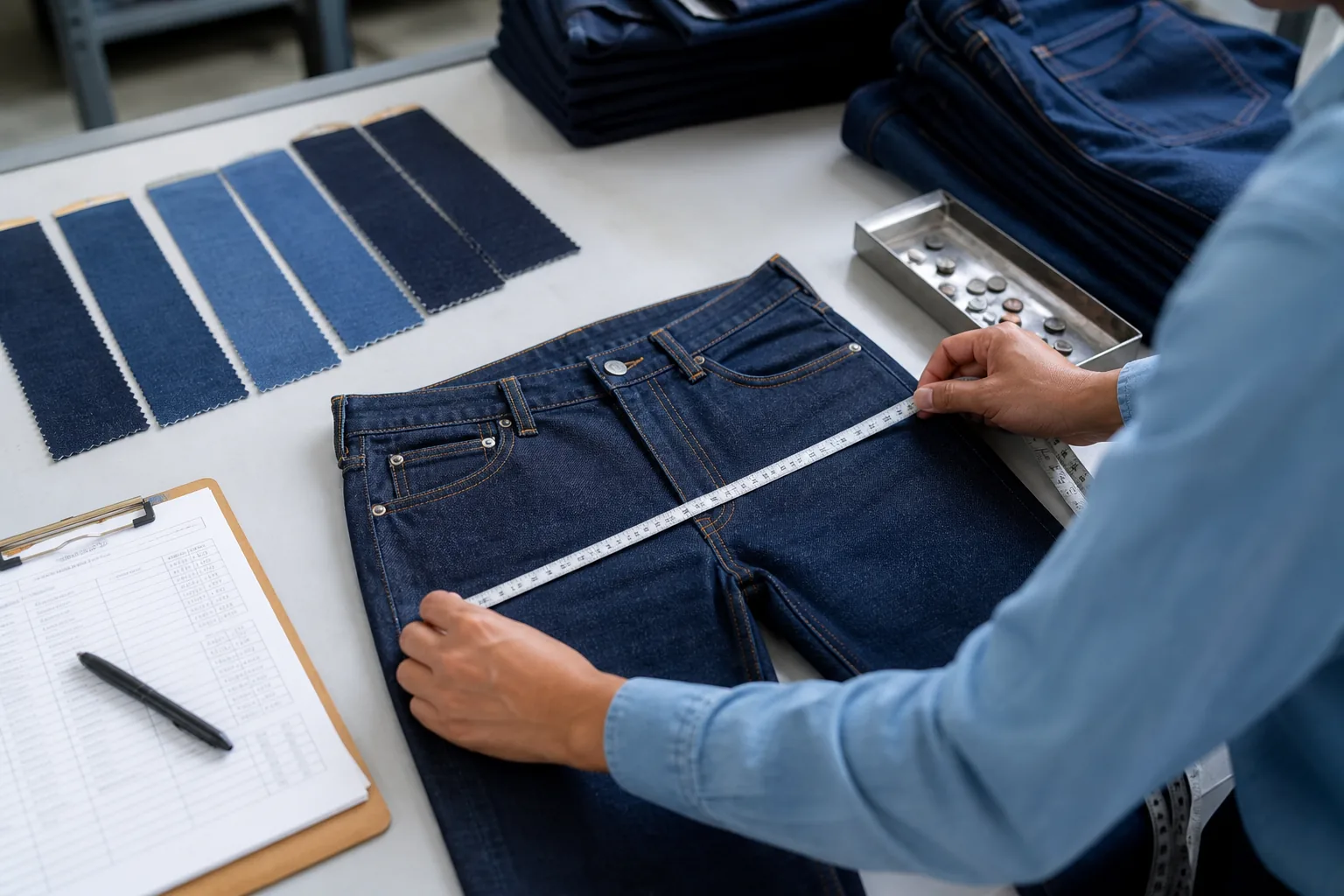
A point of measure, or POM, is a named location and method used to measure the garment. The chart should include a POM code, description, base-size measurement, tolerance and measurements for the graded sizes. A diagram showing exactly where each POM begins and ends is often as important as the number itself.
For jeans, common POMs include:
- waist measured along the waistband;
- high hip and full hip at stated distances below the waistband;
- front rise and back rise following the seam;
- thigh at a defined distance below the crotch;
- knee at a defined distance from the crotch or hem;
- leg opening;
- inseam and outseam;
- waistband height;
- front and back pocket dimensions and placement.
State whether the measurements apply before washing or after the final production wash. For most washed denim products, the customer experiences the garment after finishing, so the final approval chart should reflect finished measurements. Pre-wash measurements can still be useful to the factory as an internal production control.
Tolerances should be realistic and intentional. A single blanket tolerance for every POM is rarely useful. Waist, hip, rise and inseam directly affect fit, while a decorative pocket stitch may allow a different range. Discuss the tolerances with the pattern and production teams instead of copying them from an unrelated product.
Describe the Fit Intent, Not Only the Numbers
Two jeans can share a similar waist and hip measurement yet fit very differently because of rise shape, crotch extension, back-yoke angle, seat shaping and leg balance. Add a short fit statement that explains the intended silhouette and the non-negotiable fit points.
For example: “High-rise relaxed straight jean with a close waist, room through the seat and thigh, and a straight line from knee to hem.” That sentence helps the pattern maker understand why the measurements exist. It also makes sample comments more consistent when one correction affects several related POMs.
Identify the fit model or body measurements used for the base size. If a physical reference garment is important, label it and explain what should be copied and what should change. “Use the rise and seat balance from reference A, but increase thigh ease and reduce the leg opening” is far more useful than “make it fit like the sample.”
Size grading should preserve the design across the range. Pocket placement, knee position, rise proportion and leg opening do not always change at the same rate as waist and hip. Review at least selected sizes before bulk production when the size range is broad or the silhouette is unfamiliar.
Specify Construction, Stitching and Reinforcement
A construction page should show seam type, seam allowance, stitch type, stitch rows, topstitch distance, thread direction and reinforcement. Denim has many high-stress areas: fly base, pocket openings, belt loops, crotch seams, back pockets and waistband ends. Mark where bartacks, rivets or additional stitching are required.
Think about the wash while defining construction. Raised seams and thick intersections abrade more strongly. Heavy fabric can create excessive bulk at the crotch, waistband or jacket collar. Thread color may look subtle on dark raw denim and become highly visible after washing. The approved construction and the approved wash therefore need to be reviewed together.
For distressed products, show the exact location and approximate range of rips, grinding, abrasion and repair patches. Hand-finished effects will contain natural variation, so define the acceptable character rather than asking for mechanical identity. Critical openings still need reinforcement so that the design does not become structural damage during wear.
Turn a Wash Reference Into a Production Standard
A screenshot can communicate direction, but it cannot control bulk washing. Screen brightness, photo editing and lighting all alter the apparent blue. The base fabric used in the reference may also be completely different from the fabric selected for production.
The wash page should identify the target overall shade, contrast, whisker position, thigh and knee fading, seam abrasion, tint, softness, distressing and special effects. Add clear front, back and detail images. When a satisfactory sample is approved, treat the physical garment as the master standard and record its fabric code, wash version and approval date.
Bulk goods do not have to be mathematically identical, especially when manual sanding or distressing is involved. They do need an agreed shade and appearance range. Keep an approved light limit, standard and dark limit where shade variation is commercially important. The detailed denim wash development guide explains how fabric choice, wash recipes and physical approval samples work together.
Measurements should be checked again after the approved wash. A fit sample made in substitute fabric or an unfinished sewing sample cannot serve as the final measurement standard for washed jeans.
Define Trims, Branding, Labels and Packaging
Brand details tend to look small in a tech pack, but they are highly visible to the customer. Supply vector artwork where possible and state dimensions, material, color, finish, placement and attachment method for every label, patch and trim.
For metal hardware, specify the finish and surface character: bright, matte, antique, brushed, gunmetal or another controlled reference. For leather or jacron patches, define the base material, thickness, color, debossing or printing and how the patch should respond to the garment wash.
Care labels and country-of-origin labels must match the destination market and the actual fiber content. Packaging instructions should cover folding, button and zipper position, tissue, polybag warnings where applicable, size stickers, barcode placement, carton quantity and size ratio. A correct garment packed with the wrong barcode is still a commercial failure.
Put Testing and Compliance in Scope Before Quoting
The brand should identify the requirements for its destination market and customer. Do not leave testing until the goods are ready to ship. If the order requires dimensional-change, seam-twist, colorfastness, fiber-content or restricted-substance testing, put the requirement in the tech pack or purchase specification so that the fabric and process can be selected accordingly.
The AATCC standards directory lists established textile test methods, including dimensional change, colorfastness and appearance assessments. The correct method and pass criteria should be chosen for the product and market rather than copied from a generic checklist.
For chemical input management, brands can refer to the ZDHC Manufacturing Restricted Substances List. For broader supplier due diligence, the OECD garment and footwear guidance provides a risk-based framework. A certification logo alone is not enough. Check the certificate holder, facility, scope, validity period and whether the actual fabric, process or finished product is covered.
Use Sample Stages to Close Decisions in the Right Order
A tech pack develops with the product. The goal is not to freeze every detail before the first conversation. The goal is to close decisions in a controlled sequence and keep the current file aligned with the approved sample.
1. Development or prototype sample
This sample tests the overall design, approximate construction and feasibility. Substitute materials may be acceptable if every substitution is identified. Do not approve bulk materials from a sample that does not use them.
2. Fit sample
The fit sample tests pattern balance, comfort and measurements. Review it on the intended body or fit model. Record comments in one revision sheet with annotated photos and measurable changes. Avoid scattering critical corrections across several chat threads.
3. Wash sample
The wash sample establishes color, fading, surface character and hand feel on the selected fabric. Confirm finished measurements after the wash. If the wash changes substantially, fit may need to be checked again.
4. Pre-production sample
The pre-production sample, often called the PP sample, should use the approved fabric, wash, construction, trims, labels and packaging. Open issues should be minor and documented. Bulk cutting should not begin while the fit, fabric or wash is still being redesigned.
5. Size set and production sample
A size set checks the grading across selected sizes. A production sample comes from the actual bulk line and confirms that the production method matches the approved standard. Keep one signed approval sample with the brand and one with the manufacturer.
The full private label jeans manufacturing process shows how the tech pack, sample approvals and bulk production connect.
Common Denim Tech Pack Mistakes
Using one image as the entire specification
A reference image is useful for direction, not for hidden details. The manufacturer still needs measurements, fabric, construction, wash and trim information.
Mixing pre-wash and post-wash measurements
Label each chart clearly. The customer buys the finished garment, so the final approval standard should normally reflect the product after its intended wash.
Leaving the wash until the end
Wash affects fit, shade, surface, thread appearance and sometimes strength. Develop it with the selected fabric before the pre-production sample is approved.
Writing subjective sample comments
“Make the leg better” or “more vintage” gives the sample room no measurable target. State which POM changes, by how much, and which visual reference should control the wash.
Failing to update the BOM
If the zipper, button, pocketing or label changes during sampling, revise the BOM. The approved sample and current tech pack must describe the same product.
Approving only by photograph
Photos are useful for speed, but they do not fully communicate fit, fabric hand, stretch recovery or true shade. Keep a physical approval sample for critical washed products whenever practical.
Denim Tech Pack Checklist Before You Request a Sample
| Section | Minimum information | Approval evidence |
|---|---|---|
| Style control | Style number, season, base size, size range, version and date | Current revision history |
| Design | Front, back and detail drawings with callouts | Approved drawing or annotated sample |
| Fabric | Weight, composition, construction, stretch, color and supplier code | Signed swatch or approved article number |
| Measurements | POM diagram, base-size chart, grade and tolerances | Approved post-wash measurement report |
| Construction | Seams, stitches, allowances, reinforcement and thread | Approved workmanship sample |
| Wash | Shade, contrast, abrasion, hand feel and acceptable variation | Signed physical wash standard and limit range |
| Trims and branding | Hardware, labels, patch, artwork, colors and placements | Approved trim card and strike-offs |
| Compliance | Labeling, testing, documentation and market requirements | Reports, certificates and scope documents |
| Packaging | Folding, bag, stickers, barcode, carton and size ratio | Approved packed PP sample |
Before sending the file, ask one final question: could a new production team understand the approved product without reading six weeks of messages? If the answer is no, the missing decision belongs in the tech pack.
Working With Luokugg on Denim Product Development
Luokugg supports fashion brands and private-label buyers with fabric sourcing, pattern development, jeans sampling, wash development, custom trims, packaging and bulk production. For suitable projects, the manufacturing program starts from 100 pieces per style and color, with typical sampling stated at 7 to 12 days and production at 20 to 35 days after final approval. The actual plan depends on the fabric, wash, trims, size range and technical complexity.
You can begin with a complete jeans tech pack, or use references and an initial brief for ODM development. Before contacting the team, prepare the product category, target fit, quantity, fabric direction, wash reference, size range and required delivery date. The denim product gallery can help define the initial direction.
When the project is ready for technical review, request a denim manufacturing quote and attach the current tech pack, reference images or sample photos. A clear starting file allows the team to identify risks early and recommend the right sampling route.
Frequently Asked Questions About Denim Tech Packs
What is a denim tech pack?
A denim tech pack is a controlled production document that defines a denim product’s design, fabric, measurements, construction, wash, trims, branding, tolerances, testing and packaging. It allows a manufacturer to quote, sample and reproduce the approved garment.
Do I need a tech pack to get a jeans sample?
A complete tech pack is the most reliable route, but it is not always required for the first conversation. An ODM manufacturer can begin with sketches, reference images or a physical garment, then help convert the concept into a working specification before bulk production.
What is the most important part of a jeans tech pack?
No single page controls the whole product. The most important relationship is between the post-wash measurement chart, selected denim fabric, approved wash standard and physical approval sample. Those four items define how the finished jeans should fit and look.
Should jeans measurements be taken before or after washing?
Both can be useful during production, but the final customer-facing measurement standard for washed jeans should normally be based on the garment after its approved wash. The tech pack must label pre-wash and post-wash charts clearly.
How do I specify a denim wash in a tech pack?
Define the base fabric, overall shade, contrast, whiskers, local fading, seam abrasion, tint, softness, distressing and acceptable variation. Approve a physical wash sample and, when needed, light and dark shade limits for bulk comparison.
What is a PP sample in denim manufacturing?
A pre-production, or PP, sample represents the intended bulk standard. It should use the approved fabric, wash, construction, hardware, labels and packaging. Major design, fit and material decisions should be closed before bulk cutting begins.
Can a denim factory create a tech pack from reference photos?
A factory can use reference photos during ODM development, but photographs do not provide complete measurements, fabric specifications, internal construction or wash instructions. The factory and buyer still need to document those details during sampling.
How often should a denim tech pack be updated?
Update the tech pack whenever an approved change affects measurements, materials, construction, wash, trims, artwork, labels or packaging. The version released for production must match the signed pre-production sample.