Denim wash defects are best solved as process deviations, not as vague complaints that a shipment looks wrong. Back staining, hard crease marks, patchy abrasion, shade drift, leg twist and weak fabric may all appear after laundry, yet they do not share one cause. The fault may begin in the greige fabric, cutting bundles, stitch construction, dry process, wet recipe, machine loading, lavagem, extração, drying or packing. Rewashing without identifying that point can make the colour cleaner while quietly reducing strength, damaging elastane or moving measurements farther from specification.
A useful investigation starts with evidence. Keep the approved physical standard beside the affected garments. Quarantine by wash lot and machine load. Record the fabric roll, cutting bundle, operator, recipe revision, máquina, load weight, timestamps and test results. Then ask what changed between a passing lot and a failing lot. A defect name is only the beginning; the commercial decision depends on severity, distribution, repair risk and whether the finished garment still satisfies appearance, measurement, strength and colourfastness requirements.
This guide is written for fashion brands, sourcing teams, quality managers and private-label jeans developers. It provides a root-cause framework, a detailed denim wash defect matrix, measurement formulas, a worked 600-piece investigation, corrective-action logic and specification language. It does not publish a universal enzyme, oxidant or neutralisation recipe. Chemistry, concentration, pH, temperatura, time and mechanical action must be validated for the exact fabric, fibre blend, equipment and desired finish by competent laundry personnel.
Is It a Defect, Acceptable Variation or an Intended Wash Effect?
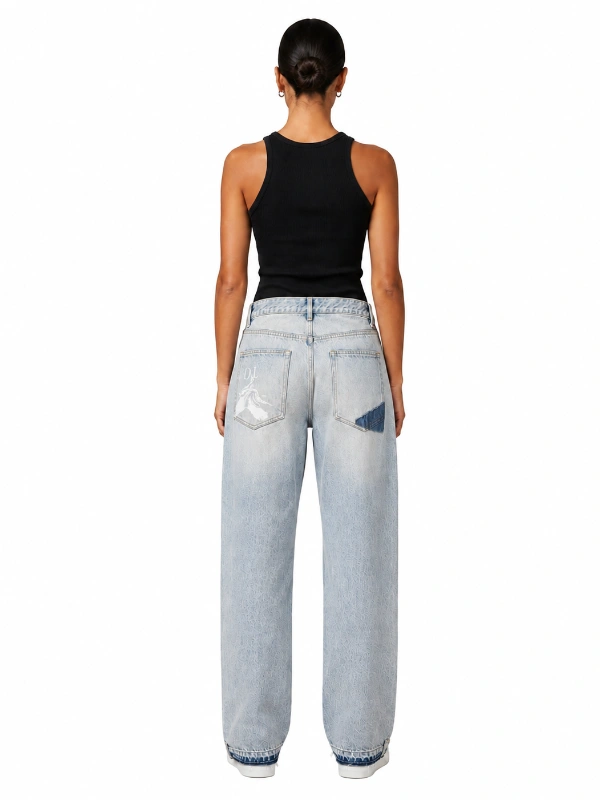
A washed denim garment is not expected to look as uniform as a solid piece-dyed trouser. Indigo yarn character, seams, folds, pocket bags, bartacks and different panel orientations all influence how a garment loses colour. A whisker, marble effect or edge abrasion can be the design. The same visual mark, in the wrong position or at the wrong intensity, can be a defect.
Three documents should settle the distinction:
- The approved physical standard: a sealed garment showing actual colour, contraste, mão, abrasion and dry-process placement.
- The written specification: measurable tolerances for shade, dimensions, twist, strength, fastness, recovery and workmanship.
- An approved variation board: boundary samples or images showing the lightest, darkest and most aggressive acceptable appearance.
A phone photograph is not a reliable colour standard. Display settings, automatic white balance, exposure and ambient light all change the result. Photographs are useful for traceability and location, while physical standards and controlled instrumental or visual assessment determine acceptance. O denim wash development process should create these references before the purchase order moves to bulk.
The Seven-Source Root-Cause Model
Calling every problem a laundry fault usually delays the answer. Start by placing the evidence into seven possible source groups.
| Source | Typical variables | Evidence to collect |
|---|---|---|
| Tecido | Dye lot, shade band, weight, construção, skew, terminar, sanforisation, stretch and recovery | Roll map, shade blanket, mill test report, retained fabric and pre-wash test results |
| Pattern and cutting | Panel direction, grain line, nap direction, marker mixing, bundle identity and replacement panels | Marker, bundle tickets, roll-to-panel traceability and recut record |
| Sewing and construction | Seam type, densidade do ponto, fio, tension, needle damage, panel easing and reinforcement | Pre-wash garment, seam audit and needle-control record |
| Dry process | Laser file, template, position, intensity, raspagem, moagem, hand sanding and local chemical application | Operator, station, file revision, placement measurement and before-wash photograph |
| Wet process | Recipe revision, sequence, dosing, água, pH, temperatura, time, load, rotation and bath exchange | Machine log, dosing record, chemical lot, sample checkpoints and alarm history |
| Extraction and drying | Residual moisture, extraction force, unloading delay, dryer load, temperatura, time and cooling | Moisture reading, dryer chart, load weight and timestamps |
| Finishing and packing | Pressing, tint fixation, armazenar, luz, ozone exposure, packaging chemistry and container conditions | Packing material lots, warehouse map, dates, retained packed sample and transport record |
This framework also stops false corrective actions. If only garments cut from one fabric roll twist, changing the wet recipe for every roll is unlikely to solve the source. If five fabric rolls pass in four machines but fail in one machine, investigate equipment, dosing and load history before blaming the cloth.
Denim Wash Defect Troubleshooting Matrix
The matrix below is a diagnostic starting point. Several causes can create a similar mark, so confirm the mechanism before authorising rework.
| Defect or symptom | Likely causes | How to confirm | Control or corrective direction |
|---|---|---|---|
| Back staining or dull blue cast | Released indigo redeposits because bath exchange, lavagem, dispersing action, water condition or load movement is inadequate | Compare light areas, embolsar, seam valleys and the passing standard; review drainage and rinse history | Isolate the process stage, validate rinsing and anti-redeposition control on a pilot, and avoid blind additional bleaching |
| Hard crease or rope mark | Garment remains folded while wet; overloading, poor wet-out, restricted movement, abrupt thermal or chemical action | Map line direction and frequency by machine position and load; open seams and folds for comparison | Correct load and movement, sequence wet-out and chemistry, review ramp and extraction, then trial a small load |
| Uneven wash or patchiness | Uneven mechanical action, dosing, spray application, load ratio, garment entanglement or mixed fabric response | Compare panel zones, machine loads, operator stations, fabric rolls and recipe timestamps | Standardise load, dosing and dry-process placement; segregate fabric shade bands |
| Wash streaks or bands | Original yarn or finishing streak, folded exposure, local chemistry, spray marks, laser banding or machine contact | Check unwashed fabric and defect direction; repeat at controlled orientation | Determine whether the mark begins in fabric, dry process or wet process before changing the recipe |
| Panel-to-panel shade mismatch | Different fabric rolls or shade bands, recut panel substitution, mixed face direction, coating or finish variation | Trace each panel to roll and bundle; inspect seam-adjacent panels under controlled light | Cut and bundle by shade band; restrict replacement panels to compatible material |
| Lot-to-lot shade drift | Recipe revision, machine difference, load weight, chemical strength, água, time, temperature or drying change | Plot measured shade and visual grade by chronological load | Use a first-load release, controlled recipe revision and defined adjustment authority |
| Over-abrasion, pinholes or tears | Excessive mechanical or chemical action, weak incoming fabric, aggressive local grinding or sharp machine surface | Locate damage, test retained fabric and post-wash strength, inspect equipment contact points | Remove the damaging source and prove residual strength before any cosmetic repair |
| Weak or missing whiskers | Laser or template misalignment, low contrast, inconsistent hand sanding, pattern or size-position change | Measure from fixed garment landmarks and compare dry-process records by size | Lock artwork revision, size-specific placement and intensity; approve before wet processing |
| Pocket shadow or label shadow | Layering blocks abrasion or chemistry; removable label or pocket shape changes after wash | Compare front and reverse at the exact hidden component position | Decide whether shadow is intentional; revise component sequence or wash standard if not |
| Excessive shrinkage or growth | Fabric relaxation, unstable finish, stretch construction, laundering severity, drying or measurement inconsistency | Measure marked points before and after the specified conditioning and cycles | Set fabric and garment limits, correct pattern allowance, and control process conditions |
| Leg twist | Fabric skew change, yarn torque, panel grain, asymmetrical shrinkage, cutting or seam construction | Compare roll skew, cut-panel grain and garment seam position before and after laundering | Control fabric skew, marker direction and pattern compensation; do not treat it as shade rework |
| Knee bagging or seat growth | Poor recovery, heat or chemistry damage, insufficient construction stability or over-stretching during finishing | Compare fabric stretch and recovery before and after wash; conduct garment wear or extension checks | Revise fabric, finishing severity and handling; validate repeated-cycle recovery |
| Seam opening or thread damage | Low seam margin, weak thread, needle damage, poor stitch balance, chemical attack or excessive abrasion | Inspect failure mode and seam allowance; separate thread break from fabric rupture | Correct construction and wash exposure, then repeat seam and strength tests |
| Yellowing after wash or packing | Residual chemistry, heat, armazenar, ozone, optical effects or phenolic interaction with packaging | Compare unpacked and packed retains; review location, packaging lots and exposure | Identify the yellowing mechanism before changing chemistry; validate packaging and storage |
| White chemical spots | Undiluted local contact, splash, incomplete dissolution, dosing point exposure or contaminated handling | Inspect spot edge, repetition and location; audit chemical preparation and dosing path | Correct dilution, transfer and machine addition; treat severe fibre damage as non-repairable |
| Metal staining or corrosion | Trim finish incompatible with laundry chemistry, galvanic contact, residual moisture or insufficient protection | Identify the metal and finish lot; inspect colour transfer around each component | Approve trims in the actual wash route and control drying and packing moisture |
| Print, patch or embroidery damage | Wrong application sequence, poor cure or adhesion, incompatible backing, shrinkage mismatch or abrasion | Compare component lots and application sequence; measure dimensional mismatch | Approve decorated panels or garments through the full production wash before bulk |
| Residual odour or harsh hand | Incomplete rinse or neutralisation, finishing excess, overdrying, contamination or unsuitable softener application | Check process records, extract pH under the specified method, moisture and retained samples | Correct the responsible stage; confirm chemistry, hand and performance after any reprocessing |
Back Staining: When Removed Indigo Returns to the Garment
Back staining is the redeposition of indigo or other released colour onto areas that should remain cleaner. It can reduce contrast in whiskers, cast blue onto weft yarns, pocket bags or labels, and make a vintage wash look flat. The defect is often most visible beside high points and in pale components, but the root cause lies in the behaviour of the whole bath.
The investigation should review:
- incoming dye depth and how much indigo the chosen process releases;
- actual load weight, garment movement and liquor conditions;
- water hardness, contamination and bath carry-over;
- chemical identity, concentration, age and dosing sequence;
- drain performance, bath exchange and each rinse endpoint;
- temperature and time profile rather than only the set value;
- delay between process stages and whether garments sit in a dirty bath;
- differences between laboratory, sample and bulk machinery.
A stronger bleach is not a universal correction. It may recover brightness while increasing fibre damage, reducing tear strength or widening shade variation. First reproduce the defect at pilot scale. Change one meaningful factor at a time, record the result, and keep an untreated control. If a corrective wash is commercially necessary, approve it against the complete product specification, not colour alone.
Crease Marks, Rope Marks and Fold Lines
A crease mark forms when a folded area receives different chemical or mechanical exposure from the surrounding cloth. It may appear as a bright line, dark rope, double edge or irregular branch. Stretch denim and lightweight fabrics can be particularly sensitive because a sharp wet fold changes local extension and contact.
Map the marks before diagnosing them. A line that follows a repeatable machine contact point suggests different action from random folded marks distributed through an overloaded batch. A defect found only in one size may relate to garment volume or dry-process placement. A mark that already exists on the unwashed blank is not created by the wet wash, even if the wash makes it more visible.
Useful controls include confirming machine capacity for the actual garment style, weighing every load, ensuring complete wet-out, preventing long stationary delays, reviewing chemical addition and temperature transition, and checking extraction and unloading. A correction should be demonstrated on garments from the same fabric roll and sewing lot. The goal is not simply to hide the line; it is to prove that the proposed extra treatment does not create new shade, measurement or strength failures.
Uneven Shade, Wash Streaks and Panel Mismatch
Shade variation has several scales. A garment can differ from the approved standard, one panel can differ from its neighbour, one side can differ from the other, garments inside a load can differ, or consecutive loads can drift. Recording only “shade fail” loses the evidence needed to find the source.
Panel mismatch usually begins before laundry
Trace the front, back, yoke, waistband and pocket pieces to their fabric roll and shade band. Replacement panels are a common weak point: a recut part may be physically correct but come from an incompatible roll. Face direction, grain direction, revestimento, resin distribution and side-to-centre shade can also become more obvious after washing. O denim fabric inspection plan should therefore connect roll shade to cutting and bundle identity.
Process streaks need location evidence
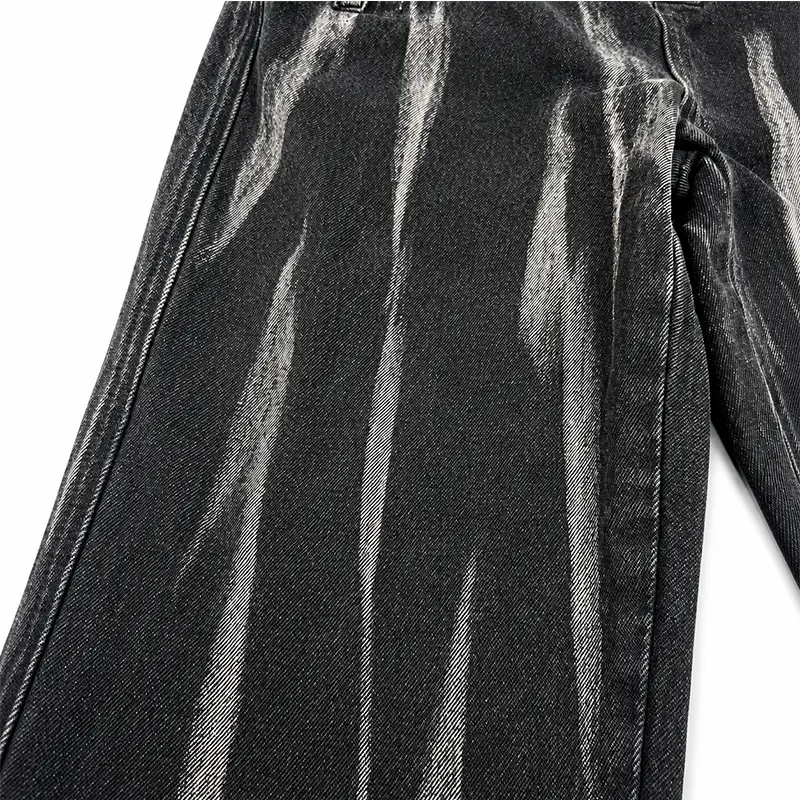
Do not describe a streak only by colour. Record its direction, length, width, edge, repeat, panel position and whether it crosses a seam. A warp-direction band that continues through an unwashed retained fabric points toward material. A local bright stripe with a sharp edge may indicate dry process or chemical contact. A broad fold-shaped band may point toward garment movement. This evidence turns a visual argument into a testable cause.
How to Measure Denim Wash Shade Consistently
Visual and instrumental assessment answer related but different questions. Trained visual review sees placement, character, seam contrast and overall harmony. Instrumental readings help quantify colour at a defined point. Neither works when sample conditioning, fold, backing, aperture, measurement position or lighting changes between readings.
A practical shade protocol should state:
- the sealed physical standard and its revision;
- conditioning time and environment;
- light sources and viewing booth condition;
- garment orientation and measurement zones;
- instrument geometry, aperture, illuminant and observer settings;
- number of readings and how textured areas are averaged;
- the buyer’s Delta E formula and limit, if instrumental tolerance is used;
- visual boundary samples for character that one colour number cannot describe.
There is no universal Delta E limit that makes every washed jean acceptable. A speckled acid wash can produce unstable readings from one small aperture, while a clean dark rinse may justify a tighter instrumental window. The brand should determine the tolerance from product risk, repeatability studies and approved visual boundaries.
Encolhimento, Growth and Leg Twist After Washing
Dimensional change is not a single overall percentage. Measure each named garment location, including waist, quadril, coxa, costura interna, outseam, front rise, back rise, hem and any design-critical panel. Mark the method, measurement tension, conditioning and number of cycles. A result taken hot from the dryer should not be compared with a conditioned approval sample.
The basic dimensional-change calculation is:
Dimensional change (%) = (after measurement – before measurement) / before measurement × 100
If an 80.0 cm inseam measures 77.2 cm after the specified cycle:
(77.2 – 80.0) / 80.0 × 100 = -3.5%
The negative sign indicates shrinkage. If a 40.0 cm half-waist becomes 40.8 cm, the result is +2.0% growth. Report direction and location instead of writing only “within 3%.” The current AATCC TM150 provides procedures for dimensional changes of garments after home laundering; the selected care procedure and acceptance limits still belong in the buyer’s specification.
Leg twist requires its own investigation. Fabric skew change, yarn torque, panel grain, pattern shape and sewing all contribute. Check fabric and cut panels before wash, then measure the garment after the specified cycle. AATCC TM179 addresses change in fabric skew after home laundering. O denim shrinkage and leg-twist guide explains how to connect that fabric behaviour to pattern and garment approval.
Stretch Loss, Poor Recovery and Elastane Damage
A garment can pass shade review and still fail on the body. Stretch describes extension under a stated force; recovery describes what remains after the force is removed and after a defined rest. They are not interchangeable. Fabric with high stretch but weak recovery may bag at the knee or seat, and excessive heat or aggressive chemistry can worsen the loss.
Compare retained unwashed fabric, approved washed sample and bulk garments under the same test. Record:
- fibre composition and elastane system;
- peso do tecido, construction and finishing route;
- extension load or method, hold time and recovery interval;
- growth after a defined extension;
- results before wash, after production wash and after repeated care cycles;
- dryer conditions and any heat-setting history;
- garment-level bagging at knee, seat and waistband.
O denim stretch recovery guide provides a fuller sourcing and test framework. For bulk troubleshooting, the important discipline is comparison: do not mix results from different loads, rest periods or specimen directions.
Strength Loss, Holes and Seam Damage
Vintage character does not remove the requirement for usable strength. Local grinding, oxidising stages, enzyme action, repeated wet processing and aggressive mechanical action may expose weak yarns or reduce residual strength. The first visible hole may be a symptom of fabric already near its limit rather than a single operator mistake.
Measure the incoming material and the approved washed state so the brand knows both absolute strength and retention. Por exemplo, if the agreed test reports 420 N before wash and 315 N after the production route:
Strength retention = 315 / 420 × 100 = 75%
Seventy-five percent is an observation, not an automatic pass. The buyer must set the minimum absolute result and any retention requirement for the end use. ASTM D5034-21(2025) covers grab breaking strength for many textile fabrics, while ASTM D1424-25 covers falling-pendulum tearing strength for applicable fabrics. Method suitability matters, especially for high-stretch constructions.
When a seam fails, inspect the failure mode. Broken thread, seam slippage, needle-cut yarns, fabric rupture beside the stitch and insufficient seam allowance require different actions. Review the denim seam construction specification before asking the laundry to hide a construction fault.
Yellowing, Residual Odour and Change During Storage
Yellow discolouration is a description, not a diagnosis. It may be linked to residual process chemistry, heat, luz, ozone, finishing products, optical effects or packaging. Phenolic yellowing is one specific mechanism. ISO 105-X18:2007, confirmed as current in 2021, assesses the potential of textile materials to phenolic yellowing and explicitly does not cover every other cause of yellow discolouration.
Preserve three retains when yellowing risk matters: an unpacked garment, a garment packed in the production materials, and a control packed with an approved alternative. Record storage duration, temperatura, location and packaging lot. If only packed garments change, the evidence is stronger than a debate based on memory. If both packed and unpacked garments change, continue the investigation upstream.
For residual odour or harsh hand, collect objective process information before adding perfume or softener. Check rinse and neutralisation records, drying, moisture, contamination and the buyer’s specified extract-pH or restricted-substance method. A cosmetic masking treatment can create a new compliance or performance problem.
Hardware, Patches, Prints and Embroidery in the Wash
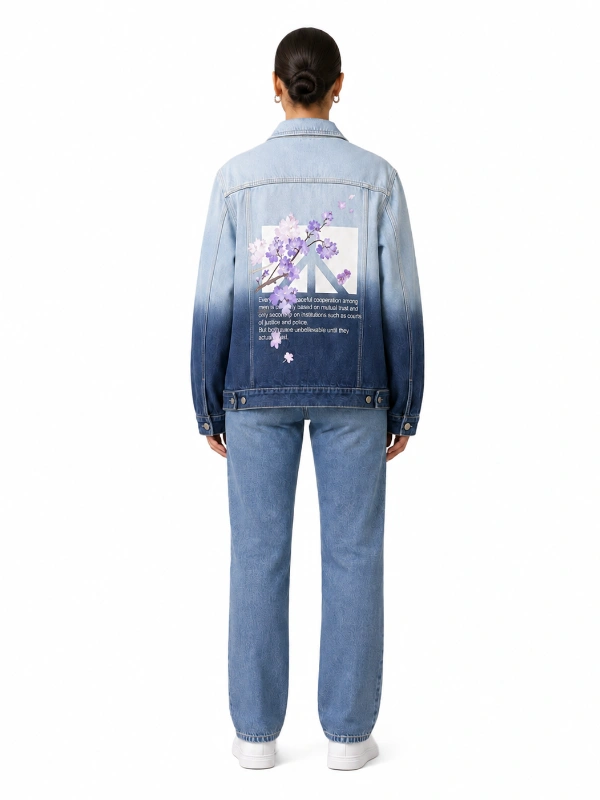
Every attached component changes the wash. Tack buttons and rivets may corrode or stain nearby fabric. Leather and paper patches can shrink, harden, bleed or distort. Prints may crack or lose adhesion. Embroidery backing can shrink differently from denim, producing puckering. Labels and pocket bags expose back staining early because their lighter surfaces make transfer obvious.
Approve components on the actual garment, in the actual application sequence and through the complete wash route. A supplier certificate for an unattached button does not prove performance after installation, processamento úmido, drying and packing. O denim hardware guide covers attachment, plating and test considerations. The tech pack should also specify whether removable components are attached before or after washing and how replacement affects shadow or colour.
Laundry Process Records That Reveal the Cause
A recipe name such as “Vintage Blue 03” is not a process record. Two loads can use that name and receive different treatment. No mínimo, retain the following for every bulk load:
- purchase order, style, colour, size mix and garment quantity;
- artigo de tecido, mill lot, roll or shade-band composition and sewing lot;
- dry-process station, operator, artwork or template revision and completion time;
- wash recipe number and controlled revision;
- machine ID, rated capacity and actual dry load weight;
- water source and agreed quality checkpoints;
- chemical product, supplier, lot, concentration or preparation and actual dose;
- sequence, addition time, bath temperature and pH checkpoints where relevant;
- rotation, time, alarms, manual interventions and stoppages;
- drain and rinse sequence, extraction and unloading time;
- dryer ID, load, temperature profile, time, cooling and final moisture where specified;
- in-process sample result and name of the person who released the load;
- final shade group, medições, inspection result and disposition.
Record actual values, not only set points. A controller may show the programmed temperature while a sensor, steam valve or load condition produces a different profile. Calibrated measuring devices and preventative maintenance are part of wash quality control, not an engineering detail outside the quality system.
Worked Example: A 600-Piece Shade and Crease Investigation
Assume a brand orders 600 rigid-denim jeans split into five wash loads of 120 pedaços. The approved defect rule in this example is buyer-defined: no more than 5.0% garments with any major wash appearance defect in a load, zero holes, and no critical shade departure from the approved boundary. These are illustrative values, not industry standards.
| Load | Machine | Recipe | Back stained | Hard crease | Any major defect | Rate |
|---|---|---|---|---|---|---|
| UM | W02 | R05 | 2 | 1 | 3 | 2.5% |
| B | W02 | R05 | 3 | 2 | 5 | 4.2% |
| C | W04 | R06 | 28 | 18 | 41 | 34.2% |
| D | W02 | R05 | 4 | 1 | 5 | 4.2% |
| E | W02 | R05 | 2 | 2 | 4 | 3.3% |
Count each affected garment once in the “any major defect” column even if it has both faults. The load defect rate is:
Load defect rate = affected garments / inspected garments × 100
For Load C:
41 / 120 × 100 = 34.2%
The lot total is 58 affected garments out of 600, ou 9.7%. That average is commercially useful but dangerous by itself. Loads A, B, D and E are each below the example limit; Load C is the clear outlier. It also differs in machine and recipe revision. The correct first action is to quarantine Load C and stop R06 on W04, not to rewash all 600 pedaços.
Investigation sequence
- Confirm that affected and passing loads used compatible fabric shade bands and sewing lots.
- Compare R05 and R06 line by line, including sequence rather than only total chemical quantity.
- Review W04 maintenance, dosing, drainage, temperatura, rotation and actual load weight.
- Map crease direction and back-stained zones on all 41 affected garments.
- Measure shade, dimensions and strength on representative passing and failing pieces.
- Create a pilot correction with 10 garments selected across defect severity, keeping untreated controls.
- Approve or reject the correction only after the complete specification is retested.
Suppose the record reveals that R06 introduced an unapproved sequence change and W04’s drain took longer than the validated machine. That is a plausible hypothesis, not proof. Reproduce the effect under controlled conditions, correct the drain condition, return to the approved recipe revision and verify the next first-off load. Only then can the team close the cause.
Corrective and Preventive Action for Wash Defects
A complete CAPA record separates four decisions that are often mixed together.
- Containment: identify, label and quarantine affected and potentially affected loads. Stop shipment and preserve evidence.
- Correction: decide what happens to the existing goods: accept by concession, sort, repair, controlled reprocess, downgrade, replace or reject.
- Root-cause action: remove the verified process or system cause, such as a wrong recipe revision, dosing fault, roll mixing or missing approval gate.
- Effectiveness check: prove that consecutive future loads remain within limits and that the action did not create another failure.
“Operator trained” is rarely sufficient by itself. If the operator could select an obsolete recipe, the system also needs revision control and access restrictions. If load weights were estimated, introduce a calibrated weighing and record step. If recut panels broke shade integrity, link recut authorisation to roll and shade-band identity. Good prevention changes the process that allowed the defect, not just the person standing nearest to it.
Wash Approval and Bulk Control Plan
A stable bulk wash is built in stages. The exact names differ by brand, but the decisions should be visible.
| Stage | Decision | Minimum evidence |
|---|---|---|
| Wash concept | Can the fabric create the intended look? | Wash panels or trial garments, initial risk notes and target references |
| Amostra de desenvolvimento | Are shade, mão, contrast and dry process direction correct? | Controlled recipe, photographs and sample comments |
| Fit or size-set sample | Do measurements and balance survive the wash across sizes? | Before-and-after measurements, fit review and pattern actions |
| Amostra de pré-produção | Is the complete product reproducible with bulk fabric, trims and construction? | Sealed standard, final tech pack, test report and recipe revision |
| Bulk pilot | Does production machinery reproduce the approval? | Defined pilot quantity, machine record, full inspection and test checks |
| First bulk load | Can routine production continue? | Rapid shade, aparência, measurement and process-record release |
| Ongoing loads | Is the process stable? | Load-level shade, defect trend, measurements and periodic laboratory checks |
| Inspeção final | Does the shipment meet the order? | Approved denim quality inspection and AQL plan, reports and traceable lot disposition |
Sampling should reflect risk. A new fabric, new laundry, high-contrast wash, stretch construction or complex decoration deserves more control than a proven repeat order. The first bulk load is not the time to discover that the laboratory sample and production machine behave differently.
What to Put in a Denim Wash Specification
O jeans tech pack should connect design intent to production evidence. Include:
- sealed physical wash standard, date and revision;
- lightest and darkest acceptable boundary samples;
- artigo de tecido, mill lot controls, shade-band and roll-traceability rules;
- approved recipe identifier and controlled revision access;
- dry-process artwork, size-specific placement, landmarks and tolerance;
- critical appearance zones and a photo defect library;
- instrumental shade protocol and buyer-defined tolerance where used;
- garment measurement points, condicionamento, cycles and limits;
- leg-twist, esticar, recovery, strength and colourfastness requirements;
- applicable current test methods and laboratory requirements;
- trim, imprimir, correção, label and embroidery wash-performance criteria;
- first-load sample quantity, approval authority and hold time;
- bulk inspection frequency and automatic escalation triggers;
- nonconformance, rework trial, concession and retest procedure;
- records retained for each machine load and the retention period.
Also state how commercial decisions affect cost and delivery. Rewashing adds handling, energy, água, chemistry and quality risk. Sorting consumes labour and may reduce usable quantity. A realistic custom jeans manufacturing cost model should include sampling, wash trials, testing and an agreed response to nonconforming lots rather than assuming every first pass will be perfect.
Release Checklist for a Corrected Wash Lot
- The affected population is identified by style, tecido, sewing lot, machine and load.
- Passing and failing samples are retained and labelled.
- The defect is defined by location, severity and frequency.
- The verified root cause is documented with evidence.
- The corrective trial includes controls and representative defect severity.
- The corrected shade matches the approved standard and boundary samples.
- Measurements and leg twist remain within written limits.
- Stretch and recovery remain acceptable for stretch products.
- Breaking or tear performance remains acceptable where required.
- Dry and wet rubbing, laundering colourfastness and staining meet the specification.
- Hardware, manchas, rótulos, prints and embroidery remain functional and visually acceptable.
- Residual chemistry, odour and hand meet the agreed requirements.
- Every reprocessed garment is re-inspected rather than assumed to pass.
- The recipe and work instruction are revised under document control.
- Consecutive future loads confirm that the preventive action is effective.
- An authorised buyer or quality representative releases the lot in writing.
For colour-transfer risk, combine production approval with the specified laboratory method. ISO 105-X12:2016 covers resistance to colour rubbing off and staining another material using dry and wet rubbing tests. O denim colourfastness testing guide explains how laundering, crocking and end-use contact should be written into one practical test plan.
Perguntas frequentes
What are the most common denim wash defects?
Common denim wash defects include back staining, crease or rope marks, uneven abrasion, shade variation, wash streaks, panel mismatch, holes, excessive shrinkage, leg twist, poor stretch recovery, seam damage, yellowing, chemical spots, corrosion and print or patch damage.
What causes back staining in denim washing?
Back staining occurs when colour released during processing redeposits on the garment. Contributing factors can include bath contamination, inadequate exchange or rinsing, ineffective dispersing or anti-redeposition control, water condition, load movement, timing and process sequence. The exact cause should be confirmed from load records and a controlled trial.
How can denim crease marks be prevented?
Control actual load weight, garment movement, wet-out, process sequence, temperature transition, extraction and delays. Map the marks by machine and load before changing the recipe, because fabric folds, machine contact and dry-process marks can look similar.
Why do denim panels become different shades after washing?
Panels may come from different fabric rolls or shade bands, face different directions, include an incompatible recut, or respond differently because of coating or finish variation. Roll-to-panel traceability and shade-controlled bundling are the first checks.
Can a defective denim wash be repaired by rewashing?
Sometimes, but not automatically. Rewashing can alter shade, dimensions, strength, recuperação de alongamento, trims and hand. A representative pilot must prove the correction against the full specification before the remaining lot is processed.
How is denim wash shrinkage calculated?
Subtract the before measurement from the after measurement, divide by the before measurement and multiply by 100. A negative result indicates shrinkage and a positive result indicates growth. Always state the measurement point, care cycle and conditioning procedure.
Is leg twist always caused by the laundry?
Não. Laundry reveals or increases twist, but fabric skew change, yarn torque, panel grain, pattern shape, cutting and seam construction can contribute. Compare fabric, cut panels and garments before and after the specified wash.
How should a brand control bulk wash shade?
Use a sealed physical standard, approved light and dark boundaries, controlled visual conditions, defined instrumental settings if applicable, first-load approval and load-by-load trend records. Keep fabric shade bands and recipe revisions traceable.
Which tests matter after an aggressive denim wash?
Depending on the product, check garment dimensions, twist, breaking or tear strength, stretch and recovery, dry and wet rubbing, laundering colourfastness, seam performance, trim durability and any buyer chemical requirements. Methods and limits must be stated before production.
What information should a wash defect report contain?
Record style, fabric and sewing lot, machine and load, recipe revision, defect type, exact location, quantidade, rate, photographs, medições, test results, suspected and verified cause, containment, correction, approval and effectiveness evidence.
Who should approve a denim wash rework?
The party named in the purchase order or quality plan should approve it, usually the brand’s authorised product or quality representative. The laundry should provide the pilot, records and retest evidence rather than processing the full lot on verbal permission.
How can buyers reduce denim wash defects before bulk production?
Approve bulk fabric, complete wash development, lock the tech pack and recipe revision, test the pre-production sample, validate production machinery with a pilot, approve the first load and retain load-level traceability through final inspection.
Conclusão final
Denim wash troubleshooting becomes manageable when each garment can be traced to material, construction and a recorded machine load. The strongest control is not a promise that variation will never occur. It is a system that detects drift early, isolates the affected population, proves the cause and prevents an uncertain correction from becoming a second defect.
Brands developing custom jeans, jaquetas, skirts or shorts can send Luokugg the fabric specification, referência de lavagem, target shade, quantidade do pedido, test protocol and delivery market through the formulário de cotação de jeans personalizado. Those inputs allow fabric approval, amostragem, production laundry controls and final inspection to be planned as one traceable process.