O peso do tecido jeans informa quanto pesa uma área quadrada de tecido; isso não te diz, por si só, se esse pano vai dar um bom par de jeans. Um jeans de 12 onças pode ser nítido ou flexível, compacto ou aberto, rígido ou altamente elástico. Pode manter uma silhueta de pernas largas limpa, desmoronar de forma atraente ao redor do sapato, ou tornar-se inesperadamente semelhante a uma placa após um acabamento de resina. O número só é útil quando é lido junto com o conteúdo de fibra, fio, tecer, esticar, acabamento, lavar e a roupa pretendida.
Essa distinção é importante no desenvolvimento de produtos. As marcas geralmente iniciam uma consulta com um número familiar, como 11 onças, então descubra durante a amostragem que o tecido está muito quente, mostra bolsas de bolso, perde os joelhos, resiste à lavagem pretendida ou torna a peça acabada mais pesada do que o cliente espera. The problem is rarely that the number was measured incorrectly. More often, the number was asked to answer questions that fabric weight cannot answer alone.
This guide explains ounces and GSM, practical weight ranges, rigid and stretch denim, product-specific selection, efeitos de lavagem, testing and bulk controls. It is written for fashion designers, private-label buyers, technical developers and sourcing teams that need to turn a fabric description into a repeatable commercial product.
O que o peso do tecido jeans realmente mede
O peso do tecido é a massa por unidade de área. As fábricas de jeans e de vestuário geralmente expressam esse valor em onças por jarda quadrada., escrito como oz/yd2 ou simplesmente oz. As especificações métricas usam gramas por metro quadrado, escrito como g/m2 ou GSM. Ambos descrevem a mesma propriedade física em unidades diferentes.
A medição é útil porque dá uma indicação rápida de quanto material está presente em uma determinada área. Muitas vezes se correlaciona com a substância, conforto térmico, opacidade e estrutura, mas essas relações não são absolutas. Peso não é espessura. Peso não é força. Não é rigidez, esticar, respirabilidade, suavidade ou durabilidade. Cada uma dessas propriedades depende de variáveis adicionais.
Considere dois tecidos que são testados em 12 onças. Pode-se usar compacto, fios finos em alta densidade e macios e firmes. O outro pode usar fios mais grossos com uma construção mais aberta e com textura. Um processo de amaciamento mecânico pode fazer com que um caia facilmente, enquanto um revestimento de superfície pode fazer com que o outro pareça rígido. Se o elastano for introduzido na trama, o mesmo peso nominal pode produzir novamente um perfil de ajuste e recuperação diferente.
O peso também precisa de um estado de produção definido. Um tecido tearstate ou cinza pode reter o dimensionamento e ainda não experimentou o mesmo relaxamento, dimensionamento ou acabamento conforme o tecido usado para corte. Um tecido acabado pode mudar novamente após a lavagem da roupa. Uma especificação útil, portanto, identifica se o valor declarado se aplica ao loomstate, tecido acabado ou material pós-lavagem. Sem essa nota, um comprador e uma usina podem reportar números diferentes enquanto ambos acreditam que estão corretos.
Como converter onças jeans em GSM
A conversão exata é baseada na área:
- GSM = onças/jarda2 x 33.9057
- onças/jarda2 = GSM x 0.0294935
Para abastecimento diário, 1 oz/yd2 é frequentemente arredondado para 33.9 GSM. O valor arredondado é adequado para comparar ofertas de tecidos, mas os registros laboratoriais e contratuais devem reter o resultado e o método testados, em vez de fazer engenharia reversa de uma unidade arredondada da outra.
| Onças por jarda quadrada | GSM aproximado | Impressão geral |
|---|---|---|
| 6 onças | 203 GSM | Leve e parecido com uma camisa |
| 8 onças | 271 GSM | Peso inferior leve |
| 10 onças | 339 GSM | Peso jeans leve a médio |
| 11 onças | 373 GSM | Peso comercial versátil |
| 12 onças | 407 GSM | Jeans mainstream substancial |
| 13 onças | 441 GSM | Jeans estruturado meio-pesado |
| 14 onças | 475 GSM | Empresa, personagem jeans |
| 16 onças | 542 GSM | Denim pesado especializado |
Não confunda onças de tecido com o peso da peça acabada. Um par de jeans usa mais de um metro quadrado de tecido, e seu peso total de envio inclui embolsamento, zíper, botões, rebites, rótulos, fio e umidade. O rendimento do tecido também muda com a largura utilizável, eficiência do marcador, proporção de tamanho e formato do padrão. UM 12 a especificação do tecido oz não é uma afirmação de que o jeans pesa 12 onças.
Um gráfico prático de peso de tecido jeans
Noções básicas de jeans CottonWorks descreve tecidos jeans acabados de aproximadamente 3.5 para 16.5 onças/jarda2, com pesos mais leves comumente usados para tops e camisas e pesos mais pesados usados para calças, jeans e jaquetas. Dentro dessa ampla extensão, as marcas podem usar as seguintes gamas como pontos de partida de desenvolvimento. Não são regras universais de produtos.
| Peso do tecido acabado | Personagem provável | Possíveis aplicações | O que verificar |
|---|---|---|---|
| 3.5-6 onças / 119-203 GSM | Muito leve, flexível, às vezes parecido com cambraia | Camisas, blusas, vestidos, forros e peças leves em camadas | Opacidade, deslizamento de costura, enrugamento e estabilidade após a lavagem |
| 6-8 onças / 203-271 GSM | Jeans leve e fácil de movimentar | Camisas de verão, vestidos, macacões, shorts soltos e camisetas macias | Cobertura, exibição de bolso, resistência ao rasgo e retração por lavagem |
| 8-10.5 onças / 271-356 GSM | Peso inferior leve com arrombamento mais suave | Jeans da moda, saias, shorts, coleções de clima quente e pernas largas e fluidas | Crescimento do joelho, recuperação de assento, resistência da costura e mão final |
| 10.5-12.5 onças / 356-424 GSM | Substância equilibrada, conforto e ampla usabilidade | Jeans convencionais, estilos de carga, saias, shorts e muitas jaquetas | Silhueta, wash response, mobilidade, espessura em costuras cruzadas e repetibilidade |
| 12.5-14.5 onças / 424-492 GSM | Estruturado, substancial e visivelmente parecido com jeans | Jeans vintage, pernas largas e rígidas, roupa de trabalho, jaquetas trucker e streetwear | Amansar, configuração de agulha e costura, lavagem, encolhimento e conforto do cliente |
| 14.5-16.5 onças / 492-559 GSM | Pesado, firme e fortemente estruturado | Calça jeans tradicional, jeans cru especializado, agasalhos e programas limitados de vestuário de trabalho | Capacidade da máquina, costura em massa, carregamento de lavagem, secagem, peso de envio e desgaste |
| Acima 16.5 onças / acima 559 GSM | Material especializado extrapesado | Produtos históricos de nicho e declarações baseadas em design | Disponibilidade, mínimos, configuração de hardware, dobrável, conforto e demanda realista |
A sobreposição é intencional. UM 10 tecido oz pode fazer jeans excelentes quando sua construção, força e recuperação combinam com o ajuste. UM 14 tecido de onça pode fazer uma jaqueta desconfortável se o ombro, cava e pacote de costura foram projetados para um tecido mais macio. A categoria do produto fornece orientação; a amostra física toma a decisão.
Por que dois jeans de peso igual podem se comportar de maneira diferente
Tamanho do fio e caráter giratório
O peso do tecido pode ser aumentado com fios maiores, mais fios por área, ou uma combinação de ambos. Fios mais grossos geralmente criam uma superfície mais pronunciada. Fios finos compactados densamente podem criar uma aparência mais limpa, rosto mais tenso. Fiado em anel, open-end and deliberately irregular slub yarns also change texture, abrasion and the way the indigo reveals the yarn core during washing.
Yarn twist influences firmness and abrasion response. A fabric with a soft, irregular yarn can wash down differently from a smooth fabric even when both share the same weight. This is one reason a supplier cannot reliably copy a wash simply by matching oz and color.
Ends, picks and cover
Ends per inch describe warp-yarn density; picks per inch describe filling-yarn density. Along with yarn size and weave, they determine how compactly the surface is covered. A denser fabric may resist air movement, hide pocket bags and hold a clean silhouette. A more open structure may feel flexible but can expose seam allowances or become unstable under aggressive finishing.
Tecer
O jeans clássico com cara de urdidura costuma usar 3 x 1 ou 2 x 1 sarja, enquanto a sarja quebrada e outras construções alteram a direção e o comportamento da superfície. UM 3 x 1 a construção pode criar uma face diagonal pronunciada e substancial. Um isqueiro 2 x 1 a construção pode produzir um equilíbrio diferente de cortina, cobrir e lavar personagem. Weave deve, portanto, aparecer na aprovação do tecido, não apenas a palavra genérica “jeans.”
Grossura, compressão e acabamento
Um tecido volumoso pode ser grosso sem ser excepcionalmente pesado. Um tecido compacto pode ser relativamente pesado e ao mesmo tempo permanecer visualmente plano. Calendário, sanforização, resina, amaciante, escovação e compactação mecânica mudam de mão e espessura sem necessariamente mover o peso o suficiente para explicar a diferença. Compradores que precisam de um acolchoado, efeito nítido ou fluido deve escrever esse alvo sensorial separadamente.
Umidade e condicionamento
As fibras têxteis trocam umidade com o ar circundante, portanto, amostras pesadas em condições diferentes podem produzir resultados diferentes. ISO 139 define atmosferas padrão para condicionamento e teste de têxteis. Para uma comparação contratual, as partes devem concordar com o método de teste, estado e condicionamento da amostra, em vez de colocar uma amostra de escritório em uma balança de cozinha.
Rígido, Jeans Comfort-Stretch e High-Stretch
O peso do tecido não revela desempenho elástico. Um rígido 11 oz jeans de algodão e um 11 oz jeans de algodão-elastano pode exigir padrões diferentes, facilidade, configurações de costura e instruções de cuidados. As questões relevantes são até onde o tecido se estende, quanta força é necessária, quão bem ele retorna e como essas propriedades mudam após o acabamento e a lavagem.
Jeans rígido
Jeans rígido geralmente significa que nenhuma fibra elástica está sendo usada para criar alongamento mecânico deliberado. Ainda pode relaxar, moldam-se ao usuário e crescem sob carga. O valor depende da construção, fio, acabamento e uso. Tecidos rígidos ficam retos, relaxado, solto, direções de vestuário de trabalho e herança, onde a estrutura e os padrões de desgaste autênticos são fundamentais para o produto.
Alongamento de conforto
O jeans stretch confortável oferece movimento suficiente para reduzir as restrições, mantendo uma aparência reconhecidamente estruturada. Pode ser útil para cós justos, jeans retos, ajustes finos e produtos comerciais que precisam de ampla usabilidade. O padrão ainda deve ser desenvolvido para a extensão e recuperação reais, não adicionando a mesma facilidade negativa usada para um jeans skinny de alta elasticidade.
Alta elasticidade e bi-stretch
High-stretch fabrics are designed for closer fits and greater body movement. They may contain elastane with polyester or other supporting fibers to improve recovery. The danger is selecting by hand stretch alone. A cloth that extends easily but recovers poorly can bag at the knee, seat and upper thigh. A fabric with strong retractive force can hold shape but feel restrictive even when its measured extension is high.
ISO 20932-1 describes strip-test methods for elasticity and related properties of fabrics. The brand does not need to put every standard number in consumer copy, but the technical team should define a repeatable test method and limits when stretch and recovery are essential to fit.
Composition percentages are not performance results. Two fabrics containing the same percentage of elastane can behave differently because the elastic yarn type, yarn placement, tecer, finishing and fabric density differ. Approve extension, growth and recovery data together with the fiber content.
Match Denim Fabric Weight to the Silhouette
A silhouette is the combined result of pattern geometry and material behavior. Changing weight after fit approval changes the product, even when every pattern piece remains identical.
Wide-leg and baggy jeans
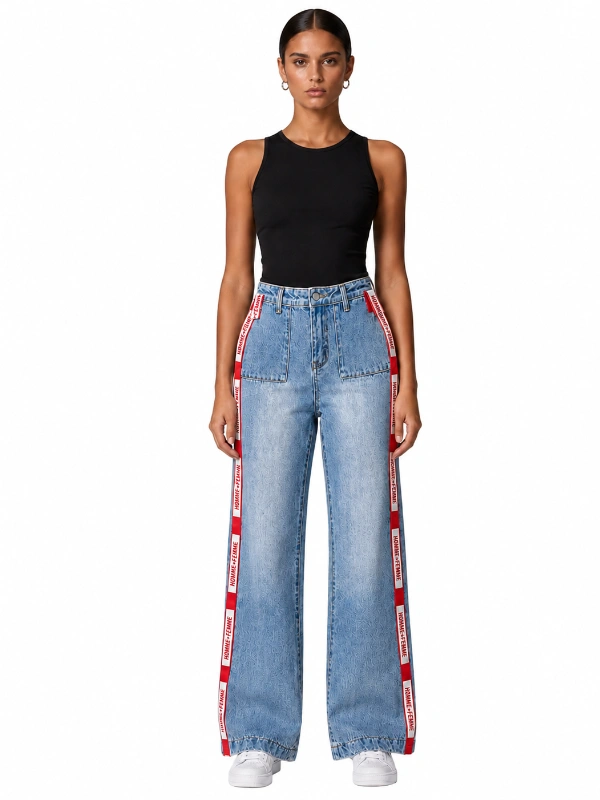
Wide-leg styles need enough body to show a deliberate line, especially through the hip and upper thigh. Yet a very stiff fabric can push outward at the side seam, create a tent-like leg and stack heavily at the hem. A softer midweight cloth can hang with cleaner vertical folds, while a structured mid-heavy cloth can create a stronger streetwear shape. Neither outcome is wrong; the brand needs to choose it.
Large legs also consume more material, which increases garment and shipment weight. When the design includes cargo pockets, double knees, facings or layered panels, evaluate the complete garment instead of assuming the shell-fabric number represents wearer comfort.
Straight and relaxed jeans
These fits tolerate a broad weight range. A lighter fabric creates an easy, worn-in impression, while a heavier rigid fabric emphasizes construction and break-in. The deciding points are usually waist comfort, knee behavior, hem fall and whether the seat holds its shape after sitting.
Slim and skinny jeans
Close fits require mobility and recovery more than a particular oz value. Excess thickness can make crossed seams uncomfortable, while a thin fabric with weak recovery can look tired after short wear. Test the finished garment through sitting, climbing stairs, squatting and repeated wear. Check whether the waistband rolls, the knees remain extended or the inseam rotates.
Curved and sculpted fits
Contoured waistbands and shaped back rises rely on the relationship between pattern and fabric retraction. If the bulk fabric has more stretch or lower recovery than the sample fabric, the garment can fit correctly on first wear and loosen later. Specify performance limits and repeat the fit review after laundering.
For a systematic approval process, use the jeans fit sample and size-set guide together with the fabric data. Fit comments without a fabric identity are difficult to reproduce.
Choose Denim Weight by Product Category
Denim shirts and dresses
Light denim allows collars, sleeves and gathered details to move naturally. The trade-off is that seam puckering, opacity and shrinkage become more visible. Test whether plackets hang straight, buttonholes remain flat and the fabric is comfortable against the body. If a dress has a fitted waist or large patch pockets, the light shell may need local support.
Denim shorts and skirts
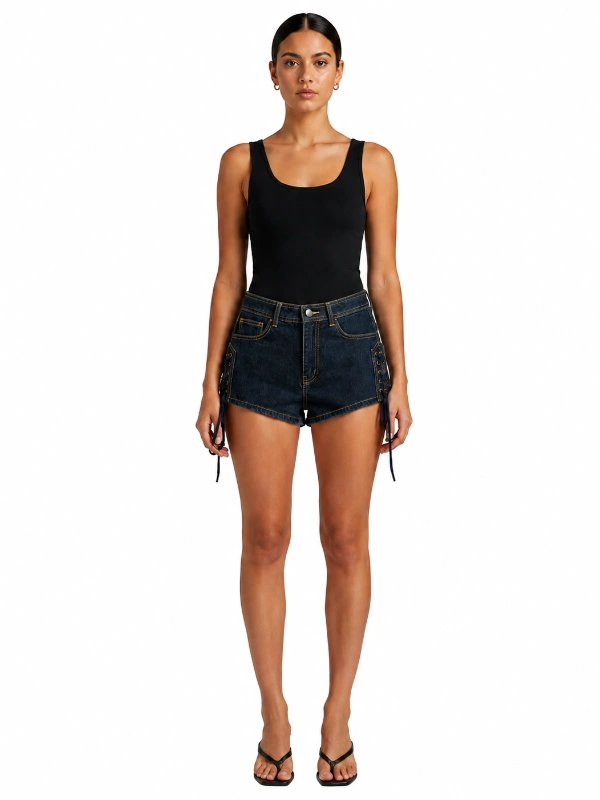
These products can use light, medium or heavy cloth depending on the design. A soft summer short needs mobility; a structured A-line skirt needs enough body to preserve its shape. Very light cloth can collapse around fly, pocket and waistband layers. Very heavy cloth can feel bulky where seam allowances cross at the crotch or side seam.
Jeans
Jeans have the widest practical range because the product can be fluid fashion, mainstream casual, rigid workwear or specialist raw denim. Start with customer expectation and fit. Then compare two or three fabric options inside a narrow range rather than ordering a sample from a number alone. A useful comparison keeps the pattern and wash direction controlled so the team can see what the fabric changes.
Denim jackets
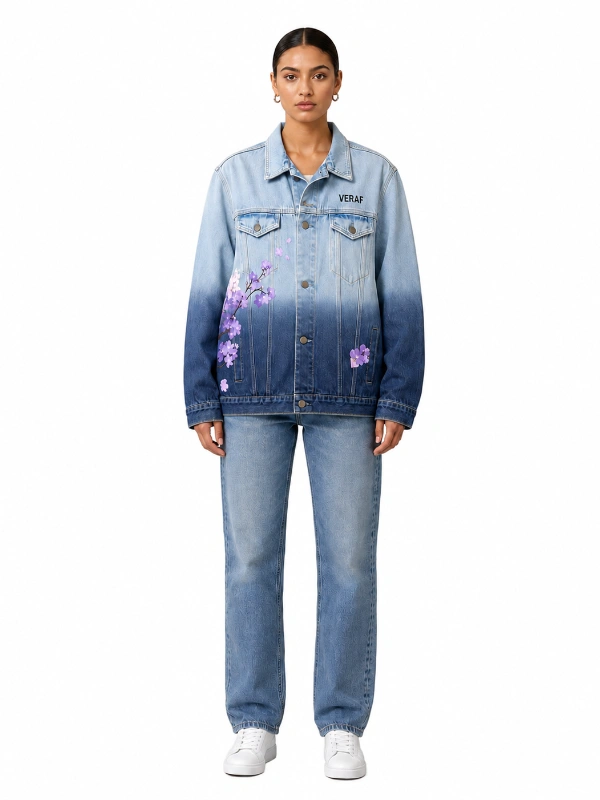
A trucker jacket needs enough structure for the collar, front placket, pocket flaps and waistband. It also needs enough flexibility for the armhole and elbow. Oversized jackets can accept more body, but the total garment becomes heavy quickly because of facings, bolsos, cuffs and multiple seam layers. Check the sample worn both open and fastened, with the intended base layer underneath.
Overalls and workwear-inspired products
Durability matters, but simply adding weight can reduce comfort and increase seam bulk without solving the actual failure point. Reinforcement layout, densidade do ponto, pocket design, bartacks, hardware and tear strength may matter more than moving from one nominal weight to another. Review the complete construction through the denim seam construction guide.
Raw and heritage denim
Raw-denim customers may actively value stiffness, visible twill, break-in and personal fading. Weight becomes part of the product story, but it should remain accurate. State whether the fabric is sanforized or unsanforized, give clear care and shrinkage information, and do not imply that maximum weight equals maximum quality. Brands developing this category can also review the raw denim fabric manufacturing guide.
Season, Climate and Wearer Expectations
Weight is a practical starting point for seasonal planning, not a complete thermal-comfort specification. A compact fabric can restrict air movement; an open construction at a similar weight may feel less enclosed. Fiber blend, ajustar, cor, finishing and garment layering also affect how the wearer experiences heat.
For warm markets, buyers often consider lower weights, relaxed fits, cropped lengths and softer finishes. That does not mean the lightest available fabric is best. A light black denim that becomes transparent under tension, or a loose jean that loses its shape after two hours, creates a different problem. Test coverage in daylight, movement, skin contact and post-wash stability.
Cold-season products can use more substantial denim, but a tight heavy jean may still feel less comfortable than a relaxed medium-weight one. Jackets must allow for the shirt, knit or sweatshirt customers will wear beneath them. If the range is sold globally, one fabric may not serve every climate. A brand can preserve the visual family while offering a lighter and heavier material version with honest product-page descriptions.
Customer expectation also depends on market position. A heritage customer may enjoy a firm first wear and months of break-in. A trend-led customer may interpret the same stiffness as poor quality. Material selection and merchandising language must tell the same story.
How Garment Washing Changes Fabric Weight and Behavior
Denim is often selected in one state and sold in another. Desizing removes material applied during weaving. Wet processing relaxes yarns. Shrinkage changes the area over which the remaining mass is distributed. Enzymes and abrasion remove surface fiber; resin and softeners can add material or change hand. Drying sets dimensions and moisture condition. The finished result can therefore differ materially from the cutting-room fabric.
If a fabric loses some mass but shrinks more in area, its measured GSM can rise. If a process removes substantial material or opens the construction, the result can move in the other direction. This is why a garment-wash specification should not promise that a pre-wash and post-wash number will be identical. Define which state is commercially important and measure that state consistently.
Rinse and desize
A rinse or desize treatment can soften loomstate cloth and reveal its true movement. It can also change shrinkage, skew and surface appearance. Dark styles that look almost raw still need post-process measurement and fit approval.
Enzyme and abrasion
Enzyme and mechanical abrasion can reduce surface hair, expose the yarn core and soften the hand. Aggressive processing may reduce strength at seams, pocket edges and distressed zones. A fabric chosen for its dry hanger feel can become much looser after the intended wash.
Bleach and heavy vintage finishes
Strong color removal and repeated mechanical action can change strength, hand and shade uniformity. Thick cloth is not immune. The exact fiber, dye route and process determine the result. Approve the wash on the actual bulk fabric article and review the guia de teste de resistência à cor do jeans when dark shades, pale trims or dye transfer are concerns.
Softener and resin
Softener can make a substantial fabric feel easier at first touch, but the brand should confirm durability through laundering. Resin can create a firm, shaped or wrinkle-set effect, yet may change strength, hand and care behavior. Sensory approval should be paired with performance limits.
Wash development should record the fabric lot, recipe version, carregamento da máquina, process sequence and approved appearance. A physical wash standard is more useful than an instruction such as “make 12 oz denim soft.” See the guia de desenvolvimento de lavagem de jeans for a fuller approval workflow and the encolhimento de jeans e guia de torção de perna for dimensional controls.
How Fabric Weight Affects Manufacturing and Cost
Heavier fabric usually changes more than the price per metre. It can affect spreading, corte, needle selection, thread balance, seam formation, pressing, lavar, secagem, packing and freight. Lighter fabric creates its own risks, including ply movement during cutting, seam puckering, show-through and damage around hardware.
Corte
Heavy plies reduce the practical lay height and increase cutting resistance. Very soft or elastic fabrics can shift between layers and require controlled relaxation before cutting. Usable width matters alongside weight because it influences consumption. A slightly higher-priced wide fabric may yield a lower garment cost than a cheaper narrow fabric.
Sewing
Needle size, point, thread ticket, stitch balance and machine feed should match the material and seam package. The critical location is often not one layer of fabric but six or eight layers where a belt loop, cós, yoke or felled seam crosses. Excess thickness can cause skipped stitches, dano à agulha, broken thread and uneven topstitching.
Hardware
Rebites, tack buttons and snaps need post lengths suited to the compressed material stack. Hardware that sets correctly on a lightweight sample may stand loose on bulk fabric, while a short post can cut or distort a thick waistband. Pull tests and appearance checks should use the actual production layers.
Washing and drying
Garment weight affects safe machine loading and process movement. Overloaded drums can produce uneven abrasion or shade. Dense garments retain more water and can require different extraction and drying controls. The laundry must develop the process by dry garment weight and machine capacity, not by piece count alone.
Packing and freight
A change of several ounces per garment becomes meaningful across thousands of units. Carton gross weight, carton strength, warehouse handling and freight cost may all change. The effect is especially visible in oversized jeans and jackets. Confirm packed dimensions and weight from a representative size ratio before finalizing logistics.
A heavier choice can be justified when it creates the right product. It should not be chosen as a shortcut for premium positioning. Material, construção, finish and consistency together create perceived quality.
Test Denim Fabric Weight Instead of Trusting a Label
A mill hanger is a useful sales reference, but a purchase specification needs a test method. ISO 3801 covers determination of mass per unit length and mass per unit area for woven fabrics, including stretch types. ASTM D3776/D3776M provides several options for determining fabric mass per unit area, including full pieces, full-width samples, small swatches and narrow fabrics.
The choice of specimen matters. A tiny swatch can confirm that swatch, but it may not represent variation across a roll or delivery. Selvage inclusion, sample location, conditioning and whether the result is based on finished or loomstate cloth must be consistent. For incoming inspection, select rolls and test positions according to the brand’s agreed sampling plan.
A practical laboratory or mill report should identify:
- fornecedor, mill article and lot number;
- fiber composition and fabric construction;
- test method and specimen option;
- conditioning procedure;
- whether selvages are included;
- individual results, average and unit;
- fabric state, such as loomstate, mill-finished or post-wash;
- date and laboratory identity.
Weight should be part of an appropriate performance package, not the only test. Dependendo do produto, the brand may also need fiber composition, usable width, tensile or tear strength, desempenho de costura, estabilidade dimensional, inclinar, colorfastness, abrasão, pilling, esticar, recovery and restricted-substance compliance.
How to Write a Useful Denim Fabric Specification
A useful specification makes the approved material identifiable and sets limits that can be verified. “Blue stretch denim, around 11 onças” leaves too much room for substitution. A working fabric section in the denim tech pack should include the following where relevant:
- mill and fabric article number;
- approved supplier and production country when controlled;
- fiber composition with an agreed test basis;
- finished mass per unit area in oz/yd2 and/or GSM;
- test method, sample state and agreed tolerance;
- usable cuttable width and full width;
- tecer, como 3 x 1 right-hand twill or broken twill;
- yarn or surface character, including slub direction if important;
- warp and weft stretch requirements;
- growth and recovery limits;
- approved base shade and face/back appearance;
- shrinkage and skew limits under the specified wash method;
- strength and seam-performance requirements;
- required certifications or traceability documents;
- sealed cutting, hanger or bulk-lot reference;
- substitution and reapproval rules.
Tolerance should be commercially realistic and technically meaningful. A zero-tolerance weight specification is rarely useful because sampling and production variation exist. An excessively wide tolerance can permit a different hand and silhouette. Agree the limit with the mill after reviewing historical capability, then determine what requires notification or resampling.
Do not approve a replacement because its test certificate falls inside the same weight range. Compare composition, construção, largura, sombra, esticar, recuperação, encolhimento, wash response and physical hand. A replacement fabric can meet the number and still require a new pattern or wash recipe.
A Reliable Denim Weight Selection Process
1. Write the product brief
Define the customer, climate, silhueta, faixa de tamanho, target retail position, wash direction and expected wearing experience. Use sensory language carefully: crisp, dry, compact, soft, fluid, substantial and broken-in describe different targets. Add photographs for visual direction, but do not expect a photograph to communicate weight or hand.
2. Compare physical cuttings
Request several candidate fabrics close to the target rather than one. Record article numbers immediately. View each cutting face and back, folded and held to light. Handle it flat, drape it over an edge and compress multiple layers. Check the data sheet, availability, mill minimum, lead time and continuity for repeat orders.
3. Make wash panels
A small panel will not reveal fit, but it can expose differences in shade loss, elenco, twill visibility, softness and surface character. Use the same process for each candidate. Eliminate fabrics that cannot reach the approved aesthetic without excessive treatment.
4. Make a garment sample
Use the intended pattern, seam construction, embolsar, trims and wash. Measure before and after processing. Review silhouette, mobilidade, skin feel, opacity, crossed-seam thickness and hardware setting. The sample must identify the exact fabric article and lot.
5. Conduct wear and laundering checks
A five-minute fitting cannot reveal knee growth, seat bagging, waistband pressure or drying behavior. Wear the sample through ordinary movement and repeat the intended care cycle. Compare measurements, shape and hand after rest. Formal testing and practical wear review answer different questions; use both.
6. Approve pre-production references
Seal the fabric cutting, washed garment, measurement chart and wash standard. Confirm bulk test data before cutting. Keep approval records linked to purchase order, estilo, color and lot. During final denim quality inspection, verify fabric identity and garment behavior against those references.
7. Preserve repeat-order knowledge
When a style sells, the brand needs more than its product photograph. Retain the mill article, test reports, shade references, wash recipe version, consumption, marker, approved sample and bulk comments. If the mill changes yarn or finishing, require review before treating the new lot as identical.
Common Denim Fabric Weight Sourcing Mistakes
Assuming heavier means better
Extra weight can add structure and perceived substance, but it can also add heat, stiffness, costura em massa, wash cost and freight. Quality means suitability and consistency. A well-engineered 9 oz summer jean can be better than a 15 oz jean that misses its customer.
Copying an ounce number from a competitor
Product-page numbers do not disclose construction, acabamento, tolerance or test state. The competitor’s fit, supplier and wash are also different. Use market products to define an experience, then build a specification from physical evaluation.
Confusing hand feel with weight
A soft fabric is not necessarily light, and a crisp fabric is not necessarily heavy. Ask for both the measured weight and the desired hand. Confirm the hand after the intended wash and laundering.
Approving an unwashed cutting for a washed product
The garment will be sold after finishing, so the finished sample is the commercial truth. A cutting is necessary for identification, but it cannot show final drape, medições, abrasão, softness or shade.
Ignoring recovery in stretch denim
Easy extension feels comfortable in the hand. Poor recovery appears later on the body. Define growth and recovery limits, conduct a wear trial and confirm performance after laundering.
Changing fabric after fit approval
Weight, esticar, thickness and drape interact with ease and balance. A new article can change the fit even if it has the same composition and oz value. Refit meaningful substitutions.
Failing to define the measurement state
Loomstate, mill-finished and garment-washed materials are not interchangeable records. Label every result and reference so the next order compares like with like.
Using an unrealistic tolerance
A requirement that no production process can hold creates repeated disputes. A limit so broad that the wearer notices the difference provides no protection. Set tolerance from product risk, test precision and supplier capability.
Denim Fabric Approval Checklist
- The intended customer, climate, silhouette and wearing experience are defined.
- The exact mill article and production state are identified.
- Oz and GSM refer to mass per unit area, not finished garment weight.
- The test method, conditioning and tolerance are agreed.
- Composition, tecer, usable width, stretch and recovery are documented.
- Physical cuttings from candidate fabrics have been compared.
- Wash panels use the intended process direction.
- A full garment has been washed, fitted and measured.
- Opacidade, mobilidade, knee growth and seat recovery have been checked.
- Crossed seams and hardware are compatible with the material stack.
- Encolhimento, inclinar, strength and colorfastness meet the product requirements.
- Bulk fabric identity and lot data are confirmed before cutting.
- Substitutions require written approval and appropriate retesting.
- The brand retains a sealed cutting and approved washed garment.
Perguntas frequentes
What is the best denim fabric weight for jeans?
Não existe um único melhor peso. Aproximadamente 10.5 para 13 oz is a versatile development range for many mainstream jeans, while lighter fabric can suit warm-weather or fluid styles and heavier fabric can suit structured, workwear or heritage products. Ajustar, construção, esticar, wash and wearer expectation should decide the final article.
How do I convert denim ounces to GSM?
Multiply oz per square yard by 33.9057 to obtain GSM. Por exemplo, 12 oz denim is approximately 407 GSM. To convert GSM to oz per square yard, multiply GSM by 0.0294935.
Is 12 oz denim heavy?
Twelve-ounce denim is generally a substantial medium weight rather than an extreme heavyweight. It is common in jeans and some jackets, but its comfort and structure still depend on weave, fio, acabamento, fit and stretch.
Is heavier denim better quality?
Não. Heavier denim contains more mass per unit area, but quality also depends on fiber, fio, construção, força, colorfastness, acabamento, consistency and suitability for the design. Unnecessary weight can reduce comfort and increase production and shipping costs.
What weight denim is suitable for summer jeans?
Many brands begin sampling summer jeans around 8 para 10.5 onças, often with a relaxed fit or softer finish. Climate, weave openness, composição, opacity, recovery and silhouette matter, so the final choice should be confirmed in a washed wear sample.
Does washing make denim heavier or lighter?
It can change the measured mass per area in either direction. Desizing and abrasion can remove material, while shrinkage reduces fabric area and may increase GSM. Added finishes and moisture condition also affect results. Compare values only when the fabric state and test method are defined.
Does denim weight determine stretch?
Não. Rigid and stretch fabrics can have the same nominal weight. Stretch, growth and recovery depend on fiber blend, elastic yarn, weave and finishing and should be measured separately.
Should denim weight be specified before or after washing?
Specify the state that controls the purchase and record both when the wash causes a meaningful change. Fabric procurement commonly uses a mill-finished value, while garment development should also document the post-wash result and approved garment behavior.
Why do two 12 oz denims feel different?
They may use different yarn sizes, spinning methods, ends and picks, tecer, fiber blends and finishes. Weight measures mass per area; it does not directly measure thickness, stiffness, cortina, suavidade, stretch or air permeability.
How should a brand approve denim fabric for bulk production?
Approve the exact mill article, test data, physical cutting, washed garment, measurements and wash standard. Confirm the bulk lot before cutting, and require reapproval when the supplier changes the article, construção, finishing or production source.
Conclusão final
Denim fabric weight is a decision filter, not a product verdict. Use ounces or GSM to define a controlled range, then judge the cloth through its construction, esticar, recuperação, thickness, wash response, silhouette and wearing experience. The most reliable approval is a documented fabric article connected to a washed garment that the brand has fitted, measured and worn.
Marcas desenvolvendo jeans customizados, jaquetas, shorts or skirts can send Luokugg the product reference, target customer, preferred weight range, composição, ajustar, direção de lavagem, quantity and delivery market through the formulário de cotação de jeans personalizado. A physical fabric comparison early in development is far less expensive than correcting the wrong hand, drape or stretch after bulk cutting.