Distressed Denim Jacket Manufacturing, Engineered in Detail.
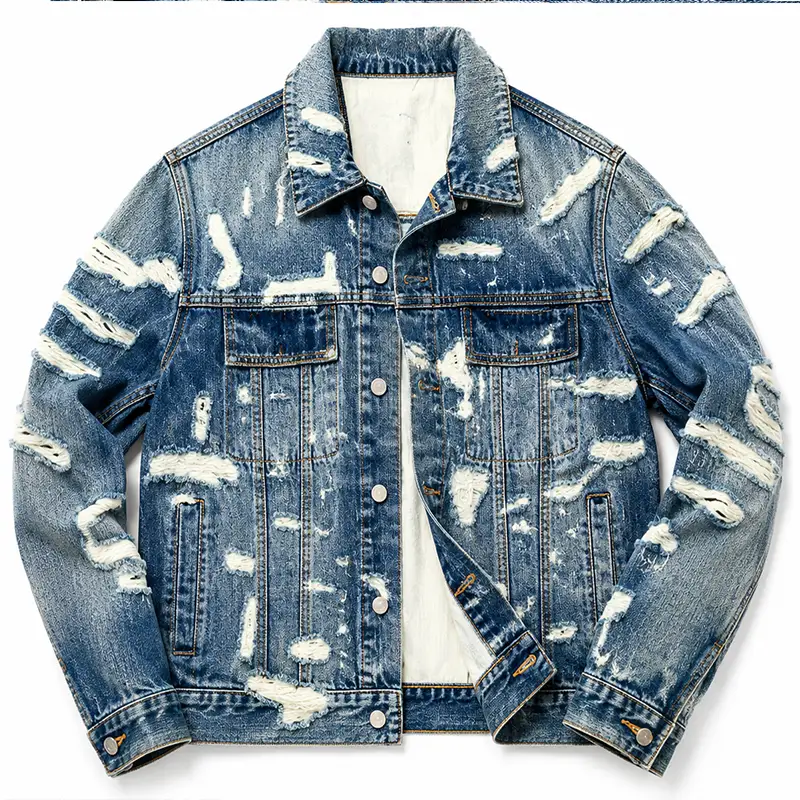
A heavily distressed denim jacket is not created by simply cutting random holes into finished fabric. It requires coordinated development across denim selection, engenharia de padrões, controlled abrasion, reinforcement patching, lavar, sewing and final quality control.
From our denim manufacturing base in Zhongshan, Guangdong, LUOKUGG develops complex distressed denim garments for fashion brands, streetwear labels, wholesalers and private-label collections. Every wash position, broken area, inside patch and seam structure can be adjusted according to your design direction.
This website does not offer individual retail purchasing. Minimum order quantity starts from 100 peças por estilo e cor.
Starting quantity per style and color
Typical development window after specifications are confirmed
Estimated after pre-production sample approval
Fabric, lavar, guarnições, labels and packaging customization
Final production time depends on fabric availability, distressing complexity, wash testing, order quantity and packaging requirements.
The Difference Between Random Damage and Controlled Denim Craftsmanship.
Commercial distressed denim must remain visually expressive while preserving the structural strength required for transport, fitting, merchandising and repeated wear. The process therefore begins before the first hole is made.
Distressing Position Mapping
Before production, the design is converted into a distressing placement map. Large openings, narrow scratches, abrasion marks, exposed white yarns and faded zones are assigned to specific garment panels.
The positions must also consider seam allowances, pocket construction, sleeve movement, button placement and the natural stress created when the jacket is worn.
Hand and Machine Distressing
Depending on the design, we combine controlled grinding, hand abrasion, corte, scraping and wash-related fading. Different tools produce different edge structures and levels of exposed yarn.
- Localized grinding for natural worn areas
- Manual scraping for irregular vintage texture
- Controlled cutting for larger distressed openings
- Edge reinforcement to slow uncontrolled tearing
Wash and Color Coordination
Distressing cannot be separated from washing. The shade of the denim, the contrast around seams, the softness of exposed yarn and the final vintage appearance are all affected by the wash formula.
Bulk production is approved against a confirmed wash standard so that the collection maintains a consistent commercial appearance.
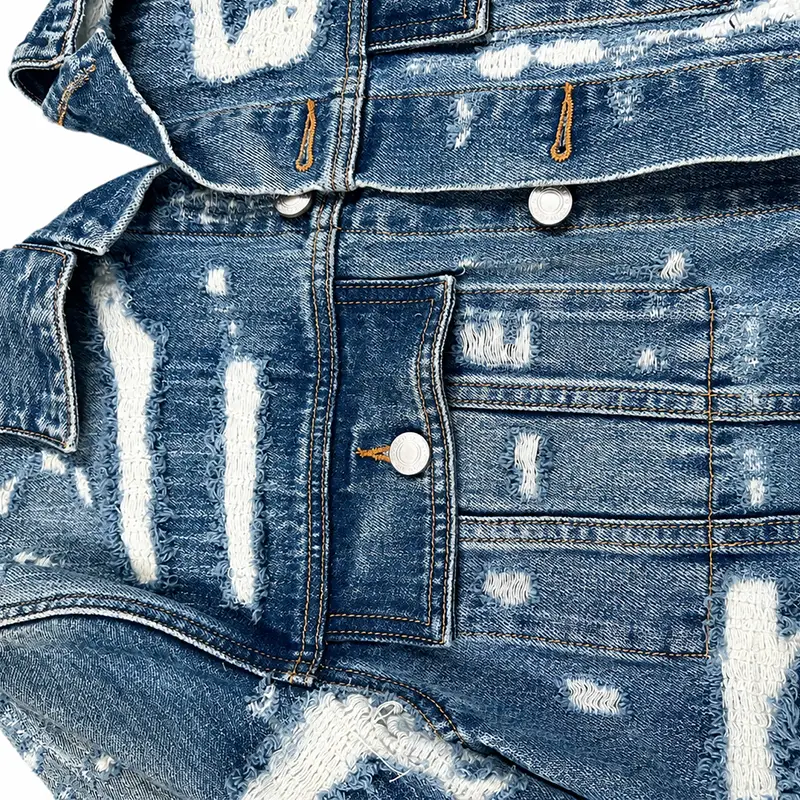
Distressing Must Work Around the Garment Structure.
Chest pockets, front plackets, buttonholes and major seams require more precise distressing control than flat garment panels. Excessive abrasion around these areas can weaken the garment or create irregular shapes during washing.
Pocket Alignment
Distressed positions are balanced around the flap, pocket opening and double-needle stitching.
Button Security
Button attachment areas remain structurally supported to reduce deformation during washing and repeated use.
Seam Protection
Distressing near major construction seams is controlled to preserve seam strength and garment shape.
Visible Destruction Outside. Comfort and Reinforcement Inside.
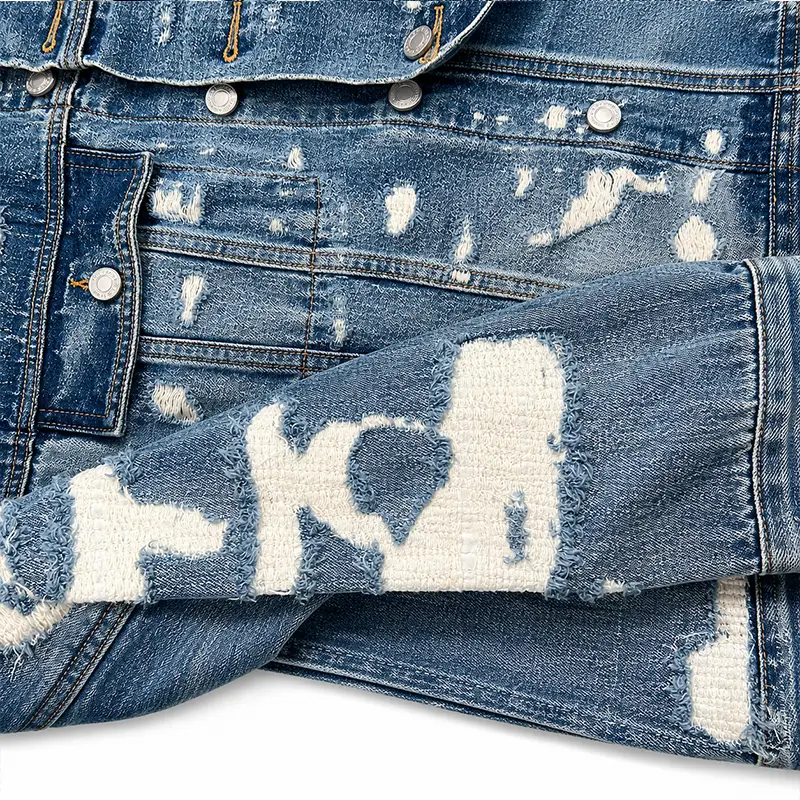
Heavy surface distressing can expose the wearer directly to rough yarn edges. The inside patch construction provides a softer contact layer while supporting the shape and stability of large distressed areas.
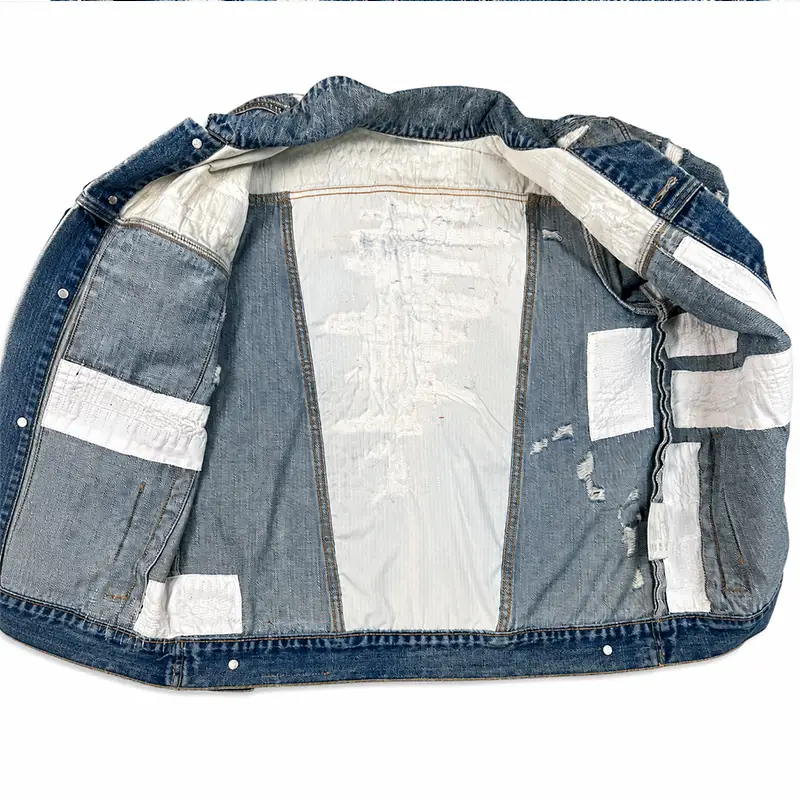
Patch reinforcement is part of the design, not an afterthought.
Internal fabric panels are positioned behind selected distressed zones before or during garment construction. The shape, thickness, stitch density and coverage are selected according to the size and location of each distressed area.
Reduces direct contact with rough distressed edges
Supports large or irregular distressed openings
Helps reduce uncontrolled expansion of damaged areas
Improves stability during washing and bulk handling
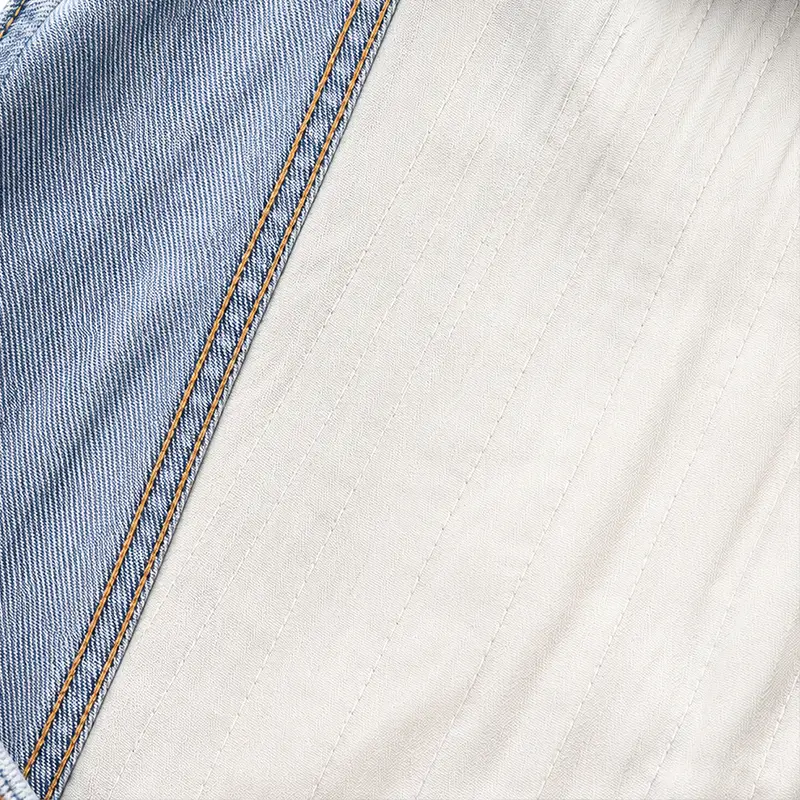
Full-Area Inner Support
Larger support areas can be applied behind major front and back panels when the design contains extensive distressing.
Patch Material Options
The reinforcement layer can be adjusted according to the target hand feel, cost, thickness and visual effect of the collection.
One Wash Standard. Multiple Distressing Zones.
A complex denim jacket contains different fabric directions, seam densities and panel sizes. The sleeves, back panel, front body, collar and pockets may react differently during washing.
Our development process evaluates each area separately while maintaining one consistent visual language across the complete garment.
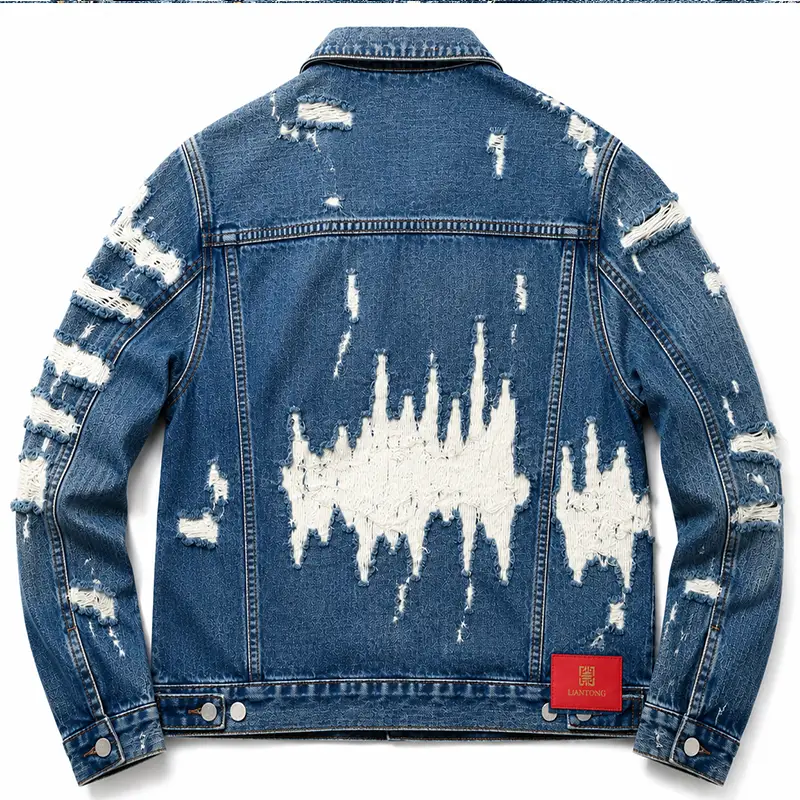
Why Complex Denim Development Benefits From a Concentrated Supply Chain.
Complex distressed denim requires repeated coordination between pattern making, de costura, angustiante, lavar, guarnições, labeling and quality inspection. Our location in Zhongshan, Guangdong allows these processes to be managed within the Pearl River Delta manufacturing network.
Denim Fabric Access
Faster comparison of different denim weights, shades, stretch levels and surface textures for sample development.
Experienced Wash Development
Coordination with specialized wash processes for vintage fading, enzyme effects, whiskering, abrasion and garment softening.
Distressing Craft Capability
Access to workers and production teams experienced in manual abrasion, grinding, scraping, cutting and repair structures.
Integrated Trims and Labels
Botões, rebites, remendos de couro, etiquetas tecidas, hangtags and packaging can be developed together with the garment.
Faster Sample Correction
Wash shade, hole placement, patch coverage and seam details can be reviewed and corrected before bulk production begins.
Export-Oriented Production
Development is organized around brand specifications, size charts, labeling requirements, packing standards and bulk inspection.
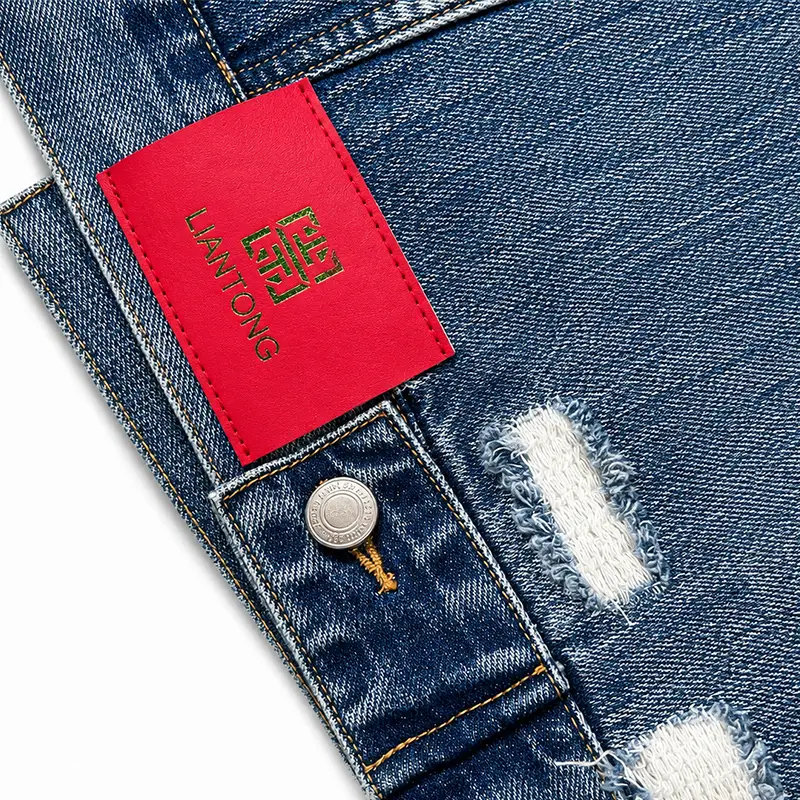
The Product Is Finished With Your Brand Identity.
The garment shown is a manufacturing reference. Brand names, artwork and labels can be replaced with your own private-label identity during development.
Custom shape, cor, embossing, printing and foil effects.
Botões personalizados, rebites, finishes and engraved logos.
Main labels, size labels, care labels and origin labels.
Hangtags, polybags, barcode stickers and carton markings.
From Design Reference to Repeatable Bulk Production.
Distressed denim sampling is used to establish a repeatable production standard. Bulk manufacturing begins only after fabric, fitting, lavar, distressing and construction details are approved.
Design and Technical Review
We review reference images, tech packs, medições, target price, quantities, fabric direction and required distressing.
Fabric and Trim Selection
Denim weight, composição, cor, shrinkage, botões, rótulos, patch materials and packaging are confirmed.
Pattern and Construction Engineering
The jacket pattern, pocket structure, collar shape, sleeve fit, seam construction and internal reinforcement are developed.
Sample Sewing and Distressing
The first sample is sewn, distressed and prepared for the selected wash process.
Wash, Fit and Detail Confirmation
Shade, softness, medições, distressing positions, patch coverage and branding details are reviewed.
PP Sample and Bulk Standard
An approved pre-production reference is used to control bulk fabric, construção, wash shade and distressing appearance.
Bulk Manufacturing
Cutting, de costura, remendando, angustiante, lavar, finishing and inspection are scheduled according to the approved standard.
Inspection and Packaging
Finished garments are checked for measurements, aparência, workmanship, labeling, packing quantity and carton requirements.
What We Evaluate Before Shipment.
Distressed denim is intentionally irregular, but bulk quality still requires clearly defined acceptance standards.
Wash Shade
Bulk color is compared with the approved wash reference and acceptable shade range.
Distressing Placement
Major openings and abrasion zones are checked against the confirmed placement standard.
Patch Coverage
Internal support materials are inspected for position, stitching and sufficient coverage.
Garment Measurements
Key measurements are checked after washing because denim can shrink or distort during wet processing.
Seam and Button Strength
High-stress seams, button attachment points, pockets and cuffs receive additional attention.
Branding and Packaging
Etiquetas, etiquetas, barcodes, size stickers and carton markings are checked before shipment.
How to Protect Heavily Distressed Denim.
This jacket is washed and distressed denim rather than untreated raw denim. Its appearance has already been developed through industrial washing and abrasion, so care instructions should focus on protecting the distressed structure.
Wash Less Frequently
Washing only when necessary helps reduce additional stress on exposed yarns, distressed openings and reinforced areas.
Turn the Jacket Inside Out
Turning the garment inside out reduces direct friction against buttons, distressed edges and the external denim surface.
Use Cold or Mild Water
Gentle water temperature and mild detergent help protect the wash shade, patch structure and surface texture.
Avoid Aggressive Machine Cycles
A laundry bag or gentle cycle can reduce pulling and uncontrolled expansion of large distressed areas.
Air Dry Naturally
High-temperature tumble drying can increase shrinkage and place extra stress on exposed yarns and reinforced patches.
Repair Before Damage Expands
Loose yarns or expanding openings can be reinforced early with internal stitching or additional patch support.
Planning an unwashed raw-denim version?
LUOKUGG can also develop rigid, unwashed or minimally processed denim jackets for brands that want natural fading and long-term wear development. Raw denim requires separate fabric shrinkage, color-transfer and care considerations and should be developed as a different product specification.
Distressed Denim Manufacturing Questions.
What is the minimum order quantity? +
Can the distressing positions be customized? +
Can you reproduce exactly the same damage on every jacket? +
Can the inside reinforcement fabric be changed? +
How long does sampling and production take? +
Do you support private-label branding? +
Do you sell individual jackets to consumers? +
Build Your Next Distressed Denim Jacket Collection.
Send us your reference images, pacote de tecnologia, target quantities, size range and branding requirements. Our team will review the fabric, construção, angustiante, wash and production feasibility for your project.