Jeans size grading is the controlled process of turning one approved base-size pattern into a complete size range. It is not a command to enlarge every line by the same percentage. The waist, hip, rise, thigh, knee, hem, pocket and inseam each respond differently as bodies change. Some measurements increase between sizes, some stay fixed, and others move position without becoming larger.
A jean can fit beautifully in the sample size and still fail as a commercial product. The smallest size may lose enough rise to become uncomfortable. The largest size may gain too much thigh but not enough back rise. A pocket that looks balanced on the base size may sit too close to the side seam at one end of the range and too far from it at the other. These are grading problems, not sewing defects, and a final inspection cannot solve them after cutting.
This guide explains how fashion brands, pattern makers and denim manufacturers can build practical grade rules, separate body dimensions from garment measurements, validate key sizes and present a useful consumer size chart. It does not provide a universal set of increments because no responsible grading system can be separated from the target customer, fit, fabric and wash.
What Jeans Size Grading Controls
Pattern grading moves selected points of an approved pattern by defined horizontal and vertical amounts to create adjacent sizes. The collection of those movements is the grade rule. In a digital pattern system, each point can have an X and Y increment. On a manual nest, the same logic appears as movement between outlines.
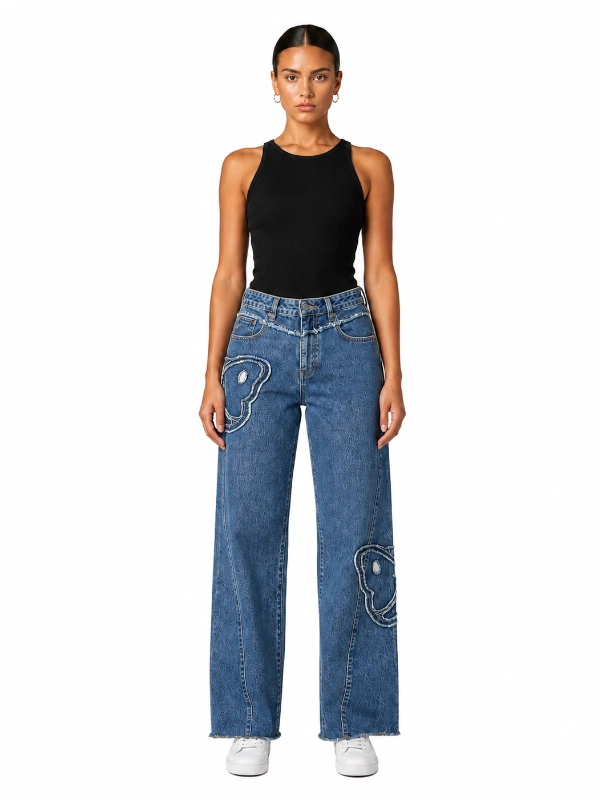
The objective is not to produce geometrically similar copies. It is to preserve the intended relationship between garment and body across a target population. That includes circumference, vertical position, mobility and visual proportion. A back pocket may remain nearly the same size while moving farther from the center back. A waistband length increases while its finished width stays constant. The front rise may grow less than the back rise. A regular inseam may remain the same across several waist sizes.
Grading also has boundaries. It cannot repair an unbalanced base pattern. It cannot create an accurate extended-size range from body data that does not represent the intended customer. It cannot neutralize unpredictable wash shrinkage. Before grading begins, the base size, fabric, wash, construction and fit direction must be stable.
A useful grading system coordinates four connected records:
- a body measurement table describing the people the range intends to fit;
- a finished garment specification describing measurable product dimensions;
- a pattern grade rule describing how pattern points move;
- a labelled size architecture describing what customers will see, such as 26-34, XS-XL or short, regular and tall.
Those records are related, but they are not interchangeable.
Body Measurements Are Not Garment Measurements
A body waist measurement describes a person. A finished waistband measurement describes a garment. Ease, compression, wearing position, fabric stretch, waistband construction and styling determine the relationship between them.
ISO 8559-1:2017 defines anthropometric measurements used to build body measurement databases and size profiles. ISO 8559-2:2025 addresses primary and secondary dimensions used in clothing size designation. A central principle is that size designation is based on body dimensions; garment dimensions are selected by the designer and manufacturer to provide the intended ease, cut and style.
This distinction prevents several expensive errors.
Positive ease
A rigid relaxed jean normally needs garment room beyond the relevant body dimensions so the wearer can sit and move. The amount is not distributed equally. Hip ease, crotch extension, thigh width and rise shape work together. Simply adding circumference at the side seams does not create mobility.
Negative ease
A stretch skinny jean may measure smaller than the body in selected areas. The fabric extends on the wearer and uses retractive force to hold the silhouette. Negative ease must be based on tested stretch, growth and recovery. A composition label containing elastane is not enough evidence.
Wearing position
High-rise, mid-rise and low-rise waistbands sit on body sections with different circumferences and shapes. A labelled waist size cannot be transferred blindly from one rise to another. The top opening, waistband contour and hip transition must correspond to the intended position.
Flat versus full measurements
Jeans specifications often record waistband, hip, thigh, knee and leg opening as flat measurements. A body chart normally records full circumference. If a full hip interval increases by 4 cm between sizes, the corresponding flat half-garment increase is not also 4 cm. It begins as 2 cm before ease strategy, seam distribution and pattern shape are considered. Failing to identify whether a value is full or half can double a grade.
Every point of measure should state how the garment is positioned, whether it is measured flat or around, and whether it is relaxed or extended. ISO 18890:2018 defines principal garment measurement points and methods, while allowing interested parties to agree additional points. A brand can use its own method, but the factory and inspector must use the same one.
Define the Target Customer Before Building the Grade
A size range is a coverage decision. It cannot fit every body shape equally well. The brand must decide which population, age profile, market and fit preference it intends to serve.
Useful inputs include:
- reliable anthropometric data for the sales market;
- the brand’s historical fit and return data;
- competitor garments measured consistently;
- customer comments about waist, hip, thigh, rise and length;
- planned channel, price position and fit promise;
- the size range and expected unit distribution;
- fit-model or form dimensions and posture;
- fabric stretch and intended wearing ease.
ISO 8559-3:2018 describes a methodology for creating body measurement tables and intervals using data for a target population. Its examples are not a ready-made jeans chart. The value is the method: identify the population, select explanatory measurements, decide intervals and build the range from evidence.
Regional standards and surveys can be useful references, not automatic answers. ASTM Committee D13.55 maintains body measurement tables for several US apparel populations. A brand selling globally may need to compare sources, segment lengths or develop a proprietary block from its customer data.
Do not begin by renaming a supplier’s generic size chart. If the target customer has a different waist-to-hip relationship, height distribution or fit expectation, changing M to S does not improve coverage. It only changes the label.
Choose and Approve the Base Size
The base size is the pattern from which adjacent sizes are developed. It is usually selected near the center of the commercial range, where reliable fit models and forms are available and projected sales are meaningful. The mathematical middle is not always the best commercial base. A brand selling most units in larger sizes may choose a different development center or use more than one block.
Before the base pattern is released for grading, confirm:
- the fit model matches the target body profile;
- the waist sits at the intended body level;
- front and back balance are correct;
- the crotch shape supports sitting and movement;
- hip, thigh and seat ease match the fit direction;
- side and inseams hang as intended;
- the leg profile is correct from thigh through hem;
- pockets, yoke, fly and waistband look proportionate;
- the sample uses the approved fabric and wash;
- finished measurements are verified after conditioning.
The jeans fit sample approval guide explains this base-size review in more detail. Grading should begin from a signed fit, not from a sample with unresolved comments that someone hopes will disappear in other sizes.
How Jeans Grade Rules Work
A grade rule expresses the change between sizes at a pattern point or finished measurement. Some systems use equal intervals across the whole range. Others use variable intervals because body dimensions or styling needs do not progress linearly. The rule must identify units, direction and whether the increment is per size, between named sizes or accumulated from the base.
Equal grading
Equal grading uses the same increment between each adjacent size. It is simple to manage and can work across a focused range when the target body data supports it. It should not be adopted merely because the software default is convenient.
Unequal or segmented grading
Intervals can change at selected breakpoints. A brand might use one waist or hip interval through the core sizes and another through extended sizes. It may maintain one regular inseam across numeric waist sizes while offering separate short and long options. Segmentation allows the architecture to follow customer data, but it requires clearer documentation and more size-set testing.
Pattern movement versus finished measurement change
A finished half-waist increment must be distributed among pattern edges while preserving the intended front-to-back balance and waistband shape. A rise measurement can change because waist position, crotch depth and crotch extension move in combination. The sum of point movements should produce the finished specification, but the specification alone does not describe how to shape every curve.
Nested pattern review
After automatic grading, inspect the pattern nest. Curves should progress smoothly. Notches must remain correctly paired. Pocket openings, fly length, zipper stops, belt-loop positions and seam intersections need review. A mathematically continuous nest can still create a poor garment if the grade direction is wrong.
The following table shows the type of decision a grade plan must contain. The values are deliberately not filled with universal increments.
| Area | Possible grading action | Main risk | How to validate |
|---|---|---|---|
| Waist opening | Increase circumference and reshape contour | Gaping, rolling or excessive compression | Fit at intended rise; measure relaxed and extended when relevant |
| Hip | Increase width and redistribute front/back | Seat drag lines or excess front fullness | Front, side and seated fit review |
| Front rise | Adjust vertical rise and crotch shape | Front discomfort, pulling or excess fold | Standing, sitting and movement check |
| Back rise | Adjust vertical length and seat coverage | Waist pull-down or back-waist gaping | Seated coverage and waistband position |
| Thigh | Increase width from crotch through upper leg | Restricted mobility or baggy front thigh | Walk, sit and squat; check grain and seam balance |
| Knee | Maintain or change width by silhouette | Leg profile becomes tapered or columnar unintentionally | Compare full-length front and side views |
| Leg opening | Hold, increase or reduce relative grade | Loss of design identity across sizes | Measure and assess with intended footwear |
| Inseam | Hold by length group or grade selectively | Unexpected size-to-size length changes | Measure after wash and define short/regular/long logic |
| Back pocket | Move, resize selectively or use size groups | Visual scale and placement drift | Photograph smallest, base and largest sizes |
Grade the Critical Jeans Measurements
Waistband
State whether the top opening is measured along the top edge, inside the waistband or straight across when closed. Contoured waistbands cannot be compared reliably if one team follows the curve and another pulls the garment flat. For stretch products, define whether the value is relaxed, extended or both.
The waistband grade should maintain its relationship with the body at the chosen rise. Increasing only the side seam can flatten the back curve or disturb front-to-back balance. Check closure overlap, button position, belt-loop spacing and the transition into the yoke and front pocket.
Hip
Define the vertical distance below the top edge at which hip is measured. If that distance also grades, say so. A fixed “x cm below top waist” measurement can intersect a different anatomical area as sizes change, particularly when rise and body depth increase. Some brands use more than one hip level to understand shape.
Front and back do not always receive equal width. The distribution should match the body profile, pocket construction and desired side-seam position. A total hip measurement can pass while the front looks loose and the back remains tight.
Front and back rise
Rise is affected by measurement method, waistband width, crotch curve and the way the garment is tensioned. Specify whether the measurement includes the waistband and how the crotch seam is aligned. Front rise affects abdomen fit and wearing height; back rise affects seat coverage, mobility and waistband stability.
Do not add equal vertical amounts automatically. Body depth and posture may require different progression. The crotch extension also matters: vertical rise alone cannot create enough room around the body.
Thigh
State where the thigh is measured relative to the crotch point and whether the leg is laid naturally or pulled straight. Upper-thigh width interacts strongly with crotch extension. A grade that widens only the outseam can shift the leg or distort the side seam.
Knee and leg opening
These measurements carry the silhouette. A straight jean, bootcut, barrel leg and wide leg should not inherit the same lower-leg grade. The knee level may move vertically if length changes. Hold or grade the hem according to the visual intention rather than treating every circumference alike.
Inseam and outseam
Inseam may remain fixed within a regular-length range, while outseam changes because rise grows. If both measurements are controlled, their relationship must be mathematically and physically possible. Define the start and end points, especially when hems are raw, turned or shaped.
Fly, zipper and front opening
Fly length may need to progress with rise, but zipper suppliers offer discrete lengths. The pattern maker may group sizes around available zipper specifications. Check that the opening remains functional, the stop stays clear of seam intersections and the fly does not become visually too short or long.
Adapt Grading to the Jeans Silhouette
Skinny and slim stretch jeans
These styles depend on controlled negative ease and fabric recovery. Grade rules must preserve mobility without allowing the larger sizes to become straight by accident. The knee and hem may require smaller increments than the hip and thigh. Wear-test the smallest and largest sizes because retractive force feels different across body circumference and fabric extension.
Straight jeans
A straight profile can still taper slightly from thigh to hem, or it can form a near column. Define that geometry in measurements and pattern shape. If the thigh grade is passed unchanged through the knee and hem, the largest size may look much wider at the bottom than intended.
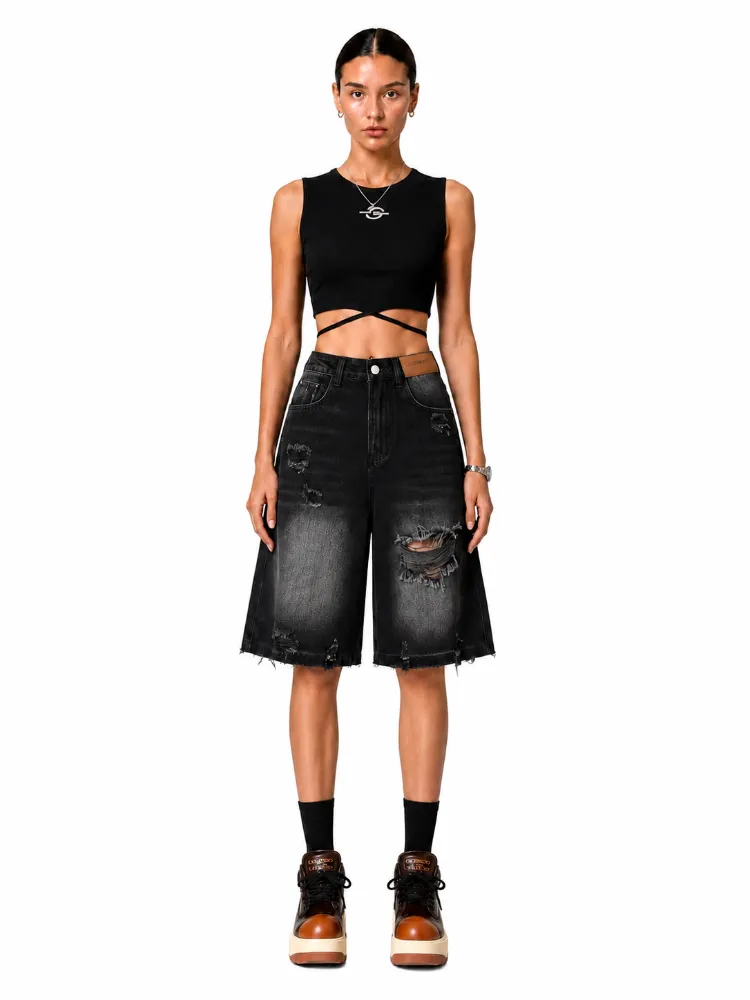
Wide-leg and baggy jeans
Wide fits are not fit-free. Waist stability, crotch shape and seat balance remain important even when leg ease is generous. Decide how much lower-leg width should grow. Holding the leg opening can preserve a controlled silhouette; grading it fully can create a more dramatic range. Review the fall of the fabric, side-seam line and stacking at the shoe.
Barrel and curved legs
The location of maximum width and the inward sweep toward the hem define these styles. Automatic proportional grading can move the curve peak or flatten the shape. Mark control points and compare nested outlines as well as finished garments.
Bootcut and flare jeans
Knee location, knee width and hem width must work together. If inseam lengths are offered, the flare break may need a corresponding vertical adjustment rather than simply extending the hem. Fit with the intended footwear and review both front and side.
High-rise and low-rise jeans
A high-rise waistband travels over more body shape between hip and waist. A low rise sits on a larger circumference and needs a different contour. Grade each block from its intended wearing position; do not create a low rise by cutting down a high-rise pattern and retaining the original top opening.
Handle Inseams and Length Options Deliberately
Waist size and body height are not the same variable. Automatically increasing inseam with every waist size assumes that larger bodies are always taller. That may not reflect the target market and can make the core range confusing.
Common architectures include:
- one regular inseam across all waist sizes;
- short, regular and long inseams offered across selected waist sizes;
- numeric waist and inseam combinations;
- one inseam with an intentionally stackable or alterable hem;
- different style-specific lengths rather than a brand-wide standard.
If length options are genuine pattern variants, decide what changes besides inseam. Knee position, flare break, cargo pocket height, whisker placement and distressing may need to move. Adding fabric only at the hem can put designed details at the wrong point on the leg.
Record finished length after the approved wash. Denim shrinkage can differ in warp and weft directions, and long pieces can reveal small percentage changes clearly. When shrinkage or leg twist is a concern, follow the controls in the denim shrinkage and leg-twist guide.
Grade Pockets, Yokes and Design Details
Customers read fit partly through visual details. Back pockets influence the apparent width and position of the seat. Front-pocket openings affect hand access. Yoke depth changes the line across the back. Embroidery, prints and rips can make the two legs look unbalanced if their positions do not respond to the grade.
Back pockets
One pocket size may work across a few adjacent sizes, but its placement usually needs to move. Measure from stable references such as center back, yoke seam and side seam, and judge the complete back view. Across a broad range, grouped pocket sizes can preserve proportion better than one pocket or continuously enlarging every size.
Front pockets and coin pockets
Opening length must permit hand access, while the pocket bag needs enough depth and must stay inside the garment. Grade the opening, facing and bag as a coordinated assembly. Check that rivets remain clear of seam allowances and that the coin pocket does not crowd the waistband.
Yokes
The yoke shapes the back waist and seat. Changing its depth affects pocket placement and back-rise balance. A grade rule should maintain the intended yoke angle and avoid abrupt curve changes in the nest.
Belt loops
The number may stay fixed while spacing changes, or larger sizes may need an additional loop according to the design standard. Positions should avoid pocket corners, center-back bulk and side-seam intersections. Verify actual spacing on the size set.
Artwork, distressing and embellishment
Artwork files need size and placement rules. A fixed embroidery can appear dominant on the smallest size and lost on the largest. A knee rip positioned from the hem may move incorrectly when lengths change. Decide whether the motif is fixed, scaled, moved or produced in size groups, then provide separate coordinates or templates.
Details that cross seams also need allowance for construction and wash. The denim seam construction guide helps connect visible placement with seam type, bulk and reinforcement.
Build Extended Sizes Responsibly
A core-size rule should not be extrapolated indefinitely. Body proportions, tissue distribution, posture and mobility requirements do not increase as a single linear scale. At some point, the range may need a new block, different interval strategy, separate fit model and revised detail proportions.
For larger sizes, review at least:
- waist-to-hip relationship;
- front and back waist shaping;
- abdomen allowance and front rise;
- seat depth and back crotch extension;
- thigh circumference and inner-thigh comfort;
- waistband support and closure position;
- pocket size, access and visual placement;
- rise stability when sitting;
- fabric recovery under higher extension;
- reinforcement at stress points.
For smaller sizes, the reverse problem occurs. Details can become crowded, fly length can become disproportionate and pocket bags can overlap. The smallest pattern deserves a real fit review, not just a software check for crossing lines.
Extended sizing is not solved by labelling. Adding 2XL and 3XL while using a block developed for a narrower body profile can create inventory without coverage. ISO 8559-4:2023 describes calculating coverage ratios of body measurement tables against a target database. The commercial lesson is straightforward: know which bodies the range actually covers and where separate fit strategies are needed.
Unisex ranges
Unisex is a merchandising choice, not a universal body shape. A relaxed style can fit a broader group, but waist-to-hip relationship, rise preference and length still vary. State the block on which the product was developed, provide useful garment measurements and fit more than one body profile before making broad claims.
Account for Fabric, Stretch and Garment Washing
A grade rule is developed for a material system. Replace rigid denim with stretch denim and the required ease changes. Replace a soft 9 oz cloth with a firm 14 oz cloth and crotch mobility, seam bulk and drape change. Keep the same fabric weight but reduce recovery, and the larger sizes may grow more during wear.
The denim fabric weight guide explains why ounces alone do not predict stretch, stiffness or drape. Grading records should identify the approved mill article, composition, weight, construction, stretch direction, extension, growth and recovery.
Stretch and negative ease
Test fabric performance before establishing finished garment measurements. A close-fitting jean may use different negative ease at waist, hip, thigh and knee. The same percentage reduction everywhere can create waistband pressure or poor seat recovery. Wear tests should include the extreme sizes because fabric extension as worn may differ across the range.
Wash shrinkage
Patterns are graded and cut before garment washing, while specifications usually control finished dimensions. Each size must arrive at the approved post-wash result. If shrinkage is stable as a percentage, absolute dimensional change becomes larger on larger pieces. If wash loading or fabric lots vary, the relationship can become less predictable.
Measure size-set garments before and after washing, calculate change by point of measure and compare sizes. Do not assume the base-size compensation applies perfectly across the range. Use the actual production fabric and intended recipe, documented through the denim wash development process.
Manual finishing placement
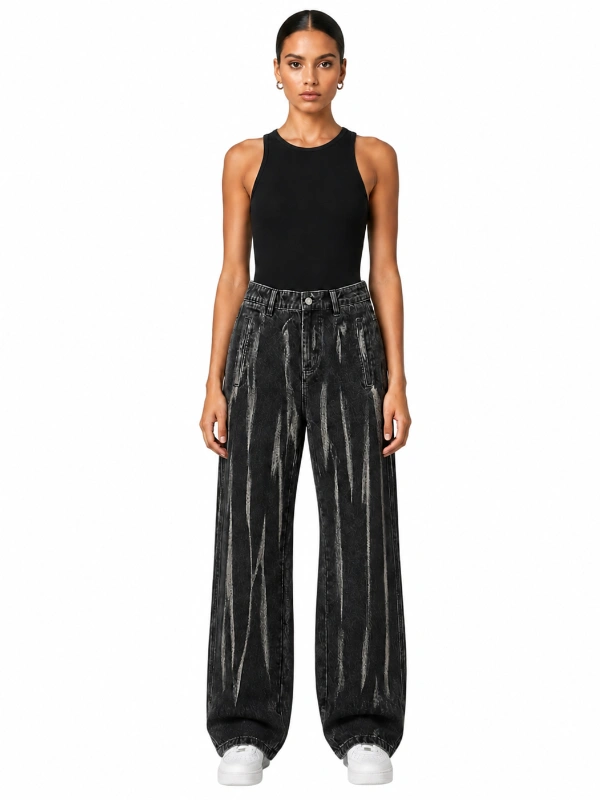
Whiskers, sanding, spray and grinding templates may need size-group versions. A whisker scaled only in width can sit too high or low when rise changes. Operators need clear reference distances and approved examples for representative sizes.
Validate the Size Set Before Production
A size set is a group of graded samples used to verify measurements, construction and fit across the range. It is not necessary to fit every size on every project, but approving only the base size leaves the grade untested.
A useful selection includes:
- the smallest commercial size;
- the approved base size;
- the largest commercial size;
- sizes at any grading breakpoint;
- representative short and long lengths;
- additional high-volume sizes when risk justifies them.
If budget requires a reduced set, jump sizes can reveal progression efficiently, but the pattern nest and full graded measurement chart still need review. When a problem appears between tested sizes, inspect the intermediate pattern before release.
Measure first
Confirm that each sample matches the graded finished specification within prototype tolerance. A fit conclusion is unreliable if the sample itself is off spec. Record actual values instead of marking a row “OK.”
Fit on the correct bodies or forms
Each fit model should match the intended body measurements and profile for that size. Photograph front, side and back in a consistent stance. Review standing, sitting, walking and bending. Note garment measurements, model measurements, fabric condition and wash lot.
Compare progression
Lay the size set in order and compare waistband shape, rise, side seams, leg profile, pockets and details. The range should look related without forcing every element to enlarge mechanically. A progression review often reveals errors that are not obvious when sizes are assessed on separate days.
Revise the rule, not only the sample
If the largest size needs more back rise, correct the pattern point and determine how that change should enter the intervening sizes. A local sample alteration that is never translated into the grade rule will disappear when production markers are generated.
After approval, retain the signed size-set comments, updated nest, graded specification and physical samples. These become part of the quality reference rather than temporary development material.
Write a Production-Ready Graded Specification
A strong denim tech pack gives the factory one controlled source for all sizes. The measurement page should contain:
- style number, version and date;
- base size and complete commercial range;
- unit of measure;
- clear point-of-measure names;
- small diagrams for methods that can be misunderstood;
- finished measurements for every size;
- plus or minus tolerances by measurement;
- notes identifying half or full measurements;
- relaxed and extended methods where relevant;
- wash and conditioning state;
- inseam or length architecture;
- size-group rules for pockets, zippers, artwork and trims;
- approved size-set and revision references.
Grade increments and full measurements
Some teams provide only a base measurement plus grade increments. That is compact but vulnerable to accumulated errors and ambiguity at breakpoints. A production specification should show the calculated measurement for each size, even if it also lists the grade rule.
Tolerances are not grade increments
A grade increment is the intentional difference between sizes. A tolerance is the acceptable production variation around one size target. If the tolerance is too close to half the grade interval, adjacent sizes can overlap materially. That may occur in practice, but the brand should understand its effect on fit consistency and labelling.
Tolerance should reflect measurement difficulty, product risk, fabric behavior and manufacturing capability. Waist, hip and inseam may need different limits. Do not apply one blanket tolerance because it is easy to format.
Version control
After a size-set correction, update the pattern, measurement chart, artwork coordinates and bill of materials together. Mark obsolete files. A factory working from a revised nest and an old specification can appear to fail inspection even when the sewing matches the latest pattern.
Turn the Production Grade Into a Useful Size Chart
A factory specification and a customer size guide serve different users. Publishing the raw production chart can overwhelm shoppers or expose measurement methods they cannot reproduce. Publishing only S, M and L gives too little information. The customer chart should explain the fit in measurements people can use.
Consider including:
- the size label and market conversion where accurate;
- the primary body waist and hip range;
- actual garment waist when useful, clearly labelled;
- inseam and rise information;
- stretch or rigid description;
- fit note such as close, regular, relaxed or oversized;
- model body measurements, height and worn size;
- instructions for measuring the body or a comparable garment;
- advice for customers between sizes.
Never mix body and garment values in one row without labelling them. A shopper may compare a 76 cm body waist with a 78 cm waistband and assume the product has only 2 cm of ease, when the waistband sits below the natural waist or contains stretch.
Use real order and return data to improve the system. Track reasons by style, size and fit area rather than relying on a general “too small” label. If one style receives repeated waist complaints but stable hip feedback, the solution may be waistband contour or rise, not a global relabelling of the size.
Control Size Grading in Bulk Production
Once the grade is approved, production must reproduce it. Confirm that the marker uses the final pattern version and all required sizes. Inspect first output by size, not only by color or sewing line. Check that size-dependent components such as zippers, pocket templates and artwork are issued correctly.
During measurement inspection:
- sample across sizes, wash loads, sewing lines and time periods;
- condition garments consistently before measuring;
- record actual values rather than pass/fail alone;
- look for trends by size and point of measure;
- separate pattern errors from sewing or wash variation;
- contain affected sizes when a systematic shift appears;
- verify corrective action with a fresh sample.
If all units in one size miss the same target, the cause may be pattern, marker, component or wash compensation. If measurements scatter around the target, the cause may be operation control, fabric relaxation or measurement method. The denim quality inspection guide explains how measurement review fits into sampling and shipment release.
Final inspection should not be the first time the brand sees an extreme size. By then, any grade problem has already been multiplied through cut goods, washed garments and packed inventory.
Common Jeans Size Grading Mistakes
Scaling the entire pattern by percentage
Uniform scaling changes seam lengths, pocket sizes, waistband width and vertical positions whether they need it or not. Clothing grades require point-specific movement tied to body growth and design.
Using a generic supplier grade without reviewing the customer
The supplier’s existing rule may suit a different market, fabric or silhouette. It can be a starting reference, but the brand owns the fit promise and should approve the body profile and size set.
Confusing circumference with flat width
This can double an intended increment. Every value must identify full, half, relaxed and extended measurement states.
Grading only waist and hip
Rise, crotch extension, thigh and vertical balance determine whether larger and smaller bodies can move comfortably. Circumference alone does not create fit.
Increasing front and back equally by habit
Body shape and style may require different distribution. Equal movement can shift the side seam or create fullness in the wrong place.
Ignoring the lower-leg silhouette
Passing the thigh increment through knee and hem can turn a straight jean into a wider profile at the top of the range. Define each control width.
Keeping all placements fixed
Pockets, yokes, rips and artwork can drift visually even when their own dimensions do not change. Position is part of the grade.
Offering length options by extending only the hem
This can leave knee, flare break, cargo pockets and wash effects at the wrong height. Define which vertical landmarks move with length.
Extrapolating the core grade into extended sizes
A broad range may require another block, changed intervals and new fit references. More labels do not guarantee more body coverage.
Approving size-set samples that are off spec
A fit comment based on the wrong sample measurement can drive a false pattern correction. Measure first, then fit.
Changing fabric or wash after grading
Stretch, recovery, shrinkage and drape alter the garment-body relationship. Material substitutions need an appropriate graded fit review.
Using production tolerance to hide a bad grade
Tolerance manages process variation. It should not be widened to make an incorrect size target pass.
Jeans Grading Approval Checklist
- The target population and market are defined.
- Body measurements are separated from garment measurements.
- The base size and fit model are appropriate for the range.
- The base pattern is approved in the intended fabric and wash.
- Every critical point of measure has a method and unit.
- Flat, full, relaxed and extended measurements are identified.
- Waist, hip, rise, thigh, knee, hem and length have deliberate rules.
- Front and back grade distribution has been reviewed.
- Pockets, yokes, belt loops and artwork have placement rules.
- Short, regular and long options define all affected vertical landmarks.
- Any grading breakpoint or separate block is documented.
- The smallest, base and largest sizes have been measured and fitted.
- Size-set samples use the approved production fabric and wash.
- The pattern nest progresses smoothly with matching seams and notches.
- Tolerances are distinct from grade increments.
- Customer size-chart values are labelled as body or garment measurements.
- All approved files share the same revision.
Frequently Asked Questions
What is jeans size grading?
Jeans size grading is the process of moving defined pattern points and changing finished garment measurements to create sizes above and below an approved base size. The grade should preserve fit, mobility, proportion and design intent for a target customer.
Is pattern grading the same as resizing a pattern?
No. Uniform resizing scales the whole shape, while apparel grading applies different horizontal and vertical movements to individual pattern points. Waist, hip, rise, thigh, hem, pockets and length do not necessarily change at the same rate.
What is a base size in jeans manufacturing?
The base size is the approved pattern used as the reference for creating adjacent sizes. It is normally near the commercial center of the range and should be fitted in the intended fabric, construction and wash before grading begins.
What is a grade rule?
A grade rule defines how a pattern point or finished measurement changes between sizes. It may include horizontal and vertical movement, equal or variable intervals, size breakpoints and separate rules for details such as pockets or artwork.
What is the difference between body measurements and garment measurements?
Body measurements describe the intended wearer. Garment measurements describe the physical product. Ease, compression, rise position, fabric stretch and styling determine the relationship between the two.
Should jeans inseam increase with every waist size?
Not automatically. Waist and height are different variables. Many brands keep one regular inseam across waist sizes or offer separate short, regular and long lengths. Knee position and design details may also need to move when length changes.
Which sizes should be included in a jeans size set?
A useful size set includes the smallest, base and largest sizes, plus sizes at any grading breakpoint and representative length options. High-risk or high-volume programs may justify additional sizes.
Can one grade rule be used for rigid and stretch denim?
Usually not without review. Stretch, recovery, thickness, shrinkage and drape change the required ease and fit. A fabric substitution should be tested in representative graded sizes.
How should back pockets be graded?
Back pockets should be reviewed for both size and position. One pocket size may work across several adjacent sizes, but placement relative to center back, yoke and side seam usually changes. Broad ranges may need grouped pocket sizes.
Do plus-size jeans need a separate pattern block?
Often, a broad extended range benefits from a separate block or revised grade intervals because body proportions do not increase linearly. The decision should come from target body data, fit testing and coverage goals rather than a fixed label threshold.
How are grading tolerances determined?
Grade increments define intentional size differences; tolerances define acceptable production variation around each target. Tolerances should reflect measurement risk, fabric behavior, method precision and manufacturing capability and should not be used to conceal an incorrect grade.
How can a brand reduce online jeans size returns?
Build the range from relevant body data, validate extreme sizes, control fabric and wash, and publish a clear size guide that separates body and garment measurements. Analyze return reasons by style, size and fit area, then update the block or product-specific rule where evidence supports it.
Final Takeaway
Good jeans grading is quiet: customers notice that each labelled size feels like the same design made for a different body. Achieving that result requires more than a software command. The brand must define its customer, approve a stable base pattern, write point-specific rules, account for fabric and wash, reposition details and validate the smallest and largest garments before bulk cutting.
Brands developing a custom jeans range can send Luokugg the target market, body or competitor references, base pattern, graded measurement chart, fabric, wash, size range, quantity and required length options through the custom denim quotation form. When those inputs are still incomplete, the development team can review the intended fit and identify what must be confirmed before sampling.