
Custom jeans MOQ is the smallest commercially workable order for a defined product, not one permanent number attached to a factory. That definition sounds simple until a quotation says “100 pieces minimum” and the buyer asks for two fits, three washes, six sizes, custom fabric and engraved buttons. Is the minimum 100 pieces in total, 100 per fit, 100 per wash or 100 per colour? All four answers are possible, and they produce very different budgets.
Here is the part that first-time buyers often miss: the sewing factory is only one source of the minimum. A denim mill may require a full fabric lot. A laundry needs a workable batch for one wash recipe. A trim supplier may sell 1,000 buttons at a time. The cutting room needs enough units to build efficient markers, while a production line has setup time whether it makes 60 pairs or 600. The order has to fit those constraints or pay for the unused balance.
This guide explains how to read a private-label jeans MOQ, convert material and process minimums into garment quantities, build a sensible size ratio and compare low-volume quotations. It includes worked examples for 120, 300 Dan 600 pairs, plus a cost-amortisation model and an RFQ checklist. The numbers are transparent planning examples. They are not Luokugg quotations or universal industry rules; actual minimums depend on the approved product, available materials, supplier terms and production plan.
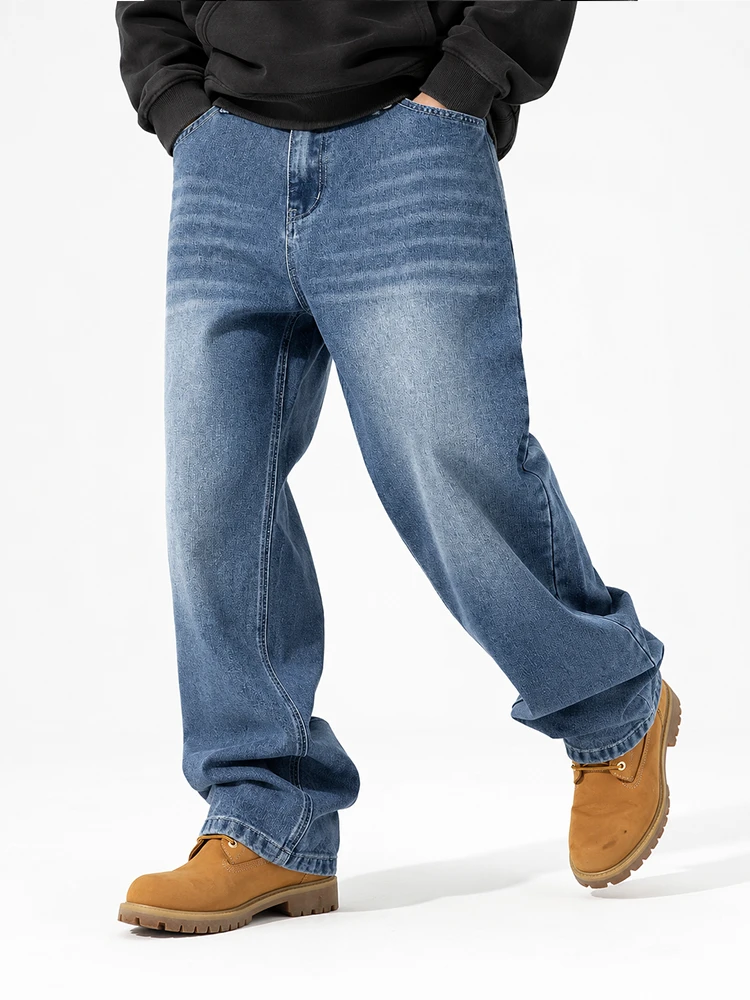
What Custom Jeans MOQ Really Means
MOQ stands for minimum order quantity. In a useful quotation, it describes a specific commercial unit. “100 pieces per style per wash” is a real basis. “MOQ rendah tersedia” is advertising until the supplier defines what can be mixed inside it.
Start by separating these terms:
- Style: one construction and pattern family. A five-pocket straight jean and a cargo jean are normally different styles.
- Colour: the fabric or finished garment colour. Indigo, black and ecru may come from different fabric articles or dye lots.
- Mencuci: one controlled laundry recipe and appearance standard. A rinse and a vintage stone wash are different production batches even when they start with the same base denim.
- Ukuran: one graded garment size. Most factories allow sizes to be mixed within a style/colour minimum, but the ratio still has to be cut efficiently.
- Order: the total purchase order across all styles and variants.
- Pengiriman: the quantity shipped at one time. Split deliveries can have separate packing, inspection and freight costs.
A supplier might accept 100 pieces per style in one stock colour, but require 100 pieces for every additional wash. Another may quote 300 pieces per style with a minimum of 100 per colour. A mill could accept 1,200 metres per custom colour regardless of the garment factory’s number. None of those statements contradicts the others; they apply to different operations.
MOQ is a constraint, not a forecast
The minimum answers “what can this supply chain make commercially?” It does not answer “what can the brand sell?” A start-up can meet a 300-piece factory minimum and still choose the wrong size mix, price point or wash. Demand planning comes first. The production plan should then fit that demand as closely as the available constraints allow.
The Seven Minimums Hidden Inside One Quotation
When the factory gives a higher number than expected, ask which layer creates it. That question usually leads to a useful solution faster than asking for a discount.
| MOQ layer | What creates it | Unit normally used | What may be shared |
|---|---|---|---|
| Garment factory | Pattern, marker, line setup, supervision and administration | Pieces per style or order | Some setup across colours using the same construction |
| Fabric supplier | Roll, dye lot, finishing lot or custom mill run | Metres, yards, kilograms or rolls per article/colour | One base cloth across styles if weight, width and finish match |
| Laundry | Machine load, chemical setup, manual process and shade control | Garments per wash recipe/colour | A base fabric, but not different approved wash standards |
| Perangkat keras | Logo tooling, casting, plating colour and supplier pack | Buttons, paku keling, snaps or zipper pieces | One trim across several compatible styles |
| Labels and packaging | Artwork setup, printing plates, weaving and pack quantity | Label, hangtag, bags or cartons per design | Brand-level items without style-specific copy |
| Cutting room | Marker length, lay height, shade groups and size ratio | Pieces per marker or lay | Sizes within one style/colour/shade group |
| Testing and inspection | Laboratory fee, test specimen and inspector minimum charge | Fee per report, colour, material or visit | Some reports across styles using the identical material |
These minimums do not always force the same garment quantity. A label printer may require 1,000 care labels while the factory makes only 120 jeans. The buyer can purchase 1,000 label, consume 120 and hold the balance for a repeat order. That solves the garment MOQ but creates prepaid inventory and version-control risk. If fibre content, address, country information or care instructions change, the remaining labels may be unusable.
Custom buttons work the same way. The denim hardware guide explains tooling, finishes and performance checks. The order may use 130 buttons including spares, while the component supplier invoices 1,000. The quotation should state who owns and stores the other 870, how long they are retained and whether they can be used on the next order.
Why Denim Behaves Differently From a Basic T-Shirt
A plain jersey T-shirt can sometimes move through one fabric, one print and a short sewing route. Jeans bring more interdependent setup. The pattern has more structured fit points; the fabric is heavier; the garment may shrink or twist in laundry; metal trims need setting dies; topstitching has to remain balanced; and the final shade is often created after sewing.
The laundry is especially important. If a brand wants 60 dark rinse, 60 mid-blue enzyme and 60 acid-wash pairs, it has not created one 180-piece wash order. It has created three 60-piece recipes. Each needs a sample, machine loading plan, chemistry, appearance standard and shade control. Whether the laundry accepts those batches depends on its equipment and what else is running that week.
Style complexity also changes the factory minimum. A five-pocket jean that fits an established line is easier to balance than a cargo jean with bellows pockets, straps and multiple reinforcement operations. Even at the same unit count, the second style has more workstations, attachments and learning time. That is why an MOQ should be quoted after the denim tech pack is reviewed, not from a mood-board image alone.
Convert Supplier Minimums Into Garment Equivalents
The cleanest way to understand custom jeans MOQ is to convert every material constraint into the number of garments it can support.
Garment-equivalent quantity = supplier minimum / planned consumption per accepted garment
Use matching units. If a mill minimum is in metres, consumption must be metres per garment. If buttons are supplied by piece, consumption is buttons per garment. Include only documented booking allowances once; do not add the same loss inside both the consumption and the final quantity.
For one variant, a simplified effective minimum is:
Effective variant MOQ = the highest non-shareable garment-equivalent constraint, rounded to the required batch multiple
Suppose one jean consumes 1.65 m of denim before a 5% booking allowance. Planned fabric per ordered garment is:
1.65 x 1.05 = 1.7325 m
If available fabric is sold by 55 m roll, one roll supports:
55 / 1.7325 = 31.75, or approximately 31 complete pairs
Four rolls provide 220 m, enough planning fabric for roughly 126 pairs. That does not mean the final order must be 126. Roll defects, actual usable width, marker result and shade grouping still need verification. It does show why a factory may propose 120 rather than 100 pieces for that material route.
Do not add unrelated minimums together
If the garment factory minimum is 100 pieces, the wash minimum is 120 pieces and the fabric supports 126 pieces, the order is not 346 pieces. The strongest non-shareable constraint is around 120-126 pieces, subject to a workable size ratio and commercial agreement. MOQ constraints overlap; they are not a list of quantities to sum.
Separate consumable inventory from garment quantity
If branded rivets have a 2,000-piece purchase minimum and each jean uses five, that component lot could support 400 pairs. The brand could still make 120 pairs if it buys and stores the 1,400 unused rivets. The economic exposure is 400-pair component inventory, while the immediate garment order remains 120. Record both numbers.
Worked Example: A 120-Pair First Run
Consider a new brand ordering one baggy five-pocket jean in one light indigo wash. It chooses an available 12 oz denim, standard button and rivet finish, a woven brand label and custom hangtag. Six waist sizes share one style.
| Input | Planning assumption | Calculation or effect |
|---|---|---|
| Kuantitas pesanan | 120 pairs, one wash | One garment and laundry variant |
| Marker consumption | 1.65 m per pair | 198 m before outside-marker allowance |
| Booking allowance | 5%, illustrative | 198 x 1.05 = 207.9 m |
| Available roll length | Approximately 55 m per roll | Four rolls = approximately 220 m |
| Laundry batch | 120 garments for the approved route | One workable style/wash batch |
| Care label pack | 500 label | 120 consumed; balance retained and version controlled |
| Custom hangtag pack | 500 tags | Fixed print setup spread over 120 garments |
| Perangkat keras | Standard stocked finish | No new logo tooling or custom plating lot |
The plan is plausible because the buyer has simplified the right things: one pattern, one fabric, one wash and standard hardware. It has not simplified fit, measurements or wash approval. The leftover labels and hangtags should appear in the commercial calculation rather than being described as free.
Before fabric booking, the factory still needs a final graded marker. The jeans fabric consumption guide explains why usable width, size ratio, shrinkage and pattern shape can move the metre requirement. The 1.65 m figure above is an example, not a safe purchasing standard.
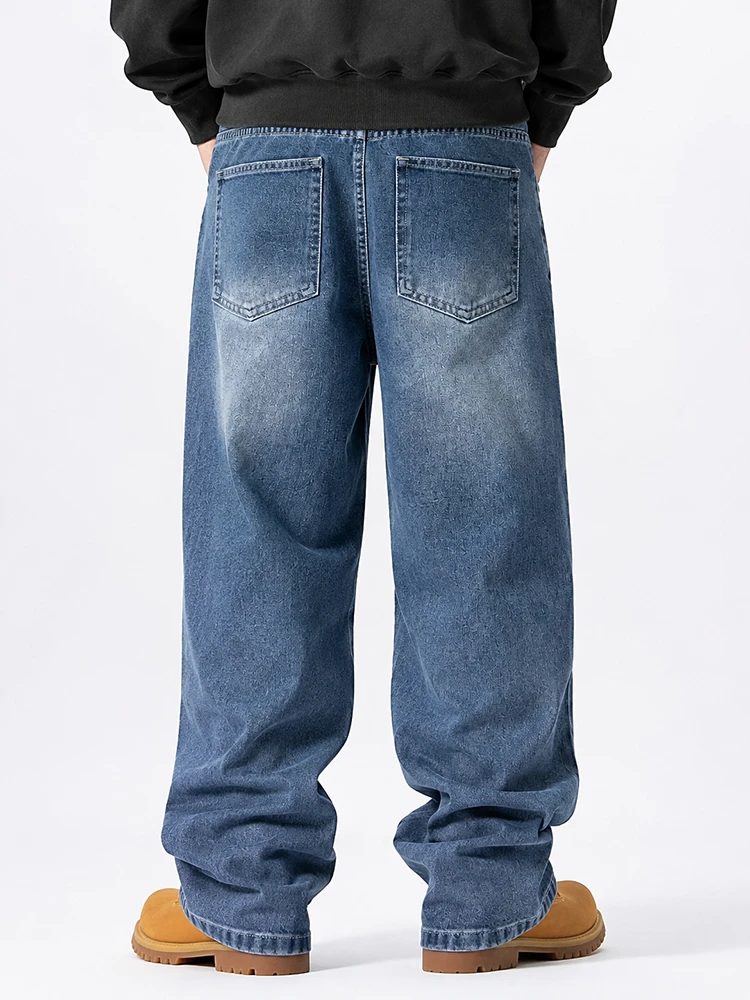
Style, Colour and Wash Are Not Interchangeable
The phrase “300 pieces total” can hide more than it reveals. A useful RFQ shows a matrix:
| Style | Base fabric | Wash/colour | Quantity | Sizes |
|---|---|---|---|---|
| Baggy five-pocket | 12 oz rigid indigo | Bilas gelap | 100 | 26-36 |
| Baggy five-pocket | 12 oz rigid indigo | Mid-blue enzyme | 100 | 26-36 |
| Baggy five-pocket | 12 oz rigid indigo | Vintage bleach | 100 | 26-36 |
The sewing line sees one construction, which helps. The laundry sees three recipes of 100 garments. If its workable minimum is 120 per recipe, the 300-piece total does not solve the wash minimum. The buyer can increase the order, reduce the wash count, find an appropriate smaller-batch route or accept a separately quoted small-batch charge. Pretending the three washes are one lot usually creates poor shade control.
A fabric colour can be an even harder division. Black sulphur denim, ecru denim and indigo denim are not three washes of one material; they may be three separate mill articles. Their fibre, dye, finishing and minimums can differ. Ask whether colour is created in the cloth or in garment finishing.
Worked Example: 300 Pairs Across Three Washes
Assume the same baggy pattern and base denim, divided equally among dark, mid and light washes. The laundry’s validated minimum is 120 garments per recipe.
| Option | Order structure | Commercial effect | Product effect |
|---|---|---|---|
| Increase all variants | 120 + 120 + 120 = 360 pairs | More inventory and cash required | Original three-wash range retained |
| Concentrate the range | 180 dark + 120 mid = 300 pairs | No added total units | Light wash removed |
| One hero wash | 300 pairs in one recipe | Best setup efficiency | Narrower launch assortment |
| Small-batch surcharge | 100 + 100 + 100 pairs | Higher unit processing cost if accepted | Three-wash range retained |
| Stage the third wash | 240 now; third wash after demand signal | Second setup and later delivery | Lower first-launch exposure |
Which option is best depends on demand, margin and launch strategy. The factory cannot answer that for the brand. It can state the technical and cost consequences so the buyer makes a deliberate choice.
If washes share a base fabric, the mill quantity may combine. The cutting room should still preserve roll and shade identity, and the laundry should keep recipe lots traceable. The denim wash development guide describes how one visual target becomes an approved bulk standard.
Worked Example: 600 Pairs With Custom Fabric
Now take a 600-pair order that requires a custom 13 oz comfort-stretch denim. The mill minimum is an illustrative 1,200 m per article and colour. Final planned garment consumption, including agreed allowance, is 1.70 m per pair.
Fabric needed for 600 pairs = 600 x 1.70 = 1,020 m
Mill balance = 1,200 – 1,020 = 180 m
Approximate garment equivalent of balance = 180 / 1.70 = 105 pairs
The factory could quote 600 garments while the buyer funds a 1,200 m mill lot. That is commercially different from a 600-garment MOQ with no excess fabric. The contract should answer:
- Who purchases and owns the 180 m balance?
- Is the balance physically segregated and identified by lot?
- Did inspection, shade and shrinkage results pass?
- How long will the factory store it, and at what cost?
- Can it support a real repeat marker after roll defects and shade grouping?
- What happens if the next order changes fit, wash or required performance?
Do not automatically convert every remaining metre into sellable product. Development samples, testing, roll ends, rejected defects and recuts consume cloth. The exact balance should be reconciled after cutting, not inferred only from the original purchase quantity.
Custom colour can create another mill minimum
If the 600 pairs divide into 300 indigo and 300 black, the mill may treat them as two 1,200 m colour lots. The total material commitment becomes 2,400 m even though the garment total stays 600. Stock fabric is often the better first-run choice when exact custom colour is less important than validating demand.
Build a Size Ratio That Can Actually Sell
Most jeans factories do not require 100 pieces in every size, but a workable ratio matters. It affects marker efficiency, cutting layers, packing and the brand’s sell-through. Equal quantities by size are easy to type into a purchase order and often wrong for the customer base.
For a 120-pair run across waist sizes 26, 28, 30, 32, 34 Dan 36, one illustrative ratio is:
1 : 2 : 3 : 3 : 2 : 1
The ratio totals 12 parts. Multiply each part by 10:
| Waist size | Ratio part | Units | Share |
|---|---|---|---|
| 26 | 1 | 10 | 8.3% |
| 28 | 2 | 20 | 16.7% |
| 30 | 3 | 30 | 25.0% |
| 32 | 3 | 30 | 25.0% |
| 34 | 2 | 20 | 16.7% |
| 36 | 1 | 10 | 8.3% |
This is an arithmetic example, not a recommended universal curve. Build the ratio from comparable sales, preorder data, customer measurements, returns and channel. If there is no history, document the hypothesis so it can be checked after launch.
Do not open extra sizes merely to look inclusive on a first run if each size receives too few useful units and the fit has not been validated. A broader range may require additional size-set samples, pattern correction and different marker groups. The jeans size grading guide explains base size, grade rules and size-set approval.
Size count does not change every material minimum
A button is usually common across sizes, while a printed size label is not. If the label supplier requires 100 pieces per size artwork, six sizes create 600 labels even when the garment order is 120. A flexible alternative is one common care label plus a separate stock size pip, provided the target-market label design remains compliant and durable.
Why Low MOQ Raises the Unit Price
Small orders are not expensive simply because a factory dislikes them. Some work happens once per style regardless of quantity: feasibility review, pattern, grading, markers, sample coordination, wash development, artwork handling, line setup, testing administration and inspection booking. Divide those fixed costs across fewer garments and the unit allocation rises.
Assume, purely for comparison, that style-level development and setup total USD 1,200 before variable materials and sewing:
| Kuantitas pesanan | Fixed cost | Fixed-cost allocation per unit |
|---|---|---|
| 60 pairs | USD 1,200 | USD 20.00 |
| 120 pairs | USD 1,200 | USD 10.00 |
| 300 pairs | USD 1,200 | USD 4.00 |
| 600 pairs | USD 1,200 | USD 2.00 |
This is not a jeans price table. Fabric, trim, labour, laundry, testing, packing, overhead and margin remain to be added. It shows why a 60-piece quote cannot be judged by multiplying a 600-piece unit price by 60. The development work has not fallen by 90%.
Small orders can also lose bulk purchasing rates and production efficiency. Short cutting lays use markers differently. The line may spend a larger share of time learning the style. The laundry may charge for a minimum machine load. The inspector may have a daily minimum fee. Ask for price breaks at realistic volumes, seperti 120, 300, 600 Dan 1,000 pieces, using the same specification.
The custom jeans manufacturing cost guide provides a fuller cost stack and a worked FOB model. MOQ and price belong in the same conversation, but they are not the same number.
How to Compare Two Custom Jeans MOQ Quotations
Factory A quotes 100 pieces at USD 24. Factory B quotes 200 pieces at USD 21. Factory A does not automatically require less cash, and Factory B is not automatically better value. Normalise the scope first.
| Question | Why it changes the answer |
|---|---|
| Is MOQ per style, colour or wash? | One total can multiply when variants are added. |
| Is fabric stock, reserved or custom made? | Material availability affects quality, repeatability and excess inventory. |
| Are sampling and pattern fees included? | A low unit price may exclude development already included elsewhere. |
| Are custom labels and hardware included? | Tooling and unconsumed supplier packs may be billed separately. |
| What wash and manual effects are included? | Rinse, enzyme, bleach, whiskers and distressing have different work content. |
| What testing and inspection are included? | “QC included” may mean only factory checking, not agreed reports or third-party inspection. |
| What quantity tolerance applies? | A 100-piece order with +/-10% has a different exposure from a firm 100. |
| Who owns excess materials? | Unused fabric and trim can be a real asset or stranded cash. |
| Which Incoterms rule and named place apply? | FOB, FCA and DDP quotations allocate different delivery tasks and costs. |
| When does lead time begin? | Deposit, material arrival and PP approval are different start triggers. |
Compare total cash required for the same approved product, not only garment unit price. Include sample fees, tooling, material balances, label, inspection, freight, duty where relevant and payment timing. Then compare what remains usable for a reorder.
How to Lower MOQ Without Damaging the Product
A good low-MOQ plan removes variation before it removes quality. These are the most useful levers.
1. Use an available fabric with repeat potential
Ask for the article code, komposisi, weight, usable width, menggeliat, recovery, colour and current stock. Also ask whether the supplier expects to restock it. A random clearance roll can make a first order possible and a successful reorder impossible.
2. Launch one fit before launching a family
One strong baggy fit in two well-chosen washes often produces better information than three fits with 50 pieces each. The brand learns size demand, return reasons and wash preference without spreading the first budget across several patterns.
3. Share the base denim across wash variants
This can combine fabric purchasing while keeping visual choice. Laundry minimums still apply to each recipe, so model both layers. Do not assume three shades automatically share one process.
4. Use standard hardware now, tool branded hardware later
A high-quality stock button and rivet in an approved finish can preserve function and reduce component inventory. Branding can sit on a woven label, hangtag or patch during the first run. Add engraved metal when reorder volume supports the tooling and pack minimum.
5. Keep packaging common across styles
A brand-level hangtag and bag can serve several products if regulatory and customer information is handled correctly. Style-specific stickers can carry barcode, colour and size. This reduces obsolete printed stock when the assortment changes.
6. Pay transparent setup charges
Sometimes the honest solution is a higher sample, wash or line-setup charge. That is preferable to a supplier quietly weakening fabric, skipping an approval or recovering cost through an unexplained material substitution.
7. Give a credible reorder path
A forecast is not a purchase order, but it helps suppliers decide whether holding fabric, trim or capacity makes sense. Share expected launch date, initial run, reorder trigger and possible 90-day volume. Do not promise thousands of pieces simply to obtain a small-order price.
The CBI market-entry guidance for denim notes that European buyers often seek flexibility and first orders below a supplier’s normal minimum. It also warns manufacturers to balance difficult trial orders with commercially sustainable relationships. That is a useful principle for both sides: flexibility works best when the first run is designed to become a repeat programme, not a one-off collection of exceptions. See the CBI guidance on entering the European denim market.
Low-MOQ Shortcuts That Create Expensive Problems
Some offers reach a very low number by changing the product without saying so. Watch for these signs:
- the quoted fabric has no article code, technical data or repeat source;
- all washes are described as “similar” without an approved physical standard;
- the factory proposes bulk cutting before fit and shrinkage are approved;
- custom hardware is promised below the component supplier’s pack minimum with no explanation;
- the quotation omits sample, pattern, testing or inspection charges;
- the supplier will not define whether MOQ is per colour or per order;
- unused fabric and trim ownership is unclear;
- sizes are spread evenly because no sales ratio was supplied;
- the production unit is actually buying finished wholesale jeans and relabelling them;
- the price changes after the sample, but the original assumptions were never written.
Low volume is not a reason to skip a representative sample. The first 120 garments can fail fit just as completely as the first 12,000. Approve construction, pengukuran, mencuci, trims and packaging against one controlled pre-production sample, then retain it for bulk comparison.
Be equally careful with “free” customisation. If a supplier offers a proprietary wash, logo button and custom package at no added cost for 50 pieces, ask where the setup and surplus materials went. There may be a sensible answer, such as existing components or a combined production run. There may also be a product substitution.
Plan the First Order and Reorder as One System
A first run is valuable because it produces evidence. Design the order so that evidence can guide the second purchase.
Record at launch:
- sell-through by style, mencuci, size and channel;
- full-price versus discounted sales;
- return rate and stated reason by size;
- customer comments about fit, nuansa tangan, shade and durability;
- available inventory by week;
- factory defect and repair data;
- actual material and trim balances;
- repeat lead time for fabric, trim and production capacity.
A simple reorder point is:
Reorder point = expected weekly sales x replenishment weeks + safety stock
If the best-selling wash moves 18 pairs per week, confirmed replenishment takes ten weeks and the brand wants 36 pairs of safety stock:
18 x 10 + 36 = 216 pairs
Place the next order when the projected available stock reaches that level, adjusted for open purchase orders and seasonality. The formula does not tell the brand how much to buy; it shows why a ten-week supply chain cannot wait until only 20 pairs remain.
Keep material references stable where the product is working. A new denim article with the same marketing description can have different width, weight, menggeliat, shrinkage and dye behaviour. A repeat order that silently changes cloth is a new development risk.
Quality Control for Small Production Runs
Small quantity does not mean every garment automatically receives expert inspection. Define the quality plan. Incoming fabric, first-piece approval, inline checks, first bulk wash and final inspection still matter because one wrong setup can affect a large share of a 120-piece order.
For final lot acceptance, ISO 2859-1:2026 provides sampling schemes indexed by acceptance quality limit for lot-by-lot inspection by attributes. The buyer and supplier need to agree the lot, inspection level, AQLs, defect classifications and acceptance rules. AQL is not a guarantee of zero defects and should not replace process control.
With a small lot, the buyer may choose enhanced checks for high-risk characteristics such as measurements, shade grouping, button attachment or packaging identity. State whether that means a larger sample, a 100% check of selected points or a full inspection. “Double QC” has no measurable meaning without scope and records.
The denim quality inspection guide covers AQL planning and defect classification. For export orders, also lock the required label set before printing. The jeans labelling guide compares key US, UE, UK and Canadian requirements, but the brand or importer remains responsible for confirming its current obligations.
What to Send a Jeans Manufacturer for an Accurate MOQ
A message that says “What is your MOQ for baggy jeans?” can only receive a marketing answer. An RFQ should let the supplier identify every minimum that applies.
- front, back and detail drawings or clear reference photos;
- finished measurement chart and intended fit;
- target customer and complete size range;
- initial quantity by style, colour, wash and size;
- komposisi kain, weight, stretch and colour direction;
- mencuci, abrasion, whisker, distressing and hand-feel references;
- seam, pocket, fly, waistband and reinforcement details;
- button, rivet, zipper, patch, label and hangtag requirements;
- kemasan, barcode and carton requirements;
- target market and required test/compliance documents;
- target price basis and quotation currency;
- required delivery event, destination and date;
- forecast or possible reorder volume, clearly marked non-binding;
- whether alternative stock materials or standard trims are acceptable.
Ask the manufacturer to return a small table rather than one MOQ number:
- minimum per style;
- minimum per fabric article and colour;
- minimum per wash recipe;
- sizes allowed inside each minimum;
- supplier packs for every custom trim;
- setup, tooling and sampling fees;
- price breaks at agreed quantities;
- ownership and storage of unused materials;
- sample and bulk lead-time start triggers;
- quotation validity and material reservation period.
This gives both sides something concrete to optimise. It may reveal that reducing one wash saves more money than increasing the entire order, or that using a stock button removes 800 pieces of stranded trim without changing the garment’s performance.
What the Purchase Order Should Say
Once the brand accepts the MOQ structure, carry it into the purchase order or attached specification. Operational wording should address:
- exact quantity by style, colour, wash and size;
- permitted over/under shipment tolerance;
- approved fabric article, width, weight, composition and lot controls;
- approved wash and shade references;
- approved trim codes and artwork versions;
- sample, test and inspection requirements;
- unit price and separately charged setup/tooling;
- quantity and value of excess materials paid by the buyer;
- ownership, storage period, access and disposal authority for balances;
- reorder price assumptions and validity where agreed;
- production and delivery milestones;
- change-control procedure if quantity or variants move after approval.
If the supplier accepts a below-normal run, record the exception. Do not assume the same minimum or unit price applies forever. A trial programme may use remaining stock, spare capacity or a one-time combined material purchase that is unavailable on the next order.
Pre-Order MOQ Checklist
- The MOQ basis is stated per style, kain, colour, wash and order.
- The size range and exact ratio are shown.
- The selected fabric is physically available or has a confirmed mill minimum.
- Consumption uses the graded production marker and actual usable width.
- Every wash variant meets a workable laundry batch or has a stated surcharge.
- Custom hardware tooling and pack quantities are itemised.
- Label and packaging balances have an owner and storage plan.
- Development, testing and inspection fees are visible.
- Unit-price breaks use exactly the same product specification.
- Quantity tolerance is included in the cash and inventory plan.
- Low MOQ has not been achieved by unapproved material substitution.
- The PP sample and bulk quality plan remain required.
- The factory has defined when production lead time begins.
- The first run captures sales, return and quality data for reordering.
- The purchase order records leftover material and trim arrangements.
Pertanyaan yang Sering Diajukan
What is a typical custom jeans MOQ?
A factory may discuss roughly 100-300 pieces per style when the order uses available fabric, standard trims and a limited number of washes. Custom fabric, colours, hardware or complex finishing can move the practical minimum to 500-1,000 pieces or more. The actual basis must be quoted for the specific product.
Is jeans MOQ calculated per style or per colour?
It can be either. Some factories set a style minimum with a smaller minimum per colour or wash; others require the full quantity for each variant. Ask the supplier to state separate minimums for style, fabric colour and wash recipe.
Can sizes be mixed within a jeans MOQ?
Usually yes, provided the sizes belong to the same style, material and wash and form a workable cutting ratio. The brand should provide a size breakdown based on customer demand rather than dividing units equally by default.
Why does custom denim fabric increase MOQ?
A mill may need a minimum yarn, pencelupan, weaving and finishing lot for one article and colour. Converting that metre or kilogram minimum into garment equivalents can produce a higher quantity than the sewing factory’s stated minimum.
Can different washes share one MOQ?
They may share the same base fabric and sewing construction, but each wash recipe normally remains a separate laundry batch. If every wash falls below the laundry’s workable load, the buyer may need more units, fewer washes or a small-batch surcharge.
Does a low MOQ always mean a higher unit price?
Usually, because pattern, contoh, setup, testing and administration are spread across fewer garments, and material suppliers may not offer bulk rates. The amount depends on which fixed costs and supplier pack balances apply to the product.
How can a start-up lower private label jeans MOQ?
Use an available repeatable fabric, start with one fit, limit colours and washes, choose standard hardware, share brand-level packaging and pay transparent setup charges where necessary. Keep fit, mencuci, testing and quality approvals intact.
What happens to unused fabric and custom trims?
The quotation and purchase order should state who owns them, where they are stored, how quantities are reconciled, how long they will be retained and who can authorise use or disposal. Paid surplus should not remain an undocumented promise.
Is a sample order the same as the production MOQ?
TIDAK. Samples are development units made at a higher per-piece cost to approve fit, konstruksi, wash and materials. Production MOQ relates to commercially running the material and bulk manufacturing processes.
Can one fabric MOQ be shared across several jeans styles?
Sometimes. Styles can share a fabric lot when the article, colour, performance and timing are compatible. Each style still needs its own pattern, consumption, production setup and wash plan, so sharing fabric does not remove all garment minimums.
Should a brand order extra units to reach a lower price break?
Only when the expected margin and sell-through justify the extra inventory. Compare the cash saved per unit with the cash tied up in additional garments, penyimpanan, markdown risk and the possibility of learning from a smaller first run.
What information is needed for an accurate jeans MOQ quote?
Provide the design or tech pack, pengukuran, fabric and wash direction, quantity by style/colour/size, branding, kemasan, target market, testing needs, destination and delivery date. Without those details, the MOQ is only a preliminary marketing number.
Final Takeaway
A useful custom jeans MOQ is not the smallest number on a supplier page. It is the smallest order that can reproduce the approved product, pay for the real material and process constraints, and leave the brand with an inventory mix it can reasonably sell. Once every minimum is converted into pieces and assigned to a variant, the negotiation becomes much clearer.
Brands can send Luokugg the design, grafik pengukuran, target denim and wash, quantity matrix, branding requirements, market and delivery date through the custom denim quotation form. The team can then identify the style, kain, wash and trim minimums separately and propose a practical route for sampling and bulk production.