Raw denim fabric is often sold through a simple story: dark indigo color, no garment wash and a surface that becomes more personal with wear. For a professional buyer, however, developing a reliable raw denim product involves far more than selecting a dark fabric and removing the washing process. Yarn character, dye penetration, weave density, shrinkage, skew, pattern engineering, sewing construction and production-lot control all influence how the garment will look on delivery and how it will age after months of use.
1. What Raw Denim Fabric Actually Means
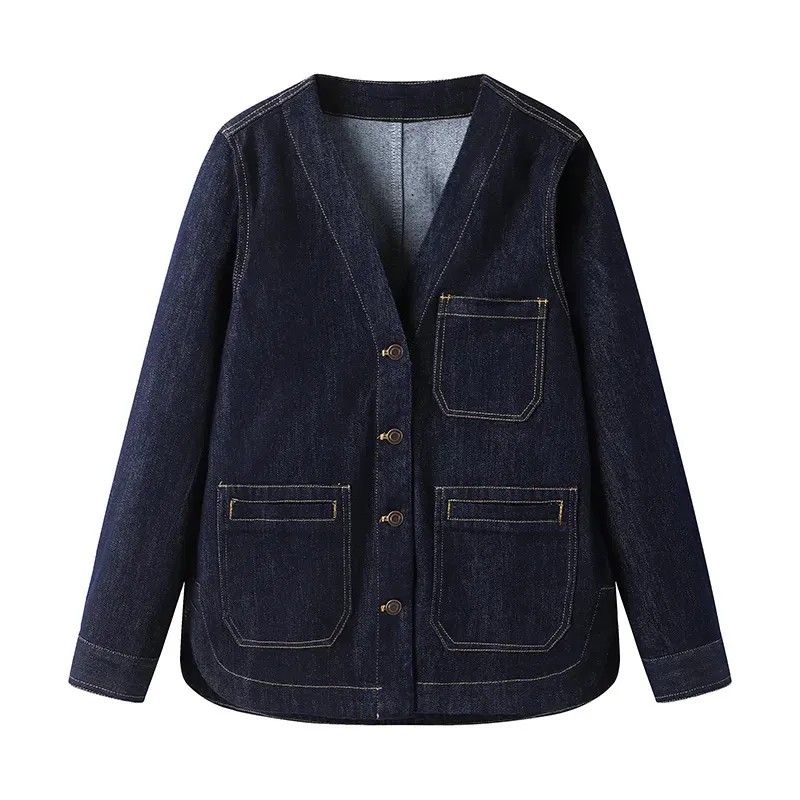
Raw denim, sometimes called dry denim, generally refers to denim that has not received a garment wash intended to soften the fabric, remove substantial indigo or create a pre-aged appearance. The jeans are cut and sewn while the fabric still retains much of its original mill character. This is why new raw denim often feels firmer, looks darker and develops visible wear patterns around the thighs, knees, pockets and hems over time.
The definition is frequently confused with two other terms: selvedge denim and unsanforized denim. They describe different fabric properties.
- Raw denim describes the absence of a conventional garment-aging wash.
- Selvedge denim describes fabric woven on narrower looms with a self-finished edge. Selvedge fabric can be raw or washed.
- Unsanforized denim has not undergone the mechanical preshrinking process commonly used to stabilize woven fabric. Unsanforized denim can shrink substantially after exposure to water.
- Sanforized raw denim is still raw denim. It has simply been mechanically stabilized before cutting and sewing.
This distinction matters because buyers sometimes request “raw selvedge denim” while expecting low shrinkage, a soft hand feel and highly consistent sizing. Those expectations may conflict with the selected fabric. A manufacturer can help balance them, but the commercial target should be clear before sampling begins.
Brands evaluating different fabric categories can review Luokugg’s custom denim fabric options, including rigid cotton denim, stretch denim, lightweight constructions and heavier heritage fabrics.
2. How Buyers Should Select Raw Denim Fabric
Selecting raw denim fabric is one of the most important decisions in a private-label denim program. A reference image may communicate color and silhouette, but it rarely communicates the full specification required for repeatable production. Two fabrics can look almost identical in a photograph while behaving very differently during cutting, sewing, pressing and wear.
Fiber composition
Traditional raw denim is commonly associated with 100% cotton because rigid cotton creates a firm structure and distinctive wear pattern. That does not mean every commercial collection should use the same composition. A small amount of elastane may improve comfort and recovery for slimmer fits, while recycled cotton or other blends may support a brand’s material strategy.
Composition should be selected according to the intended silhouette. A wide-leg heritage jean, a fitted women’s jean and a structured trucker jacket do not require the same stretch, recovery or drape.
Yarn spinning and surface character
Yarn type affects the visual depth of the fabric. Ring-spun yarns tend to create a less uniform, more textured surface than highly regular open-end yarns. Slub yarn introduces controlled variation in yarn thickness, producing vertical streaks and a more irregular fading character.
More texture is not automatically better. Strong slub can support a heritage or artisan identity, but it may look inconsistent in a minimal contemporary collection. Buyers should decide whether the desired surface is clean, slightly irregular or strongly textured rather than simply requesting “premium denim.”
Indigo dyeing and color direction
Indigo color is built through repeated dyeing and oxidation stages. In many denim programs, the yarn surface receives the strongest color while the inner core remains lighter. As abrasion gradually removes surface color, the lighter core becomes visible and creates the fading associated with raw denim.
Dyeing choices influence whether the final shade appears bright blue, deep navy, green-cast, red-cast or nearly black. Sulfur bottoming or topping may also be used to adjust depth and undertone. A buyer should therefore approve more than a general color name. The approved standard should include the face color, reverse color, cast, contrast and expected fading direction.
Weave construction
Many jeans use a 3×1 twill construction, but right-hand twill, left-hand twill and broken twill do not behave identically. Right-hand twill is widely used for classic denim structure. Left-hand twill can produce a different hand and surface appearance, while broken twill was developed to reduce the directional tendency associated with conventional twill lines.
The weave should support the product rather than become an isolated marketing feature. Pocket shape, seam construction, garment length and leg silhouette all interact with the stability of the fabric.
Fabric weight
Denim weight is normally discussed in ounces per square yard. Lightweight fabrics can work for shirts, dresses and warm-weather products. Midweight denim is easier to commercialize across a broad range of jeans and jackets. Heavyweight denim creates a more substantial product but can increase cutting difficulty, needle requirements, seam bulk, shipping weight and break-in time.
| Fabric direction | Typical product use | Buyer consideration |
|---|---|---|
| Lightweight denim | Shirts, dresses, summer trousers and soft overshirts | Drape, opacity and seam puckering require attention. |
| Midweight denim | Commercial jeans, skirts and everyday jackets | Offers a practical balance between structure, comfort and cost. |
| Heavyweight denim | Heritage jeans, workwear and structured jackets | Requires suitable sewing equipment, stronger needles and careful seam planning. |
| Super-heavy denim | Specialist heritage products and limited collections | Higher weight does not guarantee better quality or broader market acceptance. |
Sanforized or unsanforized
Shrinkage strategy should be decided before pattern development. Sanforized fabric is mechanically preshrunk to improve dimensional stability. Unsanforized fabric retains more loom-state character but may change considerably after soaking or washing.
For unsanforized products, a pattern cannot simply be graded in the same way as a stable washed jean. The development team should test shrinkage in both warp and weft directions and consider how soaking affects waistband circumference, inseam, rise, leg opening and overall balance.
3. The Raw Denim Fabric Manufacturing Process
A reliable raw denim fabric manufacturing process begins with product definition, not with bulk fabric purchasing. The following workflow shows how a professional private-label raw denim project should move from concept to commercial production.
Define the commercial brief
The brand should provide the product category, target customer, retail price range, estimated quantity, fit direction, preferred fabric weight, composition, color, trim level and delivery target. Reference garments and photographs are useful, but they should be supported by measurements and construction notes.
Source and review fabric options
The manufacturer or fabric mill presents suitable fabrics based on the brief. Buyers should compare fabric cuttings under consistent lighting and review hand feel, face texture, reverse appearance, stretch, recovery, width, usable width, shrinkage data and lot availability.
For custom developments, lead time and minimum fabric quantity should be confirmed before the garment price is treated as final.
Test shrinkage and dimensional behavior
Fabric testing should take place before final pattern approval. This is especially important for rigid and unsanforized fabrics. Warp shrinkage affects garment length, while weft shrinkage affects circumference and fit. Skew and fabric torque can influence leg twist.
Develop the pattern and first sample
The pattern maker translates the size specification into a production pattern while considering fabric thickness, shrinkage allowance, seam construction and intended ease. Heavy raw denim may require more room at bulky intersections than a soft washed stretch fabric.
The first sample is used to evaluate silhouette, rise, seat balance, pocket placement, waistband shape, yoke angle, inseam alignment and overall construction.
Approve trims and construction
Buttons, rivets, zippers, thread, leather patches, woven labels, care labels and packaging should be reviewed as part of the same product system. Raw denim often places greater visual emphasis on stitching and hardware because there is no heavy wash effect to distract from inconsistent construction.
Brands can also review Luokugg’s custom denim crafting and finishing options when a collection combines raw products with washed, distressed, printed or embroidered styles.
Create the fit sample and size set
After first-sample comments are applied, a revised fit sample should be measured and worn on the intended body or fit model. For multi-size programs, a size set helps identify grading problems that may not be visible in the base size.
The brand should approve both numerical measurements and visual proportion. A garment can fall within tolerance and still appear unbalanced if pocket scale, yoke position or leg shape is wrong.
Confirm the pre-production sample
The pre-production sample should represent the approved bulk fabric, final pattern, actual trims, labels, thread colors and packaging direction. This sample becomes the practical reference for production and inspection.
Control fabric relaxation and cutting
Denim should be relaxed under controlled conditions before cutting because tension introduced during rolling can affect dimensions. Cutting plans must consider fabric direction, shade grouping, marker efficiency, defects and usable width.
Mixing panels from visibly different shade groups can create mismatched legs, waistbands or pockets. Shade control should therefore continue from fabric inspection through bundle management.
Sew with construction suitable for the fabric
Needle size, thread specification, stitch density, folder setup and machine tension must match the fabric thickness. Weak construction may not become obvious until the garment is worn repeatedly, especially at belt loops, pocket corners, crotch seams and waistband joins.
Heavy seam intersections should be planned rather than forced through standard equipment. Hammering, seam flattening or specialized machinery may be required to reduce bulk and prevent skipped stitches or broken needles.
Finish without destroying the raw character
“Raw” does not mean that the finished garment receives no handling at all. Thread trimming, pressing, inspection, metal detection where required, measurement checking, labeling and packing still take place. A light rinse or special finishing treatment should only be used when it is part of the approved product definition, since it may change color, stiffness and shrinkage behavior.
4. Raw Denim Fabric Quality-Control Points
Raw denim fabric exposes inconsistencies that a heavy garment wash might otherwise soften or disguise. Buyers should establish measurable standards before bulk production rather than relying only on the phrase “same as approved sample.”
Dimensional stability
Shrinkage should be tested according to an agreed method. The test condition must match the product claim and care instruction. A result obtained from one laboratory method cannot automatically predict every customer’s washing behavior, but it provides a controlled basis for pattern engineering and comparison.
Skew and leg twist
Twill fabrics naturally contain directional forces. If skew and pattern alignment are not controlled, the side seam may rotate toward the front or back after washing. Some level of movement may be accepted as part of a heritage product, but it should be an intentional standard rather than a surprise discovered after delivery.
Colorfastness and crocking
Indigo-dyed denim can transfer color through rubbing, particularly in dark raw products. Dry and wet rubbing behavior should be reviewed, and the brand should prepare suitable care wording. Product photography, packaging inserts and customer-service guidance should all communicate that indigo transfer may occur.
Fabric weight and construction consistency
Raw denim fabric weight, width, density and surface character should be compared across deliveries. A fabric ordered under the same commercial name may still vary between production lots. The approved standard should therefore be supported by tolerances and physical swatches.
Seam and attachment strength
Belt loops, rivets, buttons, snaps and pocket corners carry concentrated stress. Their position and attachment method should be inspected before shipment. Hardware should not be treated as decoration only; it is part of the garment’s functional structure.
Measurement inspection
Measurement points must be clearly defined in the specification. “Waist,” for example, can be measured relaxed, aligned, curved or doubled. A tolerance is only useful when the measurement method is shared by the brand, factory and inspection team.
- Approved fabric swatch with date and lot information
- Approved pre-production garment
- Measurement chart with tolerances and measuring method
- Construction sheet with seam and stitch requirements
- Trim card showing actual bulk components
- Packaging standard and carton markings
- Test requirements appropriate to the destination market
5. Common Raw Denim Sourcing Mistakes
Choosing fabric by ounce alone
Fabric weight is easy to compare, which is why it often receives too much attention. Weight does not fully explain yarn quality, weave density, stiffness, recovery, shrinkage or wear performance. Two fabrics with the same nominal weight can create very different garments.
Assuming selvedge automatically means superior quality
Selvedge is a weaving characteristic and an important heritage detail for certain products. It does not replace fabric testing, stable dyeing, accurate pattern making or good sewing. A wider non-selvedge fabric may be the better commercial choice when the collection needs efficient cutting, accessible pricing and larger-volume consistency.
Approving appearance but not post-soak fit
A dark, crisp sample can look excellent before exposure to water. If the fabric is unstable, the customer experience may be very different. Unsanforized products should be evaluated using the same soak or care method recommended to buyers.
Ignoring production-lot variation
Indigo is valued partly because of its depth and variation, but uncontrolled shade differences can create visible mismatch within one garment or one retail delivery. The brand should define acceptable variation and require shade segregation during cutting.
Requesting a soft hand without changing the product definition
Buyers sometimes approve a rigid raw fabric and later request the softness of a heavily washed jean. Softening treatments may change color, surface character, shrinkage and the way the garment fades. The desired hand feel should be decided during fabric development, not after bulk sewing.
Making sustainability claims without transaction documents
A supplier statement that a fabric contains recycled or preferred material is not the same as documented chain-of-custody evidence. If a claim will appear on the product page, hangtag or packaging, the buyer should confirm the applicable certification, scope, transaction records and labeling rules before production.
6. What Affects Raw Denim Price and MOQ?
Raw denim removes many garment-washing costs, but it is not automatically a low-cost product. Premium yarns, custom dyeing, low-volume mill development, selvedge construction, imported hardware and detailed sewing can make a raw garment more expensive than a basic washed jean.
The cost of raw denim fabric depends on yarn specification, fabric weight, dyeing method, finishing treatment, order quantity and whether the material is selected from available stock or developed exclusively for the brand.
The main cost and MOQ drivers include:
- Stock fabric versus custom-woven fabric
- Fabric weight, composition and yarn specification
- Standard indigo shade versus custom cast or depth
- Sanforized, unsanforized or other special finishing requirements
- Selvedge versus wide-width denim
- Custom buttons, rivets, zippers and branded metal molds
- Pattern complexity and number of sewing operations
- Order quantity per style, color and fabric
- Testing, inspection and destination-market requirements
- Packaging, labeling and logistics method
Emerging brands can reduce risk by beginning with available fabrics, shared trim platforms and a focused size range. Luokugg’s low-MOQ custom denim service is designed for brands that need to validate a product before committing to a much larger inventory position.
Buyers can also review existing custom denim jeans and custom denim jacket references to communicate silhouette, pocket placement, construction and finishing direction more efficiently.
7. Responsible Sourcing and Documentation
Responsible sourcing should be handled as a documentation and process issue, not as a collection of vague environmental adjectives. Brands should identify which claim they intend to make, which part of the supply chain it covers and what evidence will be required.
Cotton traceability
Buyers interested in cotton-origin visibility can review the official Better Cotton traceability framework. Traceability programs may involve membership, platform participation, chain-of-custody models and specific claim requirements. The existence of a cotton program does not automatically mean that every finished garment can carry every related claim.
Organic and recycled material claims
Textile Exchange manages standards connected with organic and recycled material verification. Its official standards overview explains programs such as the Organic Content Standard, Recycled Claim Standard and Global Recycled Standard.
For recycled denim, brands should confirm the percentage of recycled content, the type of recycled input, the effect on yarn strength, applicable certification scope and whether supporting transaction documents will be available.
Testing for harmful substances
The OEKO-TEX® STANDARD 100 is widely recognized as a testing framework for harmful substances in textile products. Buyers should verify whether a certificate applies to the specific fabric, trim or finished product being purchased rather than assuming that a supplier’s general certificate covers every order.
Chemical and wastewater management
Denim dyeing and wet processing require disciplined chemical and wastewater management. Brands building supplier requirements can consult the ZDHC Wastewater and Sludge Guidelines as an industry reference.
8. Raw Denim Tech-Pack Checklist for Buyers
A clear raw denim fabric tech pack reduces interpretation, but it does not need to be unnecessarily complicated. The goal is to ensure that the brand and manufacturer are approving the same product.
- Product type: jeans, jacket, skirt, shirt, overshirt or other category
- Target fit: slim, straight, relaxed, wide, cropped, oversized or workwear fit
- Base size and size range: including grading expectations
- Fabric composition: cotton and any blended fibers
- Fabric weight: requested range rather than an unsupported marketing number
- Surface direction: clean, slub, neppy, hairy, smooth or vintage
- Color direction: shade depth, cast and reverse appearance
- Shrinkage strategy: sanforized, unsanforized or tested target
- Seam construction: stitch type, seam allowance and reinforcement
- Thread specification: color, thickness and contrast level
- Hardware: button, rivet, zipper, snap and finish
- Branding: leather patch, woven label, care label, hangtag and packaging
- Measurements: points of measurement, tolerances and method
- Testing: shrinkage, rubbing fastness, strength or market-specific requirements
- Customer care: soak, wash, color-transfer and drying instructions
- Order information: quantity by style, color and size
- Timeline: sample deadline, approval date and delivery target
When contacting a manufacturer, send the tech pack together with reference photographs, target quantity and destination market. This allows the production team to identify technical conflicts before quoting instead of discovering them after sampling.
9. Developing Private-Label Raw Denim with Luokugg
Luokugg is the custom denim manufacturing brand behind Luxappare.com, supporting fashion labels, wholesalers, streetwear brands and independent designers with fabric sourcing, pattern development, sampling, private-label trims and bulk production.
Our raw denim manufacturing service focuses on the production details that matter to professional buyers: fabric specification, shrinkage control, fit development, construction, labeling, packaging and repeatable bulk quality.
A practical project normally begins with an evaluation of your design, quantity, fabric direction and commercial target. We may recommend an available fabric when speed and low MOQ are priorities, or discuss a custom fabric development when the order volume and brand positioning justify it.
Before beginning, buyers can learn more about Luokugg’s manufacturing background and review the broader custom denim manufacturing services available through Luxappare.com.
Frequently Asked Questions About Raw Denim Fabric
Is raw denim the same as selvedge denim?
No. Raw denim describes denim that has not received a conventional garment-aging wash. Selvedge describes a self-finished fabric edge produced on a narrower loom. A fabric can be raw without being selvedge, and selvedge jeans can be sold raw or washed.
Can sanforized denim still be called raw denim?
Yes. Sanforization is a mechanical preshrinking treatment applied to fabric. A sanforized garment can still be considered raw when it has not received a garment wash designed to fade or pre-age it.
What fabric weight is best for a raw denim collection?
There is no single best weight. Midweight denim is often easier to commercialize because it balances structure and comfort. Heavier fabrics may suit heritage jeans and workwear, while lighter fabrics may be better for shirts, dresses and warm-weather products.
Should a raw denim sample be washed before approval?
The unwashed appearance should be approved, but dimensional behavior should also be tested. For unsanforized denim in particular, the brand should evaluate a sample after the controlled soak or wash method that will be recommended to customers.
Why can raw denim transfer color?
Dark indigo remains concentrated near the yarn surface and can transfer through friction, especially when the fabric is new or damp. Buyers should review rubbing-fastness results and provide appropriate care and color-transfer guidance.
Can a startup brand order custom raw denim in a small quantity?
Low-MOQ production may be possible when the project uses suitable available fabric and commercially practical trims. Luokugg supports selected custom denim programs starting from approximately 100 pieces per style, although the final MOQ depends on fabric availability, color, construction and customization requirements.
Planning a Raw Denim Collection?
Send us your tech pack, reference images, target quantity, preferred fabric weight, size range and delivery schedule. Our production team will review the project and recommend a suitable sampling and manufacturing route.