Understanding the denim washing process is essential for fashion brands developing custom jeans, jackets and other denim products. Washing does far more than change color. It affects shrinkage, hand feel, measurements, strength, surface texture and ultimately whether a design can be reproduced consistently from sampling to bulk production.
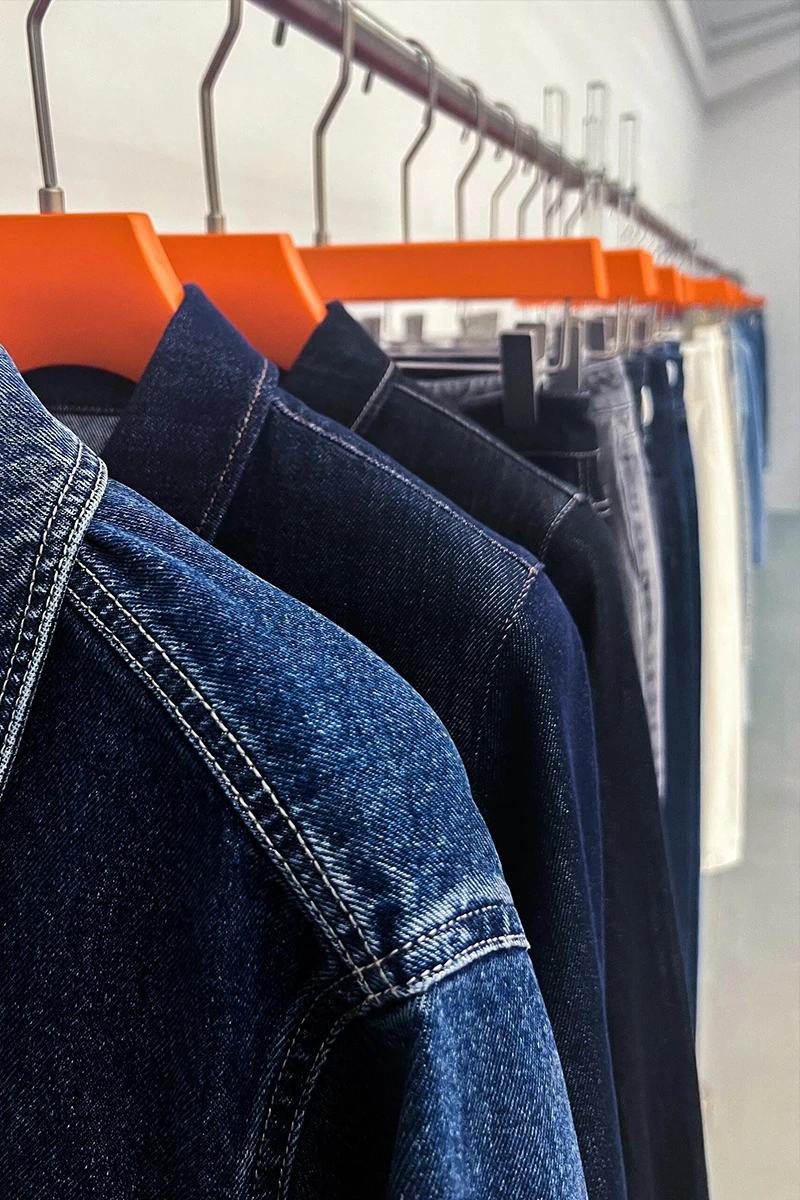
What the Denim Washing Process Actually Does
In denim manufacturing, washing is not simply a finishing operation added after sewing. It is part of the product engineering process. A pair of jeans entering a wash house may look stiff, dark and unfinished. After processing, the same garment may become softer, lighter, more dimensional and visibly aged.
The washing process can remove surface dye, soften fibers, create contrast, expose the structure of the weave and produce localized wear effects. Treatments may also change the physical dimensions of the garment. Waist, inseam, rise and leg width can all move after washing, particularly when rigid cotton denim is involved.
For this reason, experienced custom denim manufacturers do not develop patterns and washes as separate tasks. Fabric behavior, pattern measurements and the final wash must be considered together.
What Must Be Decided Before Denim Washing Starts
Wash development should begin with the base fabric rather than with the washing recipe. The same wash treatment applied to two different denim fabrics can produce very different results. Indigo concentration, yarn structure, fabric weight, stretch content and finishing all influence the way a fabric loses color.
Before a wash technician starts development, the brand and manufacturer should define several basic points:
- Target color and overall wash depth
- Desired contrast between dark and faded areas
- Rigid, comfort-stretch or high-stretch construction
- Fabric weight and fiber composition
- Expected hand feel after finishing
- Whiskering, sanding or abrasion positions
- Acceptable measurement shrinkage
- Target price and production volume
Brands developing their own material can review custom denim fabric development before deciding on the wash. Selecting fabric and washing independently is one of the most common reasons a reference effect fails during sampling.
Common Denim Washing Techniques and Their Commercial Uses
The term “denim wash” covers many different processes. Most commercial jeans are created by combining several treatments rather than using one technique alone. A medium vintage wash, for example, may involve enzyme treatment, abrasion, whiskering, localized sanding and a final tint.
| Wash or Treatment | Main Purpose | Typical Appearance | Key Production Risk |
|---|---|---|---|
| Enzyme Wash | Remove surface fibers and soften denim | Cleaner, softer and slightly faded | Over-processing may reduce strength |
| Stone Wash | Create abrasion and worn character | Natural vintage fading | Uneven abrasion and equipment wear |
| Bleach Wash | Remove larger amounts of indigo | Light blue to very pale denim | Loss of strength or uncontrolled shade |
| Whiskering | Create localized wear lines | Creases around hip and upper thigh | Inconsistent placement |
| Hand Sanding | Create controlled high points | Natural worn areas | Variation from operator to operator |
| Tinting | Alter final color tone | Vintage, dirty, warm or colored cast | Shade inconsistency |
| Grinding | Create worn edges | Aged pockets, hems and seams | Excessive fabric damage |
| Distressing | Create holes and broken surfaces | Ripped or heavily aged denim | Damage expanding during washing |
The correct combination depends on the product. A commercial women’s stretch jean may need softness and controlled fading, while heavyweight streetwear denim may depend on strong abrasion, visible seams and exaggerated vintage character.
More specialized treatments can be developed through Luxappare’s custom denim crafting and wash development service.
Enzyme Washing: One of the Foundations of Modern Denim Finishing
Enzyme washing is commonly used to soften denim and remove surface fibers. During treatment, enzymes act on the cotton surface, helping release indigo and reducing the stiff feel associated with unfinished denim.
The result depends on temperature, treatment time, enzyme concentration, mechanical action and the construction of the fabric itself. More treatment does not automatically mean a better wash. Excessive processing can weaken the fabric or create a flatter appearance than the designer intended.
Enzyme washing is often used as one stage in a larger recipe. It may prepare the garment for whiskering, sanding or further color reduction rather than being the final visual treatment.
Stone Washing and the Development of Natural Wear
Stone washing became one of the defining techniques of vintage denim because it creates irregular abrasion similar to the wear that develops naturally over time.
The appeal of a stone-washed garment comes from variation. Seams, folds and raised areas receive more abrasion, giving the garment dimension rather than a completely flat color.
However, uncontrolled abrasion creates problems. Pocket edges can become too weak, seam areas can break prematurely and individual pieces may vary beyond the approved standard.
Modern production may combine traditional mechanical effects with alternative finishing methods in order to achieve the desired appearance with better repeatability. The important issue for a buyer is not the name of the process, but whether the factory can define and reproduce the approved result.
Bleach Wash: Producing Light and High-Contrast Denim
When a design requires significantly lighter denim, stronger color-removal processes may be required. Bleach washing can move dark indigo fabric toward medium blue, pale blue or highly faded tones.
This process must be carefully controlled because color removal and fabric damage can occur at the same time. A wash that produces the correct shade but reduces fabric strength too far is not commercially successful.
Brands should therefore review both appearance and physical performance. Particularly with distressed jeans, bleaching combined with grinding or ripping may place several forms of stress on the same fabric area.
Whiskering and Hand Sanding: Creating Wear Where the Body Naturally Moves
Whiskers are the horizontal or diagonal faded lines normally seen around the upper thigh and front hip. On naturally worn jeans, these marks develop where the fabric repeatedly folds during sitting and walking.
In commercial manufacturing, whiskers can be engineered so that a new garment already carries this worn character. The challenge is placement. A whisker pattern that works on one size cannot always be positioned identically across every size because body proportions and garment dimensions change.
Hand sanding is used to lighten selected areas such as thighs, seat panels, knees and seam edges. Since this is partly a manual operation, brands should define an acceptable range instead of expecting every garment to be visually identical.
Production point: Manual variation is not automatically a defect in vintage denim. The important question is whether the differences remain within the approved visual standard.
Distressing, Grinding and Ripped Denim
Distressed denim introduces another level of complexity because the treatment intentionally damages the garment surface. Grinding may be applied to pocket openings, waistbands, hems and seams, while larger holes can be developed on knees or thighs.
A designer may focus on the appearance of the hole, but the production team must consider what happens after washing and wearing. A cut that looks small before finishing can expand significantly during mechanical treatment.
Reinforcement is sometimes required behind highly distressed areas. The correct solution depends on whether the designer wants an open hole, threads remaining across the opening, patching underneath or a repaired vintage appearance.
Embroidery, patches, printing and other decorative techniques can also be combined with distressed treatments. When several processes overlap, their production sequence becomes important. The order in which washing, embroidery, grinding and finishing occur can change both the visual result and the durability of the garment.
How a Commercial Vintage Denim Wash Is Developed
“Vintage wash” is a useful design description, but it is not a technical specification. One brand may use the term for a clean medium-blue fade, while another expects dirty tinting, heavy abrasion and visible seam contrast.
The starting point should therefore be a visual standard. Reference garments are especially useful because the wash technician can examine the true shade, fabric character and worn areas without the distortion of photography.
From there, the development process typically moves through several stages.
Select the Base Denim
Choose fabric weight, fiber composition, indigo depth, stretch and construction before attempting to reproduce the target wash.
Create the First Wash Trial
Develop an initial recipe to establish overall color, softness and contrast rather than trying to perfect every detail immediately.
Adjust Localized Effects
Refine whiskers, sanding, grinding, distressing and seam highlights after the overall color direction is close.
Check Measurements
Measure the garment after washing and compare it with the approved specification to determine required pattern corrections.
Approve a Physical Standard
Retain an approved garment that the wash house and quality team can use as the bulk production reference.
Why the Denim Washing Process Changes Fit and Measurements
One of the biggest mistakes in custom denim development is reviewing fit only before washing. A pattern may measure correctly in an unfinished garment and still fail after the approved wash.
Cotton fibers can contract, fabric tension can relax and seams can draw differently during treatment. Waist circumference, inseam, front rise, back rise and leg opening may all change.
The size of these changes depends on the fabric and wash recipe. This is why pattern development should be based on after-wash measurements rather than assuming the sewn garment will remain unchanged.
Raw denim programs require a different development approach because the customer may experience part of the shrinkage after purchase. Brands building unwashed collections can review raw denim manufacturing for a more specialized production route.
Wash Sampling: Where Most Problems Should Be Solved
Sampling is the correct time to make mistakes because mistakes are still relatively inexpensive. Once bulk production begins, every unresolved detail becomes multiplied across the order.
Buyers should review a washed sample for more than color. A practical approval should check:
- Overall wash shade under neutral lighting
- Front and back contrast
- Whisker location and intensity
- Sanding and faded areas
- Seam abrasion
- Damage around distressed sections
- Fabric hand feel
- Waist, hip, rise and inseam measurements
- Twisting or leg distortion
- Hardware appearance after washing
Changes should be documented clearly. Comments such as “make it more vintage” are open to interpretation. A stronger instruction would identify which areas need more contrast, whether the overall shade should be lighter and whether a tint should become warmer or cooler.
Brands without complete technical development files can use ODM denim manufacturing to develop samples from sketches, references or product ideas.
How Denim Manufacturers Control Bulk Wash Consistency
Once a sample is approved, the challenge changes from creativity to repeatability. Bulk garments may be processed in different loads, and differences in fabric lots, machine loading, water conditions, treatment time or manual finishing can produce variation.
A professional production system should therefore use an approved sample, documented wash recipe and defined tolerance range. Operators should not rely on memory or photographs alone.
Shade grouping can also be important. Even when garments remain within an acceptable range, packing noticeably different shades together can create a poor impression at retail.
Quality inspectors should compare finished garments against the approval standard at multiple stages rather than waiting until the entire order is complete.
What Determines the Cost of a Custom Denim Wash?
Wash price is influenced by much more than the final color. A clean rinse or basic soft wash requires relatively few operations, while a complex vintage jean may pass through several chemical, mechanical and manual stages.
Cost typically increases when the design requires:
- Multiple wash stages
- Heavy manual sanding
- Detailed whiskering
- Grinding at many locations
- Complex distressing or repair work
- Special tinting or coating
- Embroidery or patch combinations
- Very small production quantities
A buyer should therefore ask for a quotation based on the actual approved construction instead of comparing generic “jeans prices.” Two jeans that appear similar in a photograph may require very different amounts of labor.
Emerging brands can reduce development risk by combining a controlled wash program with low MOQ custom denim production rather than launching too many fabrics and wash colors in the first order.
Chemical Management and Environmental Considerations
Denim finishing has historically been one of the more resource-intensive stages of garment production. Brands should therefore evaluate not only the visual result but also how chemicals, water and process controls are managed.
Chemical-management frameworks such as ZDHC Roadmap to Zero provide industry guidance around safer chemical management in textile and footwear supply chains.
Brands evaluating fiber sourcing and material claims may also consult Textile Exchange and Better Cotton .
These resources should not be treated as marketing labels that automatically apply to every product. When a brand intends to make specific sustainability claims, the relevant certification scope, documentation and supply-chain evidence should be confirmed separately.
The practical objective is not to select a process because it sounds environmentally friendly. The objective is to produce a commercially viable garment with measurable quality while understanding the resources and chemicals required to achieve the design.
Building a Denim Wash Program That Can Scale With Your Brand
For a new denim brand, it is usually better to develop a small number of strong, repeatable washes than a large collection of loosely controlled effects.
One base fabric can sometimes support several coordinated shades. A dark rinse, medium vintage wash and light wash may create enough variety for an initial collection without introducing multiple unrelated fabrics.
This approach has several advantages. Fabric purchasing becomes easier, pattern behavior is more predictable and repeat orders are simpler to manage. The brand can also build recognizable wash standards that remain consistent across jeans, jackets, shorts and skirts.
Before expanding the collection, review actual sales results. A wash that performs strongly can then be transferred into additional silhouettes rather than developing every combination at once.
Buyers can explore existing silhouettes through the Luxappare denim product gallery and use those references when discussing fabric, fit and wash directions with the production team.
For brands with complete tech packs and established development standards, Luxappare also provides OEM denim manufacturing .
A practical sourcing rule: Approve the fabric, fit and wash as one connected product. A successful denim collection is rarely created by optimizing each of these elements independently.
Why Wash Development Matters for Private Label Denim
In private label denim, wash development is one of the strongest ways to differentiate a product. Many brands can use a similar five-pocket construction, but the choice of fabric, shade, seam contrast, whiskering and finish can create an entirely different commercial identity.
This is particularly important for online brands because customers cannot physically touch the garment before buying it. Wash appearance becomes a major part of the product image, while hand feel, fit and shrinkage determine whether customers remain satisfied after delivery.
The denim washing process should therefore be documented as part of the product specification rather than treated as an informal conversation between the buyer and wash technician.
Reference codes, wash samples, measurement charts and approved trims should remain connected to the same style so that repeat production can be compared with the original standard months later.
What Information Should a Brand Send for Custom Wash Development?
A manufacturer can develop a more accurate wash when the buyer provides useful reference information from the beginning. A complete tech pack is ideal, but it is not always necessary for the first discussion.
Useful information includes:
- Front and back product drawings or reference photos
- Preferred fabric weight and composition
- Target wash color
- Whisker and fading placement
- Reference garment if available
- Distressing or repair details
- Desired softness and hand feel
- Custom hardware and branding
- Estimated order quantity
- Size range and target market
Providing these details early allows the factory to identify whether a reference effect is compatible with the chosen fabric and whether the proposed treatment is realistic for the target price.
From Sample Approval to Repeat Orders
The real test of a denim manufacturing program is not the first sample. It is whether the same product can be reordered six months later without starting development again from zero.
For repeatable production, brands should keep records of the approved fabric, wash reference, pattern version, trim specification, measurement chart and packaging requirements.
The manufacturer should also maintain internal references. If a fabric is no longer available, the replacement should be tested rather than automatically assuming the previous wash recipe will create the same result.
This discipline becomes increasingly important as a brand grows. A collection with two denim styles can often be managed through informal communication. A collection with dozens of styles, multiple seasons and repeat orders needs structured specifications.
Building that structure early makes it easier to move from a small test order into stable commercial production.
Frequently Asked Questions About the Denim Washing Process
What is the denim washing process?
The denim washing process is a series of finishing operations used to change the color, softness, texture and appearance of denim garments. Depending on the design, it may include enzyme washing, bleaching, abrasion, whiskering, sanding, tinting and distressing.
Does washing change the size of jeans?
Yes. Denim washing can change waist, rise, inseam and other garment measurements. The amount of change depends on the fabric construction, fiber composition and wash recipe, which is why final specifications should be checked after washing.
Can a denim manufacturer copy a wash from a photo?
A photograph can provide direction, but it cannot show the exact fabric, indigo depth, hand feel or processing history. Physical wash trials are normally required to develop a commercially repeatable result.
What is the difference between stone wash and enzyme wash?
Stone washing relies heavily on mechanical abrasion to create worn character, while enzyme washing uses enzymes to act on the cotton surface and soften or fade the garment. Commercial washes may combine both approaches depending on the required appearance.
Why do bulk denim garments sometimes have different shades?
Shade differences can result from fabric lot variation, machine loading, treatment time, manual finishing and other production variables. Manufacturers control these differences through approved standards, recipes, shade grouping and quality inspection.
Can I develop custom washes for a low MOQ denim collection?
Custom wash development can be possible for smaller orders, although feasibility depends on fabric, wash complexity, style quantity and the amount of development required. Using one fabric across multiple styles can often improve efficiency.
Developing a Custom Denim Wash for Your Next Collection?
Send Luokugg your reference photos, tech pack, fabric requirements, target quantity and desired wash effect. Our team can evaluate the fabric, washing process, construction and production requirements before developing your sample.